A beeping fire alarm often indicates several potential issues, the most common being a low battery, which can be resolved by replacement. Environmental factors such as dust, humidity, and steam can also cause the alarm to beep by triggering the sensors in error. Additionally, alarms nearing the end of their life span may produce erratic beeping due to aging components. Regular cleaning and timely battery replacement usually address these issues effectively. Minor electrical faults should be examined and corrected as needed. Understanding “why is my fire alarm beeping” provides clearer insights into how to maintain the peak functionality of your fire alarm system.
Key Takeaways
- Low Battery Power: Replace the batteries if your fire alarm emits short, intermittent beeps, indicating low battery power.
- Environmental Contaminants: Clean alarms regularly to remove dust, dirt, or insects that may cause false beeping.
- Humidity or Steam: Ensure alarms are not installed near bathrooms or kitchens to avoid false triggers from steam.
- Aging Alarms: Consider replacing fire alarms that are nearing the end of their recommended service life to prevent erratic beeping.
- Faulty Wiring or Connections: Check for and repair any loose or damaged wiring and connections to stop unnecessary beeping.
Table of Contents
Why is the fire alarm beeping but no smoke?
One common reason a fire alarm may beep without smoke is a low battery. However, other factors can also trigger this alarming yet smoke-free beep. For instance, environmental contaminants such as dust, dirt, or even insects can interfere with the sensors. Over time, these particles accumulate on the sensitive components of the alarm, leading to false alarms. Regular maintenance, including gentle cleaning of the alarm’s exterior and sensors, can help mitigate this issue.
Another potential cause is humidity or steam, which can be particularly problematic in areas like kitchens and bathrooms. High moisture levels can cause the sensors to interpret steam as smoke, leading to unwarranted beeping. Maintaining proper ventilation in these areas can help reduce such occurrences. Moreover, alarms have a limited lifespan, and the internal components can degrade. An aging fire alarm nearing the end of its functional life may start beeping erratically and fail to function as expected.
Replacing old alarms with new ones every ten years is recommended by safety experts to guarantee they remain effective and reliable. Understand how the fire alarm control panel processes and signals alarms.
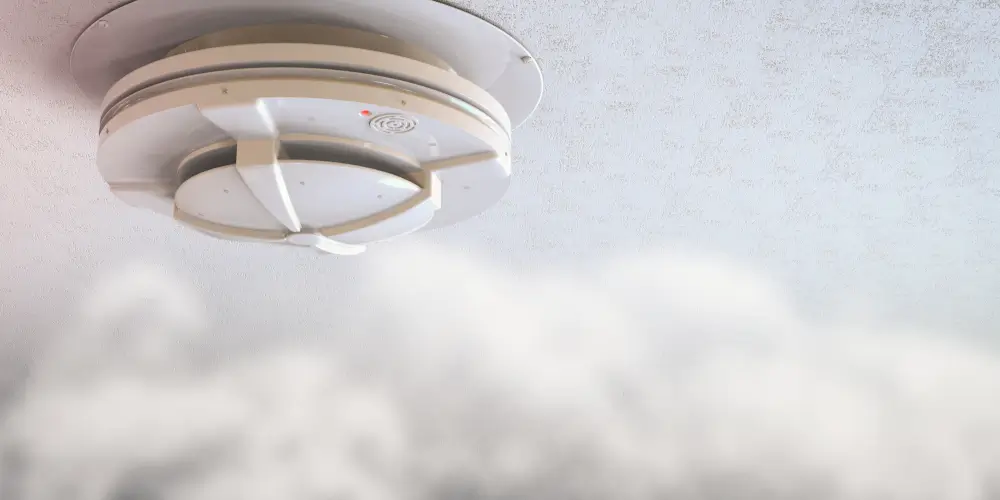
Battery Issues That Trigger Smoke Alarm Warnings
Battery-related malfunctions are a primary cause of smoke alarm warnings, often signaling the need to replace or check the power source. Smoke alarms are designed to be sensitive to power fluctuations, as these can affect their functionality. When the battery power dips below a certain threshold, the alarm may beep intermittently, alerting homeowners to the need for attention.
Understanding the different battery issues can help in quickly resolving the beeping:
- Low Battery Power: Most smoke alarms emit a short beep every few minutes to indicate that the battery is low and needs replacement.
- Improper Battery Installation: Sometimes batteries are not installed correctly, or the contacts are dirty or misaligned, causing the alarm to fail.
- Battery Leakage: Old batteries can leak, damaging the alarm’s internal components and affecting its performance.
- Expired Batteries: Even if the battery isn’t visibly depleted, it may simply be too old to deliver the required power, necessitating a replacement.
Regular maintenance, including monthly tests and annual battery replacements, can prevent many of these issues and guarantee your smoke alarm remains in good working order.
Why Does Dust Build Up Affect Fire Alarm Sensors
Accumulations of dust within fire alarm sensors can greatly impair their functionality. Over time, dust particles can accumulate on the sensitive components of smoke detectors, particularly the optical sensors, leading to false alarms or failure to detect smoke. Dust can reflect or block the light beams used in optical sensors to detect smoke particles. This interference can cause the sensors to either trigger unnecessarily or fail to trigger at all when actual smoke is present.
Maintaining the cleanliness of these sensors is essential for guaranteeing their proper operation. Regular cleaning schedules can prevent the buildup of dust and other particulates that might affect the sensor’s accuracy and reliability. Homeowners and maintenance personnel should follow the manufacturer’s cleaning instructions to avoid damaging the sensors.
Here is a simple guide on how dust affects different types of fire alarm sensors:
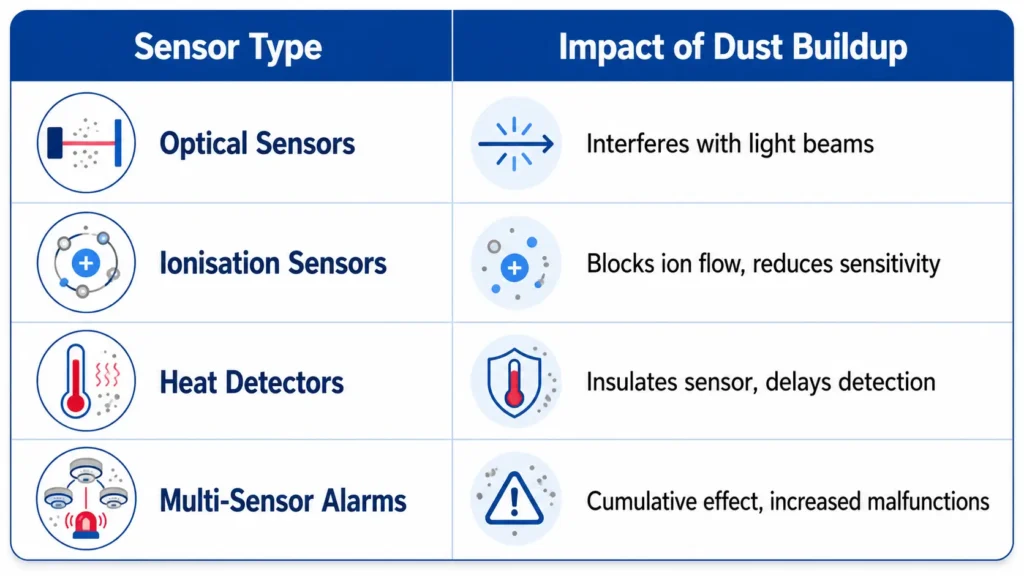
Following these guidelines can help maintain the effectiveness of fire alarms and ensure a timely response in case of a fire.
Temperature and Humidity Effects on Fire Alarms
Variations in temperature and humidity also play an essential role in their performance. Fire alarms, designed to detect smoke or heat, can sometimes respond unpredictably under extreme environmental conditions.
Significant shifts in temperature and humidity levels can cause several issues:
- False Alarms: High humidity can cause condensation inside the detector, which the system might misinterpret as smoke, triggering a false alarm.
- Sensor Malfunction: Extreme temperatures can affect the alarm system’s electronic components, potentially causing malfunctions or complete failures.
- Decreased Sensitivity: In cold conditions, smoke detector sensitivity can decrease, potentially delaying the detection of a real fire.
- Component Damage: Continuous exposure to high humidity can corrode metal contacts and circuits within the detector, impairing its functionality over time.
Regular maintenance checks can help identify “why is my fire alarm beeping”.
Electrical Issues
Electrical issues can stem from various sources, such as faulty wiring, circuit overloads, or damaged components within the fire alarm system itself. Identifying and addressing these electrical concerns is essential to guarantee the reliability and functionality of your fire safety equipment.
Here is a breakdown of common electrical issues and corresponding solutions:
| Common Electrical Issue | Suggested Solution |
| Faulty Wiring | Inspect and replace damaged or aged wires |
| Circuit Overload | Verify the fire alarm is on a dedicated circuit |
| Loose Connections | Tighten all connections and terminals |
| Degraded Components | Replace sensors, batteries, or other faulty components |
Signs That Your Fire Alarm System Needs Repair
Recognising the signs that your fire alarm system requires repair is important for maintaining safety and compliance with fire safety regulations.
Some key signs that suggest your fire alarm system needs repair include:
- Frequent False Alarms: If your fire alarm frequently goes off without an apparent cause, it might indicate sensor issues or faulty wiring.
- No Response During Tests: Regular testing is critical. A lack of alarm sound during scheduled tests can signal a serious malfunction in the system.
- Intermittent Beeping: Beeps not associated with low-battery warnings or alarm triggers may indicate electrical problems or component malfunctions.
- Visible Wear and Tear: Any visible damage on the alarm system, such as frayed wires or cracks, requires immediate attention to guarantee the system’s reliability and effectiveness.
Promptly addressing these signs by consulting with a fire safety professional can help maintain the operational integrity of your fire alarm system. Learn how to test fire alarms.
Safety Risks of Ignoring a Beeping Fire Alarm
A neglected fire alarm system may fail to activate during an emergency, preventing the necessary evacuation and emergency response actions. This oversight can result in severe consequences, including increased property damage and, tragically, loss of life. The table below summarises the key risks associated with ignoring a beeping fire alarm:
| Risk Factor | Potential Consequence |
| Delayed hazard detection | Increased risk of injury or fatality |
| Non-functional alarms | Inadequate evacuation time |
| Missed maintenance alerts | Escalation of minor issues into major hazards |
It is essential to promptly address any beeping from a fire alarm to ensure it functions correctly when most needed, safeguarding both property and lives.
How Regular Fire Alarm Servicing Prevents False Alerts
Regular maintenance of fire alarms is crucial to minimising false alarms, which can disrupt daily activities and diminish trust in the system’s reliability. A well-serviced fire alarm system ensures that all components function effectively, greatly reducing the likelihood of false alarms caused by component failures or sensitivity issues. This proactive approach not only enhances safety but also contributes to a more stable and dependable fire protection setup.
Key benefits of regular fire alarm servicing include:
- Early Detection of Faults: Routine checks help identify and rectify potential issues before they result in false alarms or system failures.
- Enhanced Sensitivity Settings: Technicians can adjust the smoke detector’s sensitivity to reduce false alarms from non-fire-related smoke or steam.
- Updated Software and Firmware: Keeping the alarm system’s software and firmware up to date can prevent glitches that might cause unexpected beeping.
- Battery Health Checks: Regular battery replacement and testing ensure alarms do not beep unnecessarily due to power issues.
Frequently Asked Questions
Can Expired Fire Alarms Still Beep?
Yes, expired fire alarms can still beep, typically indicating a need for replacement. This beeping serves as a warning that the alarm may no longer function effectively in detecting smoke or fire.
Are There Silent Fire Alarms for the Hearing Impaired?
Yes, there are silent fire alarms designed for the hearing impaired. These systems use strobe lights or vibrating pads as alert mechanisms, ensuring safety for those who cannot hear traditional audio alarms.
Does a Beeping Alarm Increase My Electricity Bill?
A beeping alarm typically does not notably increase your electricity bill. The power used for the intermittent beep is minimal compared to continuous operation or other higher-power-consuming devices in a household.
Can I Disable My Fire Alarm Temporarily?
Temporarily disabling a fire alarm is not recommended as it compromises safety. However, if necessary for maintenance, guarantee it is reactivated promptly to maintain protection against potential fire hazards in your home or workplace.
How Often Should I Replace My Entire Fire Alarm?
Fire alarms should be replaced entirely every 10 years to ensure optimal performance and compliance with safety standards. Regular replacement prevents malfunctions and enhances early detection capabilities in the event of a fire.
Conclusion
To sum up, regular maintenance and understanding the various factors that can cause a fire alarm to beep are essential in ensuring safety and functionality. Addressing issues such as battery replacement, dust accumulation, environmental influences, and electrical problems reduces the risk of false alarms and potential hazards. It is imperative to have knowledge of “why is my fire alarm beeping”, and seek professional servicing to maintain the reliability and effectiveness of the fire detection system.