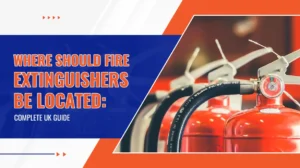

Knowing where should fire extinguishers be located is an important part of effective fire safety planning. Fire extinguishers are one of the first forms of response available when a small fire develops, but their effectiveness depends heavily on being positioned in the correct places where they can be quickly identified and safely accessed.
A fire extinguisher that is available but hidden, obstructed or located too far away from a potential fire risk may not provide meaningful protection during an emergency. The correct placement of fire extinguishers should allow occupants to reach them quickly while avoiding unnecessary exposure to fire, smoke or danger.
Key Takeaways
- Fire extinguishers should be located where people can quickly access them during a fire emergency.
- The correct position depends on the fire risks, building layout and findings of the fire risk assessment.
- Extinguishers are commonly placed near exits, escape routes and areas with increased fire risk.
- Fire extinguishers should be visible, clearly marked and free from obstruction.
- Different fire risks require different extinguisher types in suitable locations.
- Extinguishers should not be positioned where occupants must pass through fire or smoke to reach them.
Table of Contents
Why Is Fire Extinguisher Location Important?
The purpose of positioning fire extinguishers correctly is to ensure that a suitable extinguisher is available before a small fire becomes uncontrollable.
During the early stages of a fire, every second matters. A person discovering a fire should be able to identify the nearest suitable extinguisher without searching through the building.
Poor positioning can create several problems. An extinguisher placed too far from a risk area may be impossible to reach safely.
An extinguisher hidden behind equipment or stored inside a cupboard may not be noticed during an emergency.
Correct placement improves the chances of safe first response while ensuring people are not encouraged to take unnecessary risks. Choosing the correct equipment is equally important, so explore our guide to fire extinguisher colour codes and their suitable fire types to understand which extinguishers are appropriate for different hazards.
Where Should Fire Extinguishers Generally Be Located?
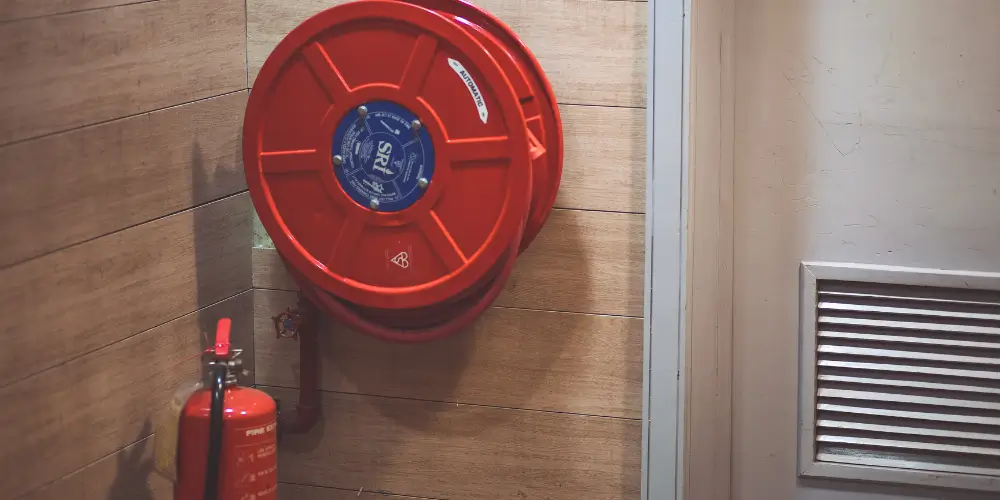
Fire extinguishers should normally be positioned in accessible locations along escape routes and near areas where fires are most likely to occur.
Common suitable locations include:
- Near building exits
- Near final exit doors
- Along escape routes
- Near areas containing fire hazards
- At access points to higher risk areas
- On suitable wall brackets or stands
The exact location depends on the premises and risks identified during the fire risk assessment.
For example, a commercial kitchen will require different extinguisher positioning compared with an office because the fire hazards are different.
Should Fire Extinguishers Be Located Near Fire Risks?
Yes, extinguishers should be provided near specific fire risks where appropriate.
The aim is to ensure that suitable equipment is available close to where a fire may start.
Examples include:
Kitchens
Commercial kitchens often contain risks involving cooking oils, electrical appliances and gas equipment.
Suitable extinguishers may include:
- Wet chemical extinguishers for cooking oil fires
- CO2 extinguishers for electrical equipment
- Fire blankets where appropriate
These should be positioned where staff can access them quickly but away from areas where a developing fire could prevent safe access.
Electrical Rooms
Electrical equipment areas may require CO2 extinguishers because they are suitable for certain electrical equipment fires.
Examples include:
- Server rooms
- Electrical cupboards
- Plant rooms
- Control rooms
The extinguisher should be located outside the immediate danger area so that it can be reached without approaching a potentially hazardous electrical fire.
Workshops and Industrial Areas
Workshops may contain risks from machinery, combustible materials, fuels or chemicals. Where fuels, solvents or other flammable liquids are present, understanding which fire extinguishers are suitable for flammable liquid fires can help businesses select appropriate firefighting equipment.
Extinguisher placement should consider:
- Machinery locations
- Storage areas
- Work processes
- Escape routes
A fire extinguisher should be close enough to provide an initial response but positioned where users can approach safely.
How Far Should Fire Extinguishers Be From Fire Risks?
The distance between fire extinguishers and potential fire risks depends on the type of premises and the risk assessment.
There is no single universal placement distance suitable for every building.
Factors considered include:
- Size of the building
- Layout
- Occupancy
- Fire hazards
- Travel distance
- Accessibility
The goal is to ensure that people can reach suitable firefighting equipment quickly without placing themselves in danger. For larger premises, additional extinguishers may be required to ensure reasonable coverage throughout the building.
Should Fire Extinguishers Be Mounted on Walls?
Fire extinguishers should generally be mounted on suitable brackets or stands rather than placed directly on the floor.
Mounting helps:
- Keep extinguishers visible
- Prevent accidental damage
- Reduce obstruction
- Improve accessibility
- Maintain a consistent location
The mounting height should allow people to easily remove the extinguisher when required.
Heavy extinguishers may need additional consideration to ensure they can be safely lifted and operated.
Where Should Fire Extinguishers Not Be Located?
Fire extinguishers should not be positioned where they are difficult to access or where using them would create unnecessary risk.
Avoid placing extinguishers:
- Behind doors
- Inside locked cupboards
- Behind furniture or equipment
- In areas likely to become inaccessible during a fire
- Where they block escape routes
- Near hazards that could prevent safe access
For example, placing an extinguisher directly next to a cooking appliance may mean someone has to approach a developing fire to reach it. A safer position may be nearby but away from immediate danger.
Fire Extinguisher Signs and Visibility Requirements
Fire extinguishers should be easy to identify.
Suitable signage helps occupants quickly locate equipment, especially in unfamiliar buildings.
Signs are particularly important in:
- Large buildings
- Warehouses
- Offices
- Public premises
- Areas with multiple rooms
The extinguisher should remain visible and not be hidden by decorations, storage items or temporary equipment.
Fire Extinguisher Locations in Different Buildings
The correct location varies depending on building use.
Offices
Office extinguishers are commonly positioned near:
- Corridors
- Stairways
- Exit points
- Printer or electrical equipment areas where appropriate
Typical risks include electrical equipment, paper storage and general office contents. Offices often contain ordinary combustible materials, making it useful to understand what Class A fire extinguishers are used for and how they protect against fires involving paper, furniture and other solid materials.
Shops and Retail Premises
Retail premises should consider:
- Customer areas
- Stock rooms
- Staff areas
- Electrical equipment locations
Extinguishers should be accessible without creating risks for customers or staff.
Flats and Residential Buildings
In residential blocks, extinguisher requirements depend on the building design, fire strategy and risk assessment.
Communal areas may require specific fire protection arrangements, while individual flats may have different requirements.
Warehouses
Warehouses often contain significant combustible storage.
Extinguisher placement should consider:
- Storage arrangements
- Forklift routes
- Machinery
- Loading areas
- Escape routes
How Does a Fire Risk Assessment Determine Extinguisher Locations?
A fire risk assessment evaluates the hazards within a building and determines appropriate fire precautions.
The assessment considers:
- What could cause a fire
- Who may be at risk
- Existing fire safety measures
- Suitable extinguisher types
- Locations where extinguishers are required
A competent assessor will consider whether occupants can safely access extinguishers and whether the locations provide effective coverage.
Fire extinguisher placement should always be based on actual risks rather than simply installing equipment in standard locations. Our guide explaining who is responsible for using a fire extinguisher also covers how fire risk assessments influence extinguisher selection, positioning and accessibility.
Can Fire Extinguishers Be Stored Outside?
Fire extinguishers installed outdoors require additional protection.
Exposure to weather conditions can cause:
- Corrosion
- Damage
- Reduced reliability
Where outdoor extinguishers are required, suitable weather protection should be provided.
Examples include:
- External cabinets
- Weatherproof covers
- Protected locations
How Often Should Fire Extinguisher Locations Be Checked?
The position of fire extinguishers should be checked regularly as part of routine fire safety inspections.
Checks should confirm:
- The extinguisher is still present
- Access is clear
- Signage remains visible
- No changes have affected suitability
- The extinguisher has not been moved
Changes to the building layout may require extinguisher locations to be reviewed.
What Happens If Fire Extinguishers Are Incorrectly Positioned?
Incorrect extinguisher placement can reduce the effectiveness of fire safety arrangements.
Problems may include:
- Delayed response to fire
- Incorrect extinguisher being used
- Equipment being inaccessible
- Increased risk to occupants
A fire extinguisher only provides protection when people can find and use it safely.
Frequently Asked Questions
Where is the best place to put a fire extinguisher?
The best location depends on the fire risks present, but extinguishers are commonly placed near exits, escape routes and areas with identified hazards.
Can fire extinguishers be kept on the floor?
Fire extinguishers should generally be mounted on suitable brackets or placed on stands to keep them visible and accessible.
Should every room have a fire extinguisher?
Not necessarily. The number and location of extinguishers depend on the building type, fire risks and fire risk assessment.
Where should kitchen fire extinguishers be located?
Kitchen extinguishers should be accessible near cooking areas but positioned where users do not need to approach a developing fire to reach them.
Can fire extinguishers be hidden in cupboards?
Fire extinguishers should not normally be hidden where they cannot be quickly identified and accessed.
Conclusion
Understanding where should fire extinguishers be located is essential for ensuring effective fire protection within any building. The correct placement should always be determined through a suitable fire risk assessment, taking into account the building layout, occupancy and potential fire risks. Regular checks, proper signage and professional maintenance ensure that extinguishers remain ready to provide protection when needed.