Fire detection and fire alarm systems provide early warning that protects lives, limits property damage, and supports code and insurance compliance. Initiating devices, such as smoke, heat, and flame detectors, sense abnormal conditions and report to a fire alarm control panel. The panel supervises wiring and power, identifies alarm locations, activates horns and strobes, and can trigger safety controls like door release or smoke control while notifying monitoring stations. Further details explain types, layouts, and upkeep.
Key Takeaways
- Fire detection provides early warning, protecting lives, reducing toxic exposure, and limiting property damage through faster evacuation and response.
- Fire alarm systems detect abnormal conditions, alert occupants with horns and strobes, and supervise wiring, devices, and power supplies for reliability.
- Common detectors include smoke, heat, and flame types; each suits different dangers and environments based on how fires develop.
- Photoelectric smoke detectors detect smouldering fires well, ionisation detectors respond faster to flaming fires, and heat detectors reduce false alarms in smoky or steamy areas.
- Conventional systems signal alarms by zone, while addressable systems identify the exact device, improving location accuracy, diagnostics, and maintenance.
Table of Contents
Why Fire Detection Matters (Safety, Property, Compliance)
Although fire often spreads faster than occupants expect, effective fire detection provides the early warning needed to protect lives, limit property damage, and support rapid emergency response. Early identification of smoke, heat, or flame can shorten evacuation time, reduce exposure to toxic gases, and improve outcomes for vulnerable occupants in homes, schools, and healthcare settings. For responders, prompt notification can guide quicker dispatch and safer tactics, especially when conditions deteriorate rapidly.
From a property perspective, faster recognition of a developing fire can reduce the growth period, helping contain damage to structures, equipment, and critical records. This can reduce downtime for businesses and limit secondary losses, such as water damage caused by suppression.
Fire detection also supports compliance with building codes, insurance requirements, and workplace safety obligations. Demonstrating adherence through properly selected, installed, and maintained detection measures, in line with British Standards (BS 5839), helps organisations manage liability, pass inspections, and maintain safe occupancy conditions.
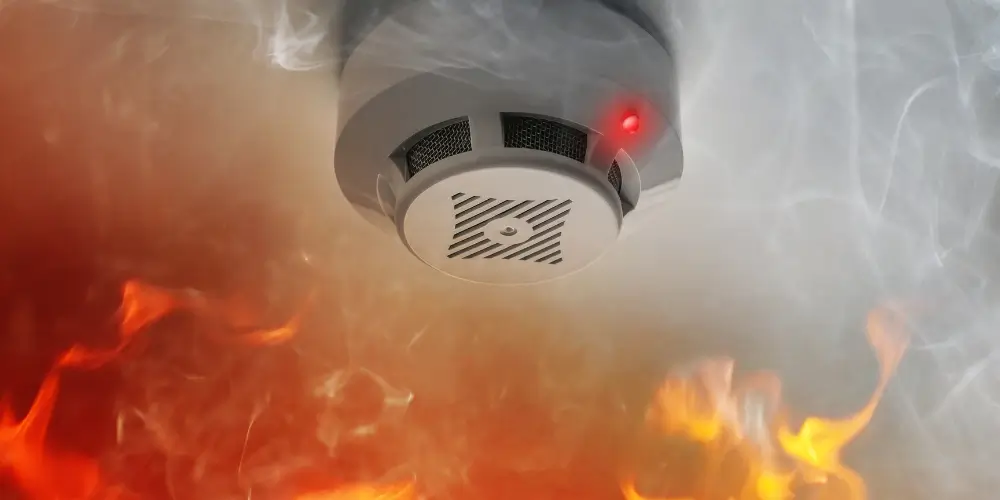
Fire Alarm System Functions: Detect, Alert, Monitor, Control
At its core, a fire alarm system serves as a coordinated chain of functions: detecting abnormal fire conditions, alerting occupants, monitoring system status, and controlling connected safety measures.
Detection begins with devices that sense signs of fire and send signals to the control panel, which interprets the inputs and applies programmed logic. Alerting translates that decision into action through audible and visual notification appliances, and, when configured, transmits events to supervising stations or on-site responders. Continuous monitoring checks system integrity by supervising power supplies, wiring paths, device connectivity, and communication links, reporting issues before protection is compromised.
Control functions then interface with building systems to limit harm and support evacuation, such as releasing magnetic door holders, shutting down air-handling equipment, recalling elevators, activating smoke control sequences, and starting suppression-related equipment where permitted. Together, these functions create timely awareness, coordinated building response, and verifiable readiness between emergencies.
Smoke vs Heat vs Flame Detection: Best-Use Scenarios
Choosing the right detection method is a key part of how the system performs its detect-and-respond function under real fire conditions. Smoke detectors typically provide the earliest warning in most occupied buildings because they sense combustion aerosols before temperatures rise considerably. Photoelectric smoke detection is often preferred for smouldering fires common in furnishings, while ionisation types can respond faster to fast-flaming particles, though nuisance alarms may be a concern in fire detection and fire alarm systems.
Heat detectors respond when the temperature exceeds a fixed point or rises rapidly. They suit areas where smoke or steam is expected, such as kitchens, garages, workshops, and dusty industrial spaces, because they are less prone to false alarms, but they usually activate later than smoke detection.
Flame detectors sense ultraviolet or infrared radiation from open flame. They are best where fires develop rapidly, and smoke may be minimal, or ventilation is high, such as aircraft hangars, fuel storage, turbine enclosures, and chemical processing areas.
Conventional vs Addressable Fire Alarm Systems: Key Differences
While both system types aim to detect fire conditions and trigger timely notification, conventional and addressable fire alarm systems differ fundamentally in how they connect devices, identify alarm locations, and scale across a facility.
A conventional system groups detectors and call points into zones wired on separate circuits. When a device activates, the control panel indicates the zone in alarm, narrowing the search but not pinpointing the exact device. This approach is straightforward, but expanding coverage often requires additional wiring and panel capacity.
An addressable system places multiple devices on a shared signalling loop, with each device assigned a unique address. The control panel can display the specific detector or module in alarm, improving location accuracy and event reporting.
Addressable designs also support more detailed diagnostics, such as identifying trouble conditions at a particular device and monitoring sensitivity status. Both types can operate notification appliances, but their identification and wiring architectures drive most practical differences.
Choosing a Fire Alarm System (Home vs Commercial Needs)
How should a fire alarm system be selected when the risks, occupancy, and regulatory expectations differ so widely between a single-family home and a commercial facility? Selection begins with a fire risk assessment: sleeping areas, cooking danger, attached garages, and egress complexity in homes versus higher occupant loads, varied ignition sources, and business continuity concerns in workplaces.
For residential settings, priorities typically include straightforward coverage, audible notification throughout bedrooms, ease of testing, and compatibility with local housing codes. For commercial properties, priorities expand to code-driven documentation, inspection and maintenance planning, clearer incident location information for responders, and integration with broader life-safety functions such as sprinkler monitoring, elevator recall, or fire doors where required.
The budget should be evaluated against the consequences of downtime, tenant density, and insurance expectations, not just the initial cost. The best choice aligns the risk profile, building layout, and jurisdictional requirements without overcomplicating operation.
Key Fire Alarm System Components (Detectors, Panel, NAC, Power)
A fire alarm system that matches the danger profile and code requirements still depends on the same core building blocks working together: initiating devices (detectors and manual pull stations), a control panel that interprets signals and manages logic, notification appliance circuits (NAC) that drive horns, strobes, and speakers, and a reliable power arrangement that maintains operation during outages.
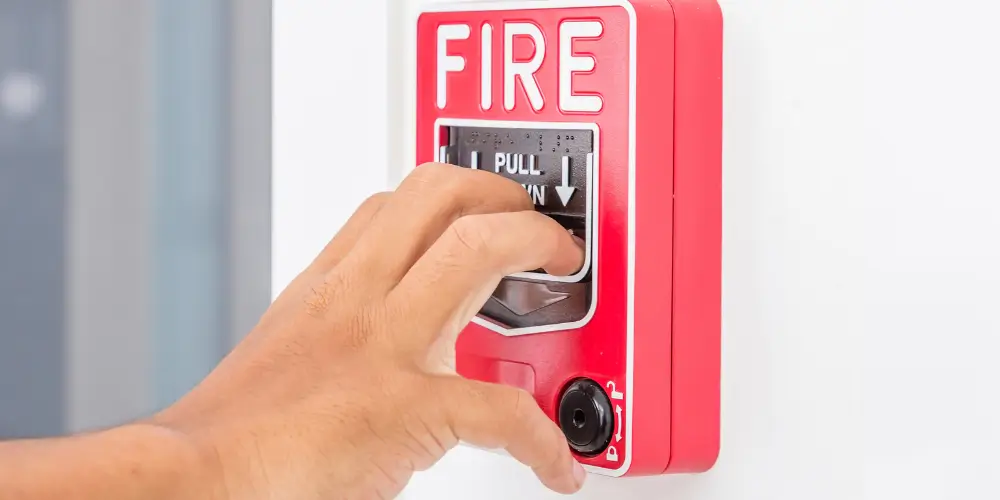
Initiating devices provide the first indication of trouble. Smoke detectors sense combustion aerosols, heat detectors respond to abnormal temperature rise, and speciality detectors (beam, aspirating, flame) cover unique risks. Manual pull stations allow occupants to trigger an alarm when fire is observed in fire detection and fire alarm systems.
The control panel serves as the system’s central hardware interface, supervising wiring, devices, and circuits for faults such as opens, shorts, or ground issues. NAC wiring distributes energy to audible and visible appliances and is sized for the required current, voltage drop, and circuit class. Power includes a primary supply and standby batteries sized for supervisory and alarm durations.
How the Fire Alarm Control Panel Processes and Signals Alarms
Upon receiving an input from an initiating device, the fire alarm control panel classifies the event (alarm, supervisory, or trouble), applies programmed cause-and-effect logic, and verifies circuit integrity. In conventional systems, it interprets zone states; in addressable systems,s it identifies the specific device and its condition. The panel correlates inputs with programmed priorities, optional time delays, and pre-alarm thresholds to reduce unwanted evacuations while still meeting life-safety intent.
When an alarm is confirmed, the panel energises notification appliance circuits to drive horns, strobes, speakers, or voice messages in the required pattern and sequence. It can also activate relays for functions such as elevator recall, smoke control, door release, and sprinkler monitoring interfaces. Simultaneously, it logs the event, illuminates indicators, and displays location text to guide response. If connected to a supervising station, it transmits coded signals over the configured communication path for dispatch.
Fire Alarm Testing and Maintenance for Reliability
| Focus area | What to verify |
| Initiating devices | Smoke/heat response, pull station activation, and proper address labels |
| Notification | Horn/strobe output, synchronisation, candela settings, sound levels |
| Power and batteries | Charger output, battery load test, backup duration |
| Communications | Signal delivery to central station, path integrity, cellular/IP supervision |
Clear documentation of results, deficiencies, and corrective actions supports code compliance and trend tracking. Reliability improves when testing frequency matches risk, environment, and manufacturer guidance.
Frequently Asked Questions
How Much Does a Fire Alarm System Typically Cost to Install and Maintain?
A fire alarm system typically costs $1,000–$10,000 to install, depending on building size and code requirements. Ongoing maintenance often runs $200–$1,000 yearly, plus monitoring fees of $10–$50 monthly.
Can Fire Alarm Systems Integrate With Smart Home or Building Management Platforms?
Yes, many fire alarm systems integrate with smart home hubs or building management systems via BACnet, Modbus, or proprietary gateways. Integration can enable centralised monitoring, notifications, and automation, but typically requires compatible panels, certification, and commissioning.
What Causes Nuisance Alarms, and How Can They Be Reduced?
Nuisance alarms are caused by dust, steam, cooking fumes, insects, poor detector placement, ageing sensors, or electrical noise. They can be reduced through proper siting, regular cleaning, sensitivity settings, firmware updates, and maintenance.
How Long Do Smoke and Heat Detectors Last Before Needing Replacement?
Smoke detectors typically require replacement after about 10 years, while heat detectors often last 10–15 years, depending on manufacturer guidance and conditions. Regular testing, cleaning, and timely battery changes help maintain reliability until scheduled replacement.
Do Fire Alarm Systems Work During Power or Internet Outages?
Most fire alarm systems still work during power outages because they include backup batteries; internet outages may stop app alerts or remote monitoring. Hardwired and monitored systems vary, so checking documentation and testing backup power is advised.
Conclusion
Fire detection and fire alarm systems remain essential for protecting lives, limiting property loss, and meeting regulatory requirements. By combining appropriate smoke, heat, or flame detection with either conventional or addressable architectures, these systems can be matched to residential and commercial risk profiles. Core components, detectors, control panels, notification appliances, and reliable power work together to detect threats, signal occupants, and interface with building controls. Regular testing and maintenance ultimately determine long-term performance and trust.