Testing a home fire alarm starts with pressing the test button monthly to confirm a loud, clear sound. The homeowner should check that every alarm is powered, audible in all rooms, and that interlinked units trigger together. Batteries must be replaced as needed, and alarms older than 8–10 years should be fully replaced. Recording test dates helps track reliability. Additional steps, tools, and troubleshooting tips can make this safety check far more effective.
Key Takeaways
- Notify everyone at home, then press and hold each alarm’s test button monthly until it sounds loudly.
- Confirm alarms have power (battery or hardwired), replace weak batteries, and use only fresh, correct-type replacements.
- Walk through the home during testing to verify the alarm is clearly audible in every room, especially bedrooms.
- Use UL-listed smoke detector test aerosol to safely simulate smoke, and troubleshoot any unit that fails to sound or interlink correctly.
- Check the manufacture date on each alarm and replace units that are 8–10 years old, damaged, discoloured, or frequently malfunctioning.
Table of Contents
How to Test a Fire Alarm: Quick Guide
A quick fire alarm test confirms that the system can detect smoke or heat and alert occupants as intended. This quick guide outlines a straightforward routine that maintains safety without feeling restrictive. Regular testing guarantees people can move, work, and live freely, knowing early warnings will function if needed.
First, they identify every alarm in the dwelling, noting locations and interconnections. They review the manufacturer’s instructions so each model is checked according to its design. Next, they schedule consistent monthly tests, choosing a fixed day to keep the habit simple and predictable.
During testing, one person presses the test button while another listens throughout the home to verify all units sound clearly and promptly. Any device that fails, chirps irregularly, or sounds weak is logged for immediate attention. Finally, they record the test date and observations, preserving a basic track record that supports long‑term reliability and uninterrupted independence.

Tools and Safety Gear for Testing Your Alarm
Once a simple testing routine is in place, attention turns to having the right tools and protective gear on hand. A small, organised kit lets a homeowner test alarms quickly and get back to living on their own terms. Essential basics include a sturdy step ladder for safe reach, a flashlight for low‑light corners, and fresh batteries stored in a dry, accessible spot.
A can of UL‑listed smoke detector test aerosol offers a controlled way to simulate smoke without lighting anything. For alarms with test buttons only, a non‑conductive stick or pencil helps press hard‑to‑reach buttons without strain.
Safety gear keeps the process low‑risk and hassle‑free. Clear safety glasses protect eyes from dust, while a simple dust mask limits inhalation of debris from vents. Light work gloves guard against minor scrapes and help maintain grip on the ladder, allowing the user to move confidently and independently during each test.
Figure Out What Kind of Fire Alarm You Have
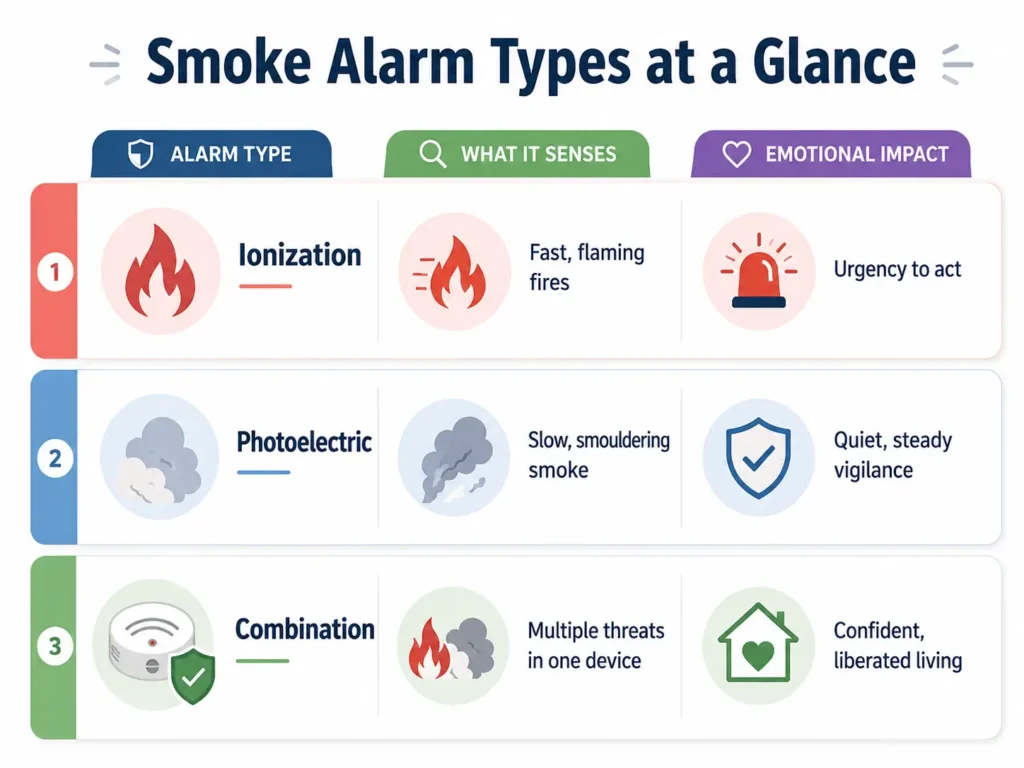
Before testing can begin, it helps to know exactly what type of fire alarm is on the ceiling or wall. A homeowner who understands the device above their head gains more control over how it protects their space. Most residential alarms fall into three main categories: ionisation, photoelectric, and combination units.
Ionisation alarms usually carry labels mentioning “radioactive material” or “americium-241.” Photoelectric models often say “photoelectric” near the battery compartment or on the back plate. Combination alarms may be marked “dual sensor,” “smoke + CO,” or “2-in-1.” Reading the fine print, model number, and manufacturing date lets someone look up the manual online, even if the original booklet is long gone.
Why Regular Fire Alarm Testing Really Matters
Knowing what kind of alarm is on the wall is only the starting point; consistent testing is what confirms that the device will work when it is needed most.
For anyone who values independence, a functioning fire alarm is a quiet guardian of personal freedom. It buys time to escape, to protect loved ones, and to safeguard hard‑won possessions.
Regular testing exposes hidden problems: dead batteries, dust‑clogged sensors, faulty wiring, or a disabled unit someone forgot about. Without testing, an alarm may look fine yet fail the only time it is called to act. That failure can turn a small, containable incident into a life‑altering catastrophe. Routine checks also help people stay familiar with how each alarm sounds and behaves, preventing confusion during an emergency. In short, regular testing keeps control in the homeowner’s hands instead of leaving safety to chance.
How Often Should You Test Your Fire Alarm?
Although every household is different, most residential fire alarms should be tested at least once a month using the built‑in test button. This schedule respects personal independence while still aligning with common safety standards. Monthly checks help ensure that batteries, internal circuitry, and sounders are ready to respond when needed, rather than failing silently.
In homes with greater risk, such as properties with older wiring, wood‑burning stoves, or frequent candle or incense use,e weekly tests may be more appropriate. After any renovation, electrical work, or noticeable power fluctuation, an additional test can confirm everything still functions correctly. Landlords and property managers are generally expected to follow, or exceed, local codes, often testing alarms in common areas more frequently.
Regardless of regulations, the ultimate goal is to safeguard the freedom to live, sleep, and host guests without being blindsided by an undetected fire or a silent, dead alarm.
Step-By-Step Fire Alarm Test Instructions
Monthly or weekly checks only help if each test is done correctly, step by step. First, the resident informs everyone in the home that an alarm test is about to happen, so no one panics or calls emergency services unnecessarily. Windows and doors remain in their usual positions, mirroring real-life conditions.
Next, power is confirmed: the unit’s indicator light should be steady or blinking as the manufacturer specifies. The person then presses and holds the test button until the alarm sounds. A strong, continuous tone signals that internal electronics and the sounder are working.
They walk through the home, confirming the alarm can be clearly heard in bedrooms, hallways, and living areas. If it’s faint in any room, repositioning or adding alarms is considered. After the test, they release the button, verify the alarm’s light returns to normal, and note the test date for future reference.
Testing Interlinked and Smart Fire Alarms
When alarms are wirelessly interlinked or connected to a smart home system, testing must verify not only that each device sounds, but that they communicate correctly across the network.
The user begins by checking the app or control panel to see that every alarm is online, powered, and showing a healthy status. Next, the test button on one physical unit is pressed and held until it emits a sound.
As this alarm activates, every interconnected unit should trigger in rapid succession. The app should display which alarm initiated the test and log the event. If available, push notifications are observed on phones or watches to verify that remote alerts function correctly. Testing continues by repeating the process in different rooms to confirm coverage and naming accuracy (e.g., “Hallway” vs “Bedroom”). Finally, the user reviews any smart features, such as integration with lights or voice assistants, to verify they respond reliably during tests.
What to Do If Your Fire Alarm Test Fails
If any part of a fire alarm test fails, whether a single unit stays silent, an interlinked alarm doesn’t trigger, or a smart alert never arrives, it signals a problem that must be addressed immediately, not postponed.
First, the power source should be checked: confirm batteries are fresh and correctly seated, or verify mains power and backup supply. The test should then be repeated. If failure continues, the user should examine placement and obstruction: vents blocked, paint over sensors, or dust-filled chambers can all cripple performance.
A gentle vacuuming around vents or followingthe manufacturer’s cleaning guidance can restore function, then another test should confirm reliability. If the alarm still underperforms, the system should be isolated. Each device is tested individually to pinpoint where the breakdown occurs between the unit, wiring, or wireless link.
At this stage, the manufacturer’s instructions and customer support become essential tools for resolving deeper technical issues.
When to Replace Your Fire Alarm (Not Just the Battery)
Even a perfectly functioning fire alarm has a finite service life, and there comes a point when replacing the entire unit, not just the battery, is essential for safety.
Most manufacturers recommend full replacement every 8–10 years, because sensors degrade over time, even if the alarm still chirps on command. The production date, stamped on the back, gives the clearest answer: if it’s older than a decade, it has overstayed. Replacement is also necessary when the unit fails a test despite fresh batteries, shows visible damage, or sounds nuisance alarms without cause.
Yellowing, cracks, or accumulated grime around vents signal that smoke may no longer reach the sensor effectively. For interconnected or smart alarms, frequent glitches, dropped connections, or inconsistent alerts indicateageingg electronics. Proactively installing new alarms preserves the owner’s autonomy to respond early to danger, rather than leaving that choice to failing hardware.
Frequently Asked Questions
Can Pets Be Affected or Stressed by Frequent Fire Alarm Testing Noise?
Yes, pets can be affected and stressed by frequent fire alarm testing noise. Their sensitive hearing amplifies the sound, so guardians should minimise tests, offer safe, quiet spaces, and gradually desensitise them to preserve calm and autonomy.
How Do Fire Alarms Accommodate People With Hearing Impairments?
Fire alarms accommodate people with hearing impairments through strobe lights, bed shakers, vibrating pagers, and smart alerts synced to phones or wearables, ensuring independent awareness of danger and supporting autonomous evacuation without relying on others’ hearing or attention.
Can Cooking Fumes or Steam Damage the Fire Alarm Over Time?
Yes, persistent cooking fumes and steam can degrade alarms, clog sensors, and trigger false alerts. Over time, this wear may dull responsiveness. Placing alarms away from stovetops and allowing them to ventilate freely helps preserve accuracy and extend device life.
How Should Renters Coordinate Fire Alarm Testing With Their Landlords?
Renters should notify landlords in writing, propose test times, and request access or guidance in accordance with the lease and local codes. They document responses, avoid disabling devices, and escalate unresolved safety concerns to building management or relevant housing authorities.
Are There Tax Credits or Insurance Discounts for Maintaining Modern Fire Alarms?
Yes. Many governments offer tax credits or rebates for code-compliant, interconnected, or smart alarms, and insurers often offer premium discounts. Eligibility and amounts vary, so individuals must document installations, request updated quotes, and keep receipts and compliance certificates.
Conclusion
Regular testing keeps fire alarms reliable when they are needed most. By using the right tools, following simple step‑by‑step checks, and paying attention to different alarm types, especially interlinked and smart systems, homeowners greatly reduce fire risk. Failed tests should never be ignored; prompt troubleshooting or replacement is essential. When alarms are tested monthly and replaced at the recommended intervals, they remain a powerful, low‑cost safeguard for every household.