
Understanding fire alarm regulations for commercial buildings in the UK is essential for employers, business owners, landlords and responsible persons who have a duty to protect occupants from fire risks. Fire alarm systems provide early warning of fire, allowing people to evacuate safely and helping reduce the potential impact of a fire incident.
In the UK, commercial fire alarm requirements are mainly based on the findings of a fire risk assessment and the recommendations provided in BS 5839-1, which covers fire detection and fire alarm systems in non domestic premises. This standard provides guidance on the design, installation, commissioning, testing and maintenance of fire alarm systems.
Fire alarm regulations do not require every commercial building to have the same type of system. The level of protection depends on factors such as building size, occupancy, activities carried out, fire hazards, escape routes and the number of people at risk. The aim is to ensure that the fire alarm system is suitable for the specific risks within the premises.
Key Takeaways
- Commercial buildings in the UK must have an appropriate fire detection and warning system based on their fire risk assessment.
- Fire alarm systems in non domestic premises are generally designed in accordance with BS 5839-1.
- The correct fire alarm category depends on the building use, occupancy, risks and required level of protection.
- Fire alarms must be regularly tested, serviced and maintained to remain effective.
- The responsible person has a duty to ensure fire safety arrangements are properly managed.
Table of Contents

What Are the Legal Requirements for Fire Alarms in Commercial Buildings?
The main legal requirement for commercial fire safety in England and Wales comes from the Regulatory Reform (Fire Safety) Order 2005.
Under this legislation, the responsible person must ensure that suitable fire precautions are in place to protect relevant persons. This includes providing appropriate arrangements for detecting and warning people about fire where necessary.
The responsible person may be:
- Business owner
- Employer
- Building owner
- Landlord
- Facilities manager
- Person who controls the premises
The law does not specify one universal fire alarm system for all businesses. Instead, the required level of protection must be determined through a suitable and sufficient fire risk assessment.
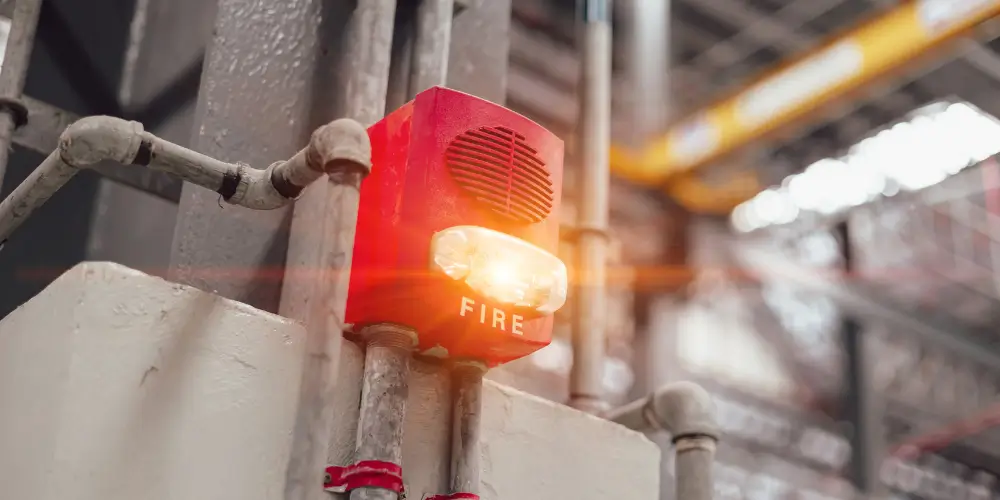
Is a Fire Alarm Required in a Commercial Building?
Most commercial premises require some form of fire detection and warning arrangement.
The type of system required depends on the circumstances of the building. A small low risk premises may require a simpler arrangement, while larger or higher risk buildings may require a fully automatic fire detection system.
Examples of premises where fire alarm systems are commonly required include:
- Offices
- Shops
- Warehouses
- Factories
- Schools
- Hotels
- Healthcare buildings
- Public buildings
The fire risk assessment should identify the appropriate level of fire detection required.
What Standard Covers Commercial Fire Alarm Systems?
The main standard for commercial fire alarm systems is BS 5839-1: Fire detection and fire alarm systems for buildings. Code of practice for design, installation, commissioning and maintenance of systems in non domestic premises.
BS 5839-1 provides recommendations relating to:
- Fire alarm system design
- Detector selection
- Detector positioning
- Alarm sounders
- Manual call points
- Power supplies
- Commissioning
- Testing
- Maintenance
Although BS 5839-1 is a code of practice rather than legislation itself, it is widely recognised as the benchmark for designing and maintaining suitable commercial fire alarm systems.
Fire Alarm Categories for Commercial Buildings
Commercial fire alarm systems are commonly divided into different categories depending on the level of protection required.
Category M Fire Alarm System
A Category M system relies on manual operation.
It includes manual call points that allow people to raise the alarm when they discover a fire.
Category M systems may be suitable where automatic detection is not considered necessary, although many commercial buildings require additional automatic detection depending on risk.
Category L Fire Alarm Systems
Category L systems are designed primarily for life protection.
They provide automatic detection to warn occupants and support safe evacuation.
The main L categories include:
L1 Fire Alarm System
An L1 system provides automatic detection throughout the building.
It offers the highest level of life protection and is commonly considered for buildings where early detection is critical.
Examples may include:
- Care homes
- Hospitals
- Buildings with vulnerable occupants
L2 Fire Alarm System
An L2 system provides detection in escape routes and additional higher risk areas.
These areas may include locations where fire could develop and affect escape routes.
L3 Fire Alarm System
An L3 system provides detection in escape routes and rooms opening onto those routes.
The purpose is to provide warning before smoke or fire prevents safe evacuation.
For a detailed comparison of automatic detection coverage, explore our guide to L1, L2 and L3 fire alarm systems and understand how each category provides different levels of protection.
Category P Fire Alarm Systems
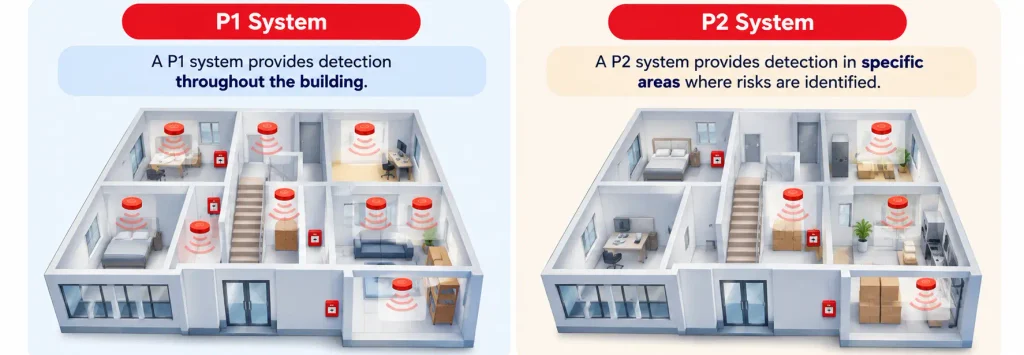
Category P systems are designed mainly for property protection.
Under BS 5839-1, Category P fire alarm systems are divided into two classifications: P1 and P2. Both provide automatic fire detection, but they differ in the extent of coverage required.
How Is the Correct Fire Alarm Category Selected?
The correct fire alarm category should be based on a fire risk assessment.
Factors considered include:
- Building size
- Number of occupants
- Occupant vulnerability
- Building layout
- Sleeping accommodation
- Fire hazards
- Escape routes
- Business activities
For example, a warehouse storing combustible materials may require different protection compared with a small office.
The objective is not simply to install the highest category system but to provide protection appropriate to the identified risks.
Fire Alarm Installation Requirements
A commercial fire alarm installation should be designed and installed by competent professionals. To understand the equipment involved, read our guide to fire detection and fire alarm systems, covering detectors, control panels, alarm sounders and backup power supplies.
Important installation considerations include:
Detector Positioning
Detectors must be positioned correctly to provide effective coverage.
Poor detector placement can result in delayed detection or unwanted false alarms.
Manual Call Points
Manual call points should be positioned where people can easily access them during an emergency.
They are commonly located near exits and escape routes.
Alarm Sounders
The alarm must be loud enough to alert occupants throughout the premises.
Consideration should be given to:
- Background noise levels
- Building layout
- Occupants who may require additional warning methods
Power Supply
Fire alarm systems require reliable power supplies, including standby batteries to maintain operation during mains failure.
Fire Alarm Testing Requirements
Regular testing is essential to ensure that fire alarm systems remain operational.
Routine checks should include:
- Weekly alarm testing
- Regular inspection of system condition
- Professional servicing
- Testing of detectors and alarm devices
BS 5839-1 recommends regular testing and maintenance arrangements to ensure systems continue operating effectively.
All tests and maintenance activities should be recorded in the fire alarm logbook.
How Often Should Commercial Fire Alarms Be Serviced?
Commercial fire alarm systems should be serviced regularly by a competent person.
Routine servicing typically includes:
- Inspection of control panels
- Testing detectors
- Checking sounders
- Inspecting batteries
- Reviewing fault history
- Confirming system operation
The frequency of servicing depends on the system, building type and relevant maintenance requirements.
A neglected fire alarm system may fail when it is needed most.
Fire Alarm Maintenance Responsibilities
The responsible person must ensure the fire alarm system remains suitable and operational.
Maintenance responsibilities include:
- Arranging testing
- Keeping records
- Repairing faults
- Ensuring staff understand alarm procedures
- Reviewing fire safety arrangements
A fire alarm system should never be isolated or disabled without suitable precautions.
Common Fire Alarm Compliance Problems in Commercial Buildings
Common issues identified during inspections include:
- Missing maintenance records
- Fault warnings being ignored
- Damaged detectors
- Blocked manual call points
- Poor audibility
- Incorrect detector coverage
- Expired batteries
- Lack of staff awareness
Regular inspections help identify these issues before they affect fire safety.

Fire Alarm Certification and Documentation
After installation, commissioning and maintenance, suitable documentation should be retained.
Records may include:
- Fire alarm design certificate
- Installation certificate
- Commissioning certificate
- Service reports
- Testing records
- Fault records
Maintaining documentation helps demonstrate that the system is being properly managed.
Frequently Asked Questions
Is a fire alarm legally required in commercial buildings?
Commercial premises must have suitable fire detection and warning arrangements where required by the fire risk assessment.
What standard covers commercial fire alarm systems in the UK?
Commercial fire alarm systems are generally designed and maintained in accordance with BS 5839-1.
Who is responsible for fire alarm compliance?
The responsible person, such as an employer, owner or person controlling the premises, is responsible for ensuring suitable fire safety arrangements are maintained.
What fire alarm category does a commercial building need?
The required category depends on the fire risk assessment, building use, occupancy and level of protection required.
How often should commercial fire alarms be tested?
Commercial fire alarms should be tested regularly, including routine user checks and professional servicing according to the system requirements.
Conclusion
Understanding fire alarm regulations for commercial buildings in the UK helps businesses meet their legal responsibilities and maintain effective fire safety arrangements. Commercial fire alarm systems should be designed according to the risks identified within the premises, with BS 5839-1 providing recognised guidance for design, installation, commissioning and maintenance. The correct fire alarm category depends on the building type, occupancy and hazards present. Regular testing, servicing and effective fire safety management are essential to ensure that systems provide reliable warning during an emergency.