
Fire protection is not based on one single safety measure. Effective fire safety relies on a structured approach that combines prevention, protection and emergency response measures to reduce the likelihood of a fire occurring and limit its consequences if one develops. This structured approach is known as the hierarchy of fire protection.
The hierarchy of fire protection refers to the order in which fire safety measures should be considered, starting with preventing fires from happening, followed by methods that contain fire spread, detect fire quickly and support safe evacuation. Understanding the hierarchy of fire protection helps building owners, landlords, employers and responsible persons develop safer environments by ensuring that fire risks are managed through a combination of preventative and protective measures.
Key Takeaways
- The hierarchy of fire protection is a layered approach used to prevent fires, control fire spread and protect occupants.
- Fire prevention is the first priority and focuses on reducing the likelihood of ignition.
- Passive fire protection helps contain fire and smoke through measures such as fire doors, compartmentation and fire resistant construction.
- Active fire protection includes systems such as fire alarms, emergency lighting, fire extinguishers and suppression systems.
- Fire safety management ensures that protection measures remain effective through maintenance, testing and training.
- A suitable fire risk assessment helps determine the correct level of fire protection required for a building.
Table of Contents

What Is the Hierarchy of Fire Protection?
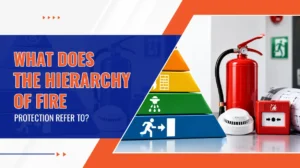
The hierarchy of fire protection is a structured method of managing fire risks by applying different levels of control. It recognises that fire safety involves more than installing equipment. Effective protection requires preventing fires where possible, limiting their spread and ensuring people can respond safely during an emergency.
The hierarchy normally follows four main stages:
- Fire prevention
- Passive fire protection
- Active fire protection
- Fire safety management
Each stage supports the next. Prevention reduces the chance of a fire starting, passive protection slows the spread of fire and smoke, active systems provide detection and response, while fire safety management ensures all measures remain effective.
This layered approach creates a stronger fire safety strategy because if one measure fails, other controls provide additional protection.
Level One: Fire Prevention
Fire prevention is the first stage in the hierarchy because preventing a fire from starting is the most effective way of reducing risk.
Fire prevention focuses on identifying potential hazards and removing or controlling them before they result in ignition. Many fires occur because of poor maintenance, unsafe practices, electrical faults or inadequate storage of combustible materials.
To reduce potential ignition hazards, follow our fire prevention checklist for identifying and controlling common fire risks, including electrical faults, unsafe heating practices and combustible materials.
Common fire prevention measures include:
- Regular electrical inspections and maintenance
- Safe storage of combustible materials
- Good housekeeping practices
- Controlling sources of ignition
- Safe use of heating equipment
- Managing hot work activities
- Proper storage of flammable substances
A fire risk assessment plays an important role in fire prevention by identifying hazards and determining suitable control measures.
For example, replacing damaged electrical equipment, keeping escape routes clear and removing unnecessary combustible storage can significantly reduce the likelihood of a fire developing.
Level Two: Passive Fire Protection
Passive fire protection refers to measures built into the structure of a building that help prevent the spread of fire and smoke.
Unlike active systems, passive fire protection does not require activation. It works continuously by creating barriers that contain fire within specific areas for a set period.
Examples of passive fire protection include:
- Fire doors
- Fire resistant walls and floors
- Compartmentation
- Fire stopping
- Fire resistant glazing
- Protected escape routes
Fire compartmentation divides a building into separate areas to slow fire progression. This gives occupants more time to evacuate and allows emergency services to control the situation.
Fire doors are an important part of passive protection. When correctly installed and maintained, they help prevent smoke and flames from spreading through corridors, stairways and other escape routes.
For further guidance on fire-resistant construction, explore our guide to fire door thickness, fire resistance ratings and construction requirements to understand how complete fire door assemblies help limit the spread of fire and smoke.
Level Three: Active Fire Protection
Active fire protection includes systems that detect, control or suppress fires after they have started.
These systems usually require some form of activation, either automatically or manually.
Examples of active fire protection include:
- Fire alarm systems
- Smoke detectors
- Heat detectors
- Emergency lighting
- Fire extinguishers
- Sprinkler systems
- Fire suppression systems
Fire alarms provide early warning, allowing occupants to evacuate before fire conditions become dangerous. To understand how automatic detection supports active fire protection, read our guide to fire detection and fire alarm systems, covering smoke detectors, heat detectors, control panels and alarm warning devices.
Fire extinguishers provide a first response option for small fires, but the correct extinguisher must always be selected based on the type of fire involved.
Suppression systems such as sprinklers can help control fire growth by releasing water or another extinguishing agent when required.
Active fire protection systems must be regularly tested and maintained to ensure they operate correctly during an emergency.
Level Four: Fire Safety Management
Fire safety management is the ongoing process of maintaining fire protection arrangements and ensuring they remain effective.
Even well designed fire protection systems can fail if they are not properly managed and maintained.
Fire safety management includes:
- Regular fire risk assessments
- Staff fire safety training
- Emergency evacuation procedures
- Fire alarm testing
- Fire door inspections
- Maintenance records
- Fire drills
- Reviewing changes to the building
The responsible person under the Regulatory Reform (Fire Safety) Order 2005 has a duty to ensure suitable fire safety arrangements are maintained within relevant premises.
Good management ensures that fire protection measures continue working throughout the life of the building. For practical guidance on managing emergency arrangements, explore our article on fire procedures in the workplace, including staff training, evacuation planning, fire drills and ongoing safety responsibilities.
How Do Passive and Active Fire Protection Work Together?
Passive and active fire protection are designed to work together rather than operate separately.
Passive protection helps slow the movement of fire and smoke, while active systems detect and respond to fire conditions.
For example:
A fire starts in a room.
A smoke detector activates the fire alarm.
The alarm warns occupants to evacuate.
Fire doors and compartment walls help prevent fire spread.
Emergency lighting supports safe movement through escape routes. Maintained and non-maintained emergency lighting explains how emergency lighting supports safe evacuation alongside fire alarms and protected escape routes.
Each layer contributes to reducing risk and protecting people.

The Role of Fire Risk Assessment in Fire Protection
A fire risk assessment is the foundation of effective fire protection planning.
It identifies:
- Fire hazards
- People at risk
- Existing control measures
- Areas requiring improvement
- Emergency arrangements
The assessment helps determine which fire protection measures are necessary for a particular building.
A small office, a care home, a warehouse and a high rise residential building will all have different fire risks and therefore require different levels of protection.
Fire protection should always be proportionate to the hazards and circumstances of the premises. Understanding the different types of fire risk assessments and their suitability for UK properties can help property owners identify appropriate assessment methods and fire protection measures.
Examples of Fire Protection Measures
Fire protection requirements vary depending on the type of building and its use.
Residential Buildings
Common measures include:
- Smoke alarms
- Fire doors
- Emergency lighting
- Escape route protection
- Fire risk assessments
Commercial Buildings
Common measures include:
- Fire alarm systems
- Fire extinguishers
- Emergency lighting
- Staff training
- Electrical safety controls
Industrial Premises
Common measures include:
- Fire detection systems
- Suppression systems
- Fire compartmentation
- Hazard control procedures
- Specialist fire protection equipment
The correct combination of measures depends on the risks identified during the fire risk assessment.
Why Are Multiple Layers of Fire Protection Needed?
The hierarchy of fire protection uses multiple layers because individual safety measures can fail.
For example:
- A fire may start despite prevention controls.
- A fire door may become damaged without proper maintenance.
- A detector may fail if it is not tested regularly.
By using several levels of protection, the impact of a failure in one area can be reduced.
This layered approach improves resilience and provides additional protection for occupants and buildings.
Standards and Regulations Related to Fire Protection
Fire protection measures in the UK are supported by various regulations and standards, including:
- Regulatory Reform (Fire Safety) Order 2005
- BS 5839 for fire detection and fire alarm systems
- BS 5266 for emergency lighting
- BS 8214 for timber fire door assemblies
- BS 9999 for fire safety management
These standards provide guidance on designing, installing, inspecting and maintaining fire safety systems.
Frequently Asked Questions
What does the hierarchy of fire protection refer to?
The hierarchy of fire protection refers to a structured approach that uses prevention, protection and emergency response measures to reduce fire risks and protect people.
What are the four stages of fire protection?
The four main stages are fire prevention, passive fire protection, active fire protection and fire safety management.
Why is fire prevention the first stage?
Fire prevention reduces the chance of a fire starting by controlling hazards and removing potential sources of ignition.
What is passive fire protection?
Passive fire protection includes building features such as fire doors, compartmentation and fire resistant materials that help slow fire and smoke spread.
What is active fire protection?
Active fire protection includes systems such as fire alarms, extinguishers, sprinklers and suppression systems that detect or respond to fire.
Conclusion
The hierarchy of fire protection refers to the structured approach used to manage fire risks through prevention, passive protection, active systems and ongoing fire safety management. A successful fire safety strategy does not depend on one measure alone. Instead, multiple layers of protection work together to prevent fires, limit fire spread and protect occupants. By understanding and applying the hierarchy of fire protection, responsible persons can ensure that buildings are better prepared and that fire safety arrangements remain effective.