
The duty to manage asbestos was introduced under the Control of Asbestos at Work Regulations 2002 and came into force on 21 May 2004. It required responsible persons to identify and manage asbestos risks in certain premises.
Although asbestos was banned in the UK by 1999, it remains present in many older buildings. Today, Regulation 4 of the Control of Asbestos Regulations 2012 governs asbestos management duties in non-domestic premises across Great Britain.
Key Takeaways
- The UK duty to manage asbestos was introduced under the Control of Asbestos at Work Regulations 2002.
- The duty came into force on 21 May 2004.
- The UK completed its general ban on the importation, supply and use of asbestos in 1999.
- The Control of Asbestos Regulations 2006 consolidated earlier asbestos legislation.
- Regulation 4 of the Control of Asbestos Regulations 2012 now governs the duty to manage asbestos in Great Britain.
- The duty applies to non-domestic premises and common parts of certain residential buildings.
- Dutyholders must identify or presume asbestos, assess risks, maintain records and implement an asbestos management plan.
- Asbestos management plans must be reviewed at least every 12 months, or sooner when circumstances require.
Table of Contents
The Origins of Asbestos Use in Construction
Asbestos is a naturally occurring group of fibrous minerals historically valued for its resistance to heat, fire and chemical damage. These properties made it attractive for use in construction, manufacturing and industrial equipment.
Commercial use of asbestos in the UK expanded during the late nineteenth century as industrialisation increased demand for affordable insulation and fire-resistant materials.
Its use became particularly widespread during the twentieth century, especially in buildings constructed or refurbished between the 1950s and 1980s. Asbestos-containing materials were incorporated into residential properties, schools, factories, offices, warehouses and other commercial premises.
Common applications included pipe insulation, asbestos insulating board, sprayed fire protection coatings, textured coatings, floor tiles, roofing sheets and cement products.
Although asbestos offered practical benefits, widespread installation created long-term health risks that were not adequately controlled during its early use.
Buildings constructed or refurbished before 2000 may still contain asbestos, making identification and safe management essential before maintenance, refurbishment or demolition work.
Early Awareness: Health Risks of Asbestos Exposure
Evidence linking asbestos exposure to serious health conditions developed throughout the twentieth century.
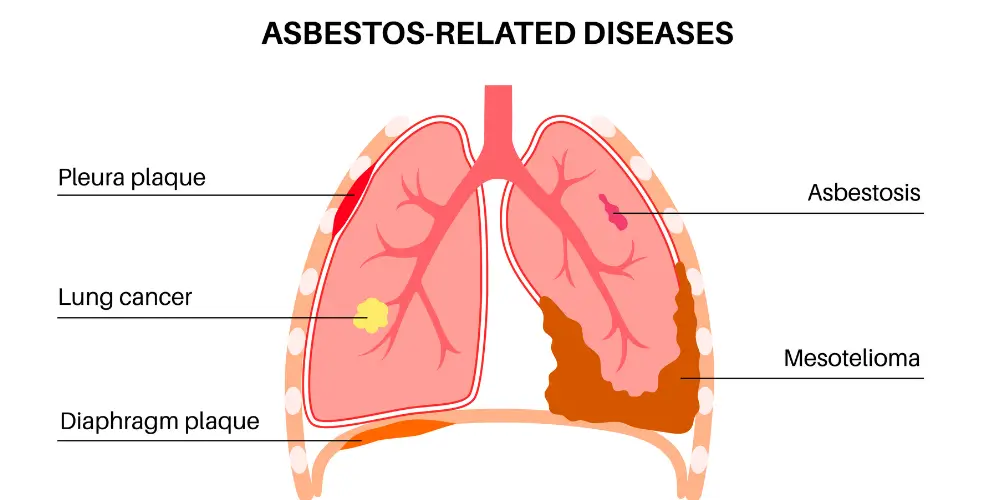
Medical research established associations between inhaled asbestos fibres and diseases including asbestosis, lung cancer and mesothelioma.
Asbestos becomes particularly hazardous when materials are damaged, disturbed or deteriorate, releasing microscopic fibres into the air. These fibres can be inhaled and may remain in the lungs, contributing to serious diseases that can take decades to develop.
Workers involved in construction, shipbuilding, insulation installation, maintenance and demolition have historically faced significant exposure risks.
The increasing understanding of these health consequences led to stronger occupational safety requirements and restrictions on asbestos products.
Importantly, the presence of asbestos in a building does not automatically mean immediate danger. Materials in good condition that are unlikely to be disturbed can often remain in place under a suitable management arrangement.
The main objective is to prevent exposure by identifying asbestos-containing materials and ensuring they are not accidentally disturbed.
Major Milestones in Asbestos Regulation: A Timeline
UK asbestos legislation developed gradually as scientific understanding improved and concerns about occupational exposure increased.
| Year | Key development |
|---|---|
| 1931 | The Asbestos Industry Regulations introduced controls for specified asbestos-related industrial processes. |
| 1969 | The Asbestos Regulations 1969 introduced broader controls on exposure in workplaces. |
| 1983 | The Asbestos (Licensing) Regulations introduced licensing requirements for certain higher-risk asbestos work. |
| 1985 | Restrictions prohibited certain asbestos products and uses, including blue and brown asbestos. |
| 1987 | The Control of Asbestos at Work Regulations strengthened workplace exposure controls. |
| 1999 | The UK completed its general prohibition on the importation, supply and use of asbestos. |
| 2002 | The Control of Asbestos at Work Regulations introduced the specific duty to manage asbestos. |
| 21 May 2004 | Regulation 4, establishing the duty to manage asbestos in non-domestic premises, came into force. |
| 2006 | The Control of Asbestos Regulations consolidated earlier regulatory requirements. |
| 2012 | The Control of Asbestos Regulations 2012 replaced the 2006 framework in Great Britain. |
These developments show how asbestos regulation moved from controlling industrial exposure and restricting asbestos products towards actively managing asbestos already present in buildings.
The most significant date for the duty to manage asbestos is 21 May 2004, rather than 1985, 2006 or 2012.These milestones demonstrate a growing awareness and urgency to protect individuals from the dangers of asbestos, ensuring that freedom from health risks becomes a fundamental right for all.
The Introduction of the Duty to Manage Asbestos
The duty to manage asbestos was introduced by Regulation 4 of the Control of Asbestos at Work Regulations 2002 and became legally effective on 21 May 2004.
Before this duty, asbestos legislation primarily focused on controlling exposure during work activities and restricting the use of asbestos products.
However, substantial quantities of asbestos remained in existing buildings. Maintenance workers, contractors and other building users could be exposed if asbestos-containing materials were damaged or disturbed without appropriate precautions.
The new duty established a proactive approach requiring those responsible for maintaining or repairing non-domestic premises to identify asbestos-containing materials, assess their condition and manage the associated risks.
Rather than waiting until asbestos was disturbed, dutyholders were required to take reasonable steps to establish whether it was present and ensure relevant information was available to those who might encounter it.
The duty also applies to common parts of certain residential buildings, including communal corridors, stairways and other shared areas.
Understanding who the Control of Asbestos Regulations apply to helps clarify how legal responsibilities are allocated between property owners, landlords and those responsible for maintenance.
Control of Asbestos Regulations 2006
The Control of Asbestos Regulations 2006 represented an important stage in the development of asbestos legislation.
These regulations brought together earlier requirements covering asbestos exposure, licensing and the management of asbestos-containing materials.
The 2006 framework continued the duty to manage asbestos that had already been introduced under the 2002 regulations.
Its provisions addressed several important areas, including:
- Asbestos identification: Establishing whether asbestos-containing materials are present before work that may disturb them.
- Risk assessment: Evaluating the likelihood and consequences of exposure to asbestos fibres.
- Exposure control: Implementing suitable precautions to prevent or minimise exposure during work.
- Information and training: Ensuring relevant workers receive appropriate information, instruction and training.
- Licensing requirements: Applying specialist controls to higher-risk asbestos work.
The 2006 regulations did not introduce the original duty to manage asbestos. Instead, they consolidated and updated existing legal requirements.
They were subsequently replaced in Great Britain by the Control of Asbestos Regulations 2012.
For an explanation of the current framework, see our guide to the Control of Asbestos Regulations 2012 and their requirements.
How Employers Can Manage Asbestos Safely
Employers must prioritise the safe management of asbestos to protect both workers and the public. Effective strategies include regular risk assessments, employee training, and proper containment measures. By implementing a structured approach, employers can minimise exposure and guarantee compliance with regulations.
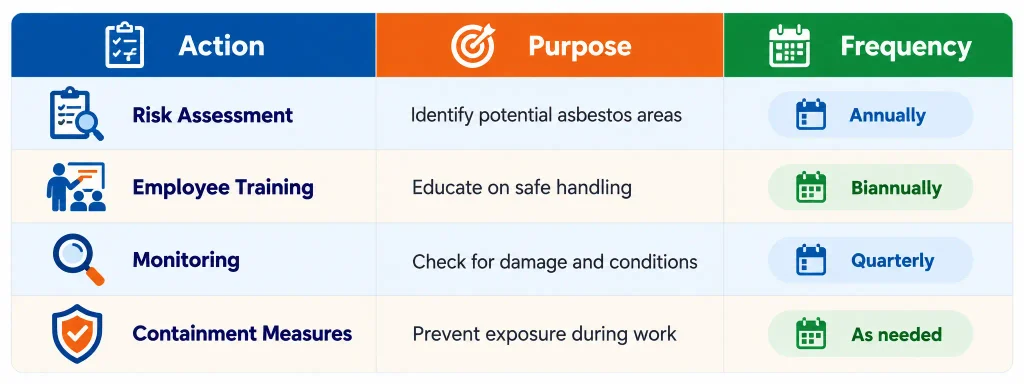
Additionally, maintaining clear communication with all stakeholders is essential. By fostering an environment of awareness and responsibility, employers can considerably reduce the risks associated with asbestos, empowering workers to advocate for their own safety while contributing to a healthier workplace.
Best Practices for Managing Asbestos Today
Effective asbestos management requires more than completing an initial survey. Dutyholders must ensure the information remains accurate and that suitable precautions continue to operate throughout the building’s use.
A practical management approach should include the following measures.
1. Maintain Accurate Asbestos Records
Keep the asbestos register and management plan up to date. Record changes to the condition, location or treatment of asbestos-containing materials.
2. Monitor Asbestos Condition
Inspect identified materials according to a suitable monitoring schedule.
Materials showing deterioration, damage or increased likelihood of disturbance should be reassessed and appropriate action taken.
3. Provide Appropriate Training
Ensure employees and contractors receive information and training relevant to their work.
Workers should understand how to recognise suspected asbestos, avoid disturbing it and respond if unexpected materials are discovered.
4. Control Maintenance and Refurbishment Activities
Review asbestos information before maintenance or refurbishment work begins.
Where intrusive work is planned, arrange the appropriate survey and ensure the work is undertaken by competent contractors with the required controls.
5. Review the Management Plan
Review the asbestos management plan at least annually and update it sooner where circumstances change.
For example, refurbishment work, changes in building use, newly identified asbestos or damage to existing materials may require immediate revisions.
These measures help ensure asbestos risks remain controlled and that contractors receive reliable information before beginning work.

Challenges in Regulating Asbestos Today
One of the main challenges in asbestos management is the continued presence of asbestos-containing materials in buildings constructed or refurbished before 2000.
Although asbestos use has been prohibited in the UK for decades, existing materials may remain concealed in walls, ceilings, floors, insulation systems and structural components.
This can make identification difficult, particularly where building records are incomplete or previous refurbishments have altered the original construction.
Another challenge is ensuring that property owners, employers and contractors understand their respective responsibilities.
An asbestos survey alone does not complete the duty to manage. The information must be used to assess risks, establish management arrangements and prevent accidental disturbance.
Budget limitations and inadequate maintenance planning may also lead to delayed inspections or remedial work.
These challenges underline the importance of proportionate risk assessment, accurate documentation and communication between building dutyholders and contractors.
For further information, explore where asbestos may still be found in older UK buildings and why these materials require ongoing attention.
The Future of Asbestos Regulations and Management
The future of asbestos management in the UK is likely to remain focused on preventing exposure to materials already present in existing buildings.
As older properties undergo refurbishment, energy efficiency improvements and changes in use, asbestos identification and safe working procedures will remain important.
Digital asbestos registers, improved survey technologies and more accessible building records may support better management practices.
However, technological improvements do not remove the need for competent inspections, suitable risk assessments and effective communication.
Enforcement and regulatory developments should be monitored through the Health and Safety Executive and relevant government publications.
Although changes to asbestos regulation may be proposed in the future, stricter penalties, new training rules or mandatory removal programmes should not be presented as confirmed requirements unless they have been formally introduced.
The current priority remains compliance with the applicable regulations and effective management of existing asbestos-containing materials.
Frequently Asked Questions
What Materials Commonly Contain Asbestos in Older Buildings?
Older buildings often contain asbestos in materials such as insulation, ceiling tiles, floor tiles, roofing materials, and siding. These materials pose health risks, necessitating careful management and assessment to guarantee safety for occupants and workers.
How Can Homeowners Identify Asbestos in Their Property?
Homeowners can identify asbestos by inspecting materials like insulation, floor tiles, and roofing from pre-1980s constructions. Consulting professionals for sampling and testing is essential, as only trained experts can safely confirm its presence and guarantee proper handling. Check out How Do You Check for Asbestos Safely and Accurately
Are There Specific Training Requirements for Asbestos Management?
Yes, specific training requirements for asbestos management exist, focusing on identification, risk assessment, and safe handling practices. This training guarantees that individuals are equipped to manage asbestos-related tasks responsibly and effectively, promoting safety and compliance.
What Are the Penalties for Non-Compliance With Asbestos Regulations?
Penalties for non-compliance with asbestos regulations can include hefty fines, legal action, and potential imprisonment. Organisations may also face increased inspections and reputational damage, emphasising the importance of proper asbestos management and adherence to safety guidelines.
Can Asbestos Be Safely Removed by Non-Professionals?
Asbestos removal should not be attempted by non-professionals due to health risks and legal implications. Qualified experts possess the necessary training and equipment to guarantee safe handling and compliance with regulations, protecting both individuals and the environment.
Conclusion
The duty to manage asbestos was introduced under the Control of Asbestos at Work Regulations 2002 and came into force on 21 May 2004. Today, the Control of Asbestos Regulations 2012 govern these duties in Great Britain, requiring dutyholders to identify asbestos risks, maintain records and implement effective management plans. Proper asbestos management helps ensure legal compliance, prevent exposure and protect building occupants and workers.