The Control of Asbestos Regulations 2012 require UK property owners to identify, assess, and manage asbestos in non‑domestic premises and in the common parts of residential buildings. A dutyholder must maintain an asbestos register, arrange appropriate surveys, assess risks, and control or remove hazardous materials before work. Contractors need pre-work information, suitable PPE, and clearance certification where applicable. Records, notifications and competent contractors demonstrate compliance. Continue for practical checklists, survey choices and documentation templates to implement these duties.
Key Takeaways
- Dutyholders must identify, record and manage asbestos in non-domestic and shared residential premises via an up-to-date asbestos register.
- Conduct appropriate surveys: management surveys for occupied buildings and refurbishment/demolition surveys before disruptive work.
- Implement risk assessments and control measures, and ensure trained staff or contractors use correct PPE and safe work methods.
- Provide contractors with the asbestos register and method statements, and ensure air monitoring, clearance certification, and waste consignment notes where required.
- Keep documented management plans, training records, test results and evidence of competent contractors to demonstrate compliance to inspectors.
Table of Contents
Quick Compliance Checklist: What Owners Must Do Under CAR 2012
Property owners must identify all non-domestic buildings they control, appoint a dutyholder for asbestos management where required, guarantee an up-to-date asbestos register is prepared and maintained, arrange for risk assessments and periodic re-inspections, provide contractors with the register before work begins, communicate asbestos information to occupants and incoming dutyholders, and keep records of inspections, training, and remedial actions to demonstrate compliance with CAR 2012.
The checklist that follows summarises core actions: confirm building inventory and tenure; commission competent surveyors to produce a current register identifying ACMs and their condition; assess and prioritise risk based on condition and likelihood of disturbance; assign a named dutyholder responsible for managing asbestos risk and ascertaining contact details are recorded; implement control measures such as labels, management plans and safe systems of work; schedule periodic re-inspections and update the register after any change; ensure contractors receive the register and method statements before work; document staff training, contractor briefings, incident reports and remedial works. These steps enable demonstrable, auditable compliance under CAR 2012.

Does CAR 2012 Apply to Your Building? (Which Buildings & Materials Are Covered)
Having established the practical actions owners must take under CAR 2012, the next question is whether the regulations actually apply to a specific building or material.
CAR 2012 applies to non-domestic premises and common parts of residential buildings with multiple occupancies; it does not generally apply to single private homes occupied solely as domestic residences. Coverage includes workplaces, commercial properties, rented accommodation, schools, hospitals and communal areas of flats.
The Control of Asbestos Regulations 2012 Materials covered are those that contain asbestos or are presumed to contain it: asbestos insulation, asbestos insulating board, asbestos cement, textured coatings (e.g., artex), floor tiles, roofing materials and lagging. The regulations concern materials that could release asbestos fibres during maintenance, refurbishment, demolition or normal wear.
Asbestos-containing materials in good condition that will not be disturbed still fall within the scope for management and record-keeping. Owners should assess each building and material on its use, type and potential for fibre release to determine CAR 2012 applicability.
What the “Duty to Manage Asbestos” Means: Who’s Responsible, and When
The duty to manage asbestos under CAR 2012 places a clear legal obligation on the “dutyholder”, typically the person or organisation with control of the premises or responsibility for maintenance- to identify, assess and manage asbestos risks. Responsibility rests with the dutyholder until legal control passes; landlords, managing agents or occupying businesses must act proportionately, keeping records, arranging surveys and ensuring others are informed. Action is required when materials are presumed or identified as containing asbestos, if deterioration or disturbance could release fibres, or during planned work.
Practical steps include appointing competent advisers, maintaining an asbestos register, implementing control measures and providing information to anyone who may disturb materials. Non-compliance carries enforcement and prosecution risks. Read our blog post “Understanding who the control of asbestos regulations apply to“, and explore more about the duties.
Which Survey Do You Need: Management vs. Refurbishment/Demolition?
Which inspection is appropriate depends on the building’s current use and the planned work: a management survey is for routine occupation and maintenance, whereas a refurbishment/demolition survey is required before any work that will disturb the fabric.
A management survey aims to locate, as far as is reasonably practicable, asbestos-containing materials (ACMs) that might be damaged or disturbed during normal use. It uses surface inspection, sampling where necessary, and creates a register to inform maintenance and minimise disturbance.
A refurbishment/demolition survey is intrusive and thorough. It seeks ACMs hidden within the structure in walls, floors, ceilings and service risers so contractors can plan safe removal or protection. This survey often requires destructive inspection and a detailed scope aligned to proposed works.
Choosing the correct survey affects legal compliance, contractor safety and project scheduling. Property owners should commission qualified surveyors who will recommend the appropriate type based on building age, condition and the intended scope of works.
Five Steps to Assess, Control and Record Asbestos Risk on Site
Effective asbestos risk management on site follows five clear steps that together guarantee hazards are identified, controlled, and documented to protect occupants and workers.
First, inspect and survey areas to locate suspect materials, noting condition and potential for disturbance.
Second, assess risk by considering material type, friability, location, use, and likelihood of damage or disturbance; prioritise actions based on exposure potential.
Third, decide and implement controls: avoid disturbance where possible, label and encapsulate materials, apply engineering controls, restrict access, or arrange for licensed removal when necessary.
Fourth, confirm work is carried out safely: use trained personnel, appropriate PPE, containment, and air monitoring where required, and follow correct waste handling and disposal routes.
Fifth, record actions and outcomes clearly, including evidence of assessments, control measures, work carried out, air test results, and personnel competency checks to demonstrate ongoing management and compliance with regulatory duties. Here you can find the more details on How Do You Check for Asbestos Safely and Accurately
Create and Maintain an Asbestos Register and Management Plan (Templates & Records)
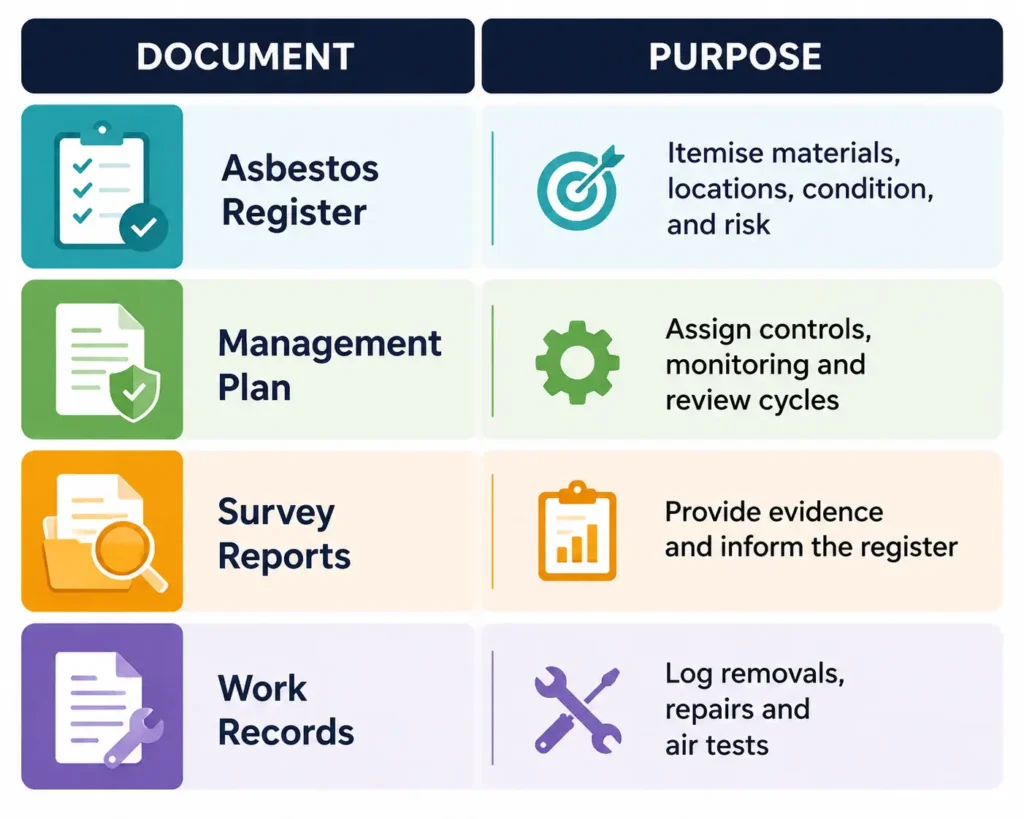
Several straightforward documents underpin sound asbestos management: an up-to-date asbestos register and a practical management plan. The register records location, material type, condition, risk level and survey date; the plan sets actions, responsibilities, review dates and emergency procedures. Templates should be concise, standardised and stored where dutyholders and site managers can access them. Records must be kept for the building’s life and updated after surveys, removals or incidents. Clear version control, named authors and dated entries maintain legal defensibility and operational clarity.
| Document | Purpose |
| Asbestos Register | Itemise materials, locations, condition, and risk |
| Management Plan | Assign controls, monitoring and review cycles |
| Survey Reports | Provide evidence and inform the register |
| Work Records | Log removals, repairs and air tests |
Templates reduce errors; records enable audits and informed decisions. Reviews at prescribed intervals and after material changes guarantee the documents reflect current site reality and regulatory expectations.
Hiring Contractors Safely, Notifications and Safe Work Under CAR 2012
Having an accurate register and management plan sets the baseline for engaging contractors, as these documents define known asbestos locations, required controls and recordkeeping obligations that contractors must follow.When work may disturb asbestos, property owners must select contractors with appropriate licences, training and insurance, verifying competence through qualifications, references and documented procedures. Where licensed work is required, a written notification to the HSE must be prepared and timing coordinated; non-licensed work still requires risk assessment, control measures and competent oversight.
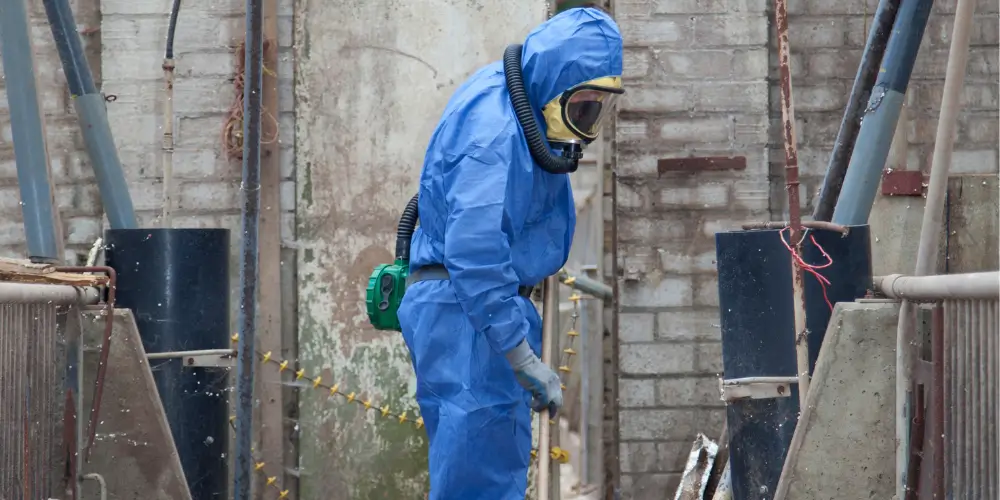
Contracts should specify method statements, clearance and reoccupation procedures, waste handling and sample analysis arrangements. During work, dutyholders should guarantee that air monitoring, asbestos waste consignment notes and thorough decontamination facilities are provided, and that unexpected finds trigger immediate cessation and reassessment. On completion, contractors must supply test results, certification of air clearance where applicable and updates to the asbestos register and management plan. Clear contractual responsibilities reduce risk and demonstrate proactive control under CAR 2012.
Enforcement, Penalties and How to Prove Compliance to Inspectors
While regulators focus on preventing exposure through guidance and inspections, enforcement under CAR 2012 includes formal notices, prosecutions and financial penalties for breaches of duties relating to identification, control and removal of asbestos. Inspectors from the Health and Safety Executive or local authorities may serve improvement or prohibition notices, require remedial works or initiate prosecution where failures are serious or persistent. Financial penalties and custodial sentences are possible for corporate and individual culpability.
To demonstrate compliance, property owners should maintain an up‑to‑date asbestos management plan, surveyed and risk‑assessed records, written arrangements for removal or encapsulation, and evidence of competent contractor selection and notification to the appropriate authorities. Training records, air‑test certificates, waste consignment notes and photographic documentation of works bolster defence. During inspections, concise, well‑organised documentation that shows timely action on identified risks is the most effective means to satisfy inspectors and reduce enforcement risk.
Frequently Asked Questions
How Does CAR 2012 Affect Residential Tenants Versus Freeholders?
Car 2012 obliges dutyholders: freeholders must manage and assess asbestos risk, maintain records, and arrange removal; tenants have duties to avoid disturbing asbestos and report concerns, but primary legal responsibility rests with property owners or managing agents.
Are Insurance Policies Affected by Asbestos Discoveries?
Yes. Insurers may adjust cover, exclude asbestos-related claims, or increase premiums; discovery can trigger notification, remediation conditions, or policy voidance. Property owners should review terms, disclose findings promptly, and consult brokers or legal counsel.
What Training Is Required for Non-Licensed Staff Handling Minor Work?
Non-licensed staff must receive asbestos awareness training, task-specific instruction on safe methods for minor work, emergency procedures, PPE use, and when to stop and report. Refresher training should be provided periodically and after incidents.
How Long Must Asbestos Records Be Retained After Disposal or Demolition?
Records must be kept for at least 40 years following disposal or demolition, and in some cases indefinitely if practicable. The person responsible should guarantee secure, accessible retention and document any limitations to availability.
Can Local Planning or Building Control Impose Additional Asbestos Requirements?
Yes. Local planning or building control can require additional asbestos-related measures where necessary for planning conditions, demolition or refurbishment approvals, or building safety, provided these do not conflict with, but complement, national asbestos regulations and health guidance.
Conclusion
In conclusion, compliance with the Control of Asbestos Regulations 2012 requires property owners to identify asbestos risks, appoint a dutyholder, and maintain up-to-date registers and management plans. Appropriate surveys must precede refurbishment or demolition, and contractors should be hired and managed to guarantee safe work and proper notifications. Recordkeeping and visible control measures demonstrate due diligence; failure to comply risks enforcement action and significant penalties, so proactive management is essential.