Who does the control of asbestos regulations apply to? The Control of Asbestos Regulations apply to anyone who owns, manages, or works on non-domestic premises where asbestos may be present. This includes landlords, freeholders, managing agents, employers, contractors, and self‑employed tradespeople, as well as those responsible for shared areas in residential buildings. Duties cover identifying asbestos, evaluating risks, planning safe work, and protecting workers and occupants. They also distinguish between licensed and non‑licensed work. Further details clarify exactly who is responsible and what they must do.
Key Takeaways
- CAR applies to anyone who owns, manages, or controls non‑domestic premises where asbestos may be present, including commercial, public, and shared residential common areas.
- Landlords, freeholders, managing agents, and certain tenants are “dutyholders” responsible for identifying, assessing, and managing asbestos risks in their premises.
- Self‑employed tradespeople and small businesses must comply with CAR whenever their work could disturb asbestos, even during minor maintenance or refurbishment tasks.
- CAR applies to buildings constructed or refurbished before 2000, which must be presumed to contain asbestos unless a competent survey proves otherwise.
- Multiple parties can share CAR responsibilities and must cooperate to manage asbestos risks, but simple occupation without disturbance is generally outside CAR’s scope.
Table of Contents
Who the Control of Asbestos Regulations Apply To
Although commonly associated with heavy industry, the Control of Asbestos Regulations apply broadly to anyone who owns, manages, or works on non‑domestic premises where asbestos may be present. The scope is intentionally wide because asbestos‑containing materials still exist in many everyday workplaces and public spaces, not just factories or shipyards.
Who does the control of asbestos regulations apply to? These regulations cover commercial buildings, shared parts of residential blocks, public buildings, and many informal or alternative workspaces where people gather to earn a living. Landlords, managing agents, workplace operators, and those commissioning building or maintenance work all fall within their reach, regardless of business size or structure.
Self‑employed people, freelancers, and small collective ventures using older premises are equally included.
Even where activity is flexible or decentralised, the law expects clear arrangements so that people can work without facing hidden, life‑shortening risks from damaged or disturbed asbestos. Freedom to work differently does not remove this legal responsibility.

Who Is the Dutyholder Under CAR?
Under the Control of Asbestos Regulations (CAR), the “dutyholder” is the person or organisation with primary legal responsibility for managing asbestos risks in non‑domestic premises.
This role sits with whoever has control of repair and maintenance: often the landlord, freeholder, managing agent, or, in some cases, the tenant under a lease. CAR focuses on practical control, not just legal ownership, so written agreements, contracts, and actual decision‑making power all matter.
Where control is shared, more than one dutyholder can exist. Each must cooperate, clearly define responsibilities, and avoid gaps that could leave people exposed.
Dutyholders must know whether asbestos is present, keep records, assess risks, and guarantee appropriate precautions are taken. They also have to make asbestos information available to anyone who is likely to disturb it.
When CAR Applies to Buildings and Work Activities
When does the Control of Asbestos Regulations (CAR) actually bite in day‑to‑day practice?
It applies whenever a non‑domestic building, or the common parts of domestic premises, may contain asbestos and people could be exposed during work. Age matters: structures built or refurbished before 2000 are assumed suspect unless proven otherwise.
Who does the control of asbestos regulations apply to? CAR is triggered not just by demolition or asbestos removal, but by any work that might disturb materials: drilling, cutting, cable runs, refurbishments, or invasive surveys. CAR also applies to routine activities where asbestos could be damaged over time, such as plant maintenance, ceiling access, or service alterations. Even short‑term jobs or “one‑off” projects fall within scope if they pose a risk of fibre release.
Conversely, simply occupying a building without disturbing asbestos is not, by itself, “work”, but once anyone plans or directs work that could interfere with suspect materials, the full regulatory framework is engaged.
CAR Duties for Landlords and Managing Agents
Once it is understood where CAR applies, attention turns to those who carry the legal burden of compliance in multi‑occupied premises: landlords and managing agents.
Their duties exist not to restrict use of space, but to safeguard the freedom to live, work, and trade without hidden health threats. In law, they are usually the “dutyholders” and must actively control asbestos risks within common parts and any areas under their management.
Employer CAR Duties for Staff and Contractors
Employers operating in buildings where asbestos may be present carry distinct duties under CAR to protect both their own staff and any contractors they engage. These duties do not exist to restrict activity, but to allow work to proceed without hidden health risks or regulatory shocks later.
They must identify asbestos risks, consult the asbestos register, and guarantee that no task disturbs suspect materials without prior assessment. Before work begins, employers need to share clear information about the location and condition of asbestos, so individuals can choose safe methods and, where necessary, decline unsafe practices.
Training is central: staff and contractors must understand how to recognise potential asbestos, avoid disturbance, and act decisively if they encounter it. Employers must also provide suitable protective measures and emergency procedures.
CAR Duties for Self-Employed Trades and Small Businesses
Many self-employed tradespeople and small businesses assume asbestos duties fall only on large employers, but the Control of Asbestos Regulations place clear legal obligations on anyone who plans or undertakes work that could disturb asbestos.
Compliance is not about red tape; it is about retaining control over work, health, and legal risk, rather than surrendering it after something goes wrong.
Key duties include:
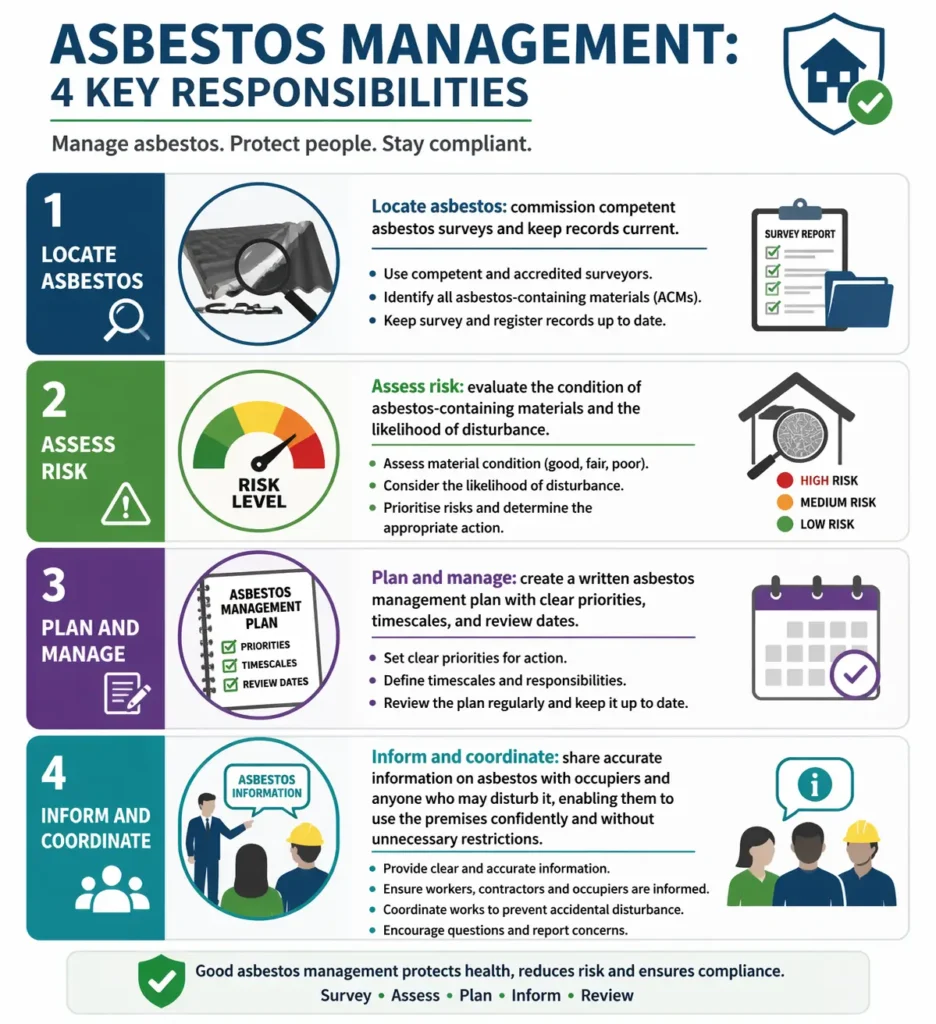
- Identify risk – Before starting work, they must check whether asbestos may be present, using surveys, records, or competent advice.
- Assess exposure – They must complete a suitable risk assessment and decide whether the task can be done safely.
- Plan and prevent – They must design methods, equipment, and controls to avoid or minimise fibre release.
- Inform and protect others – They must communicate risks to anyone nearby and guarantee appropriate training, PPE, and decontamination arrangements are in place.
Licensable vs Non-Licensable Asbestos Work Under CAR
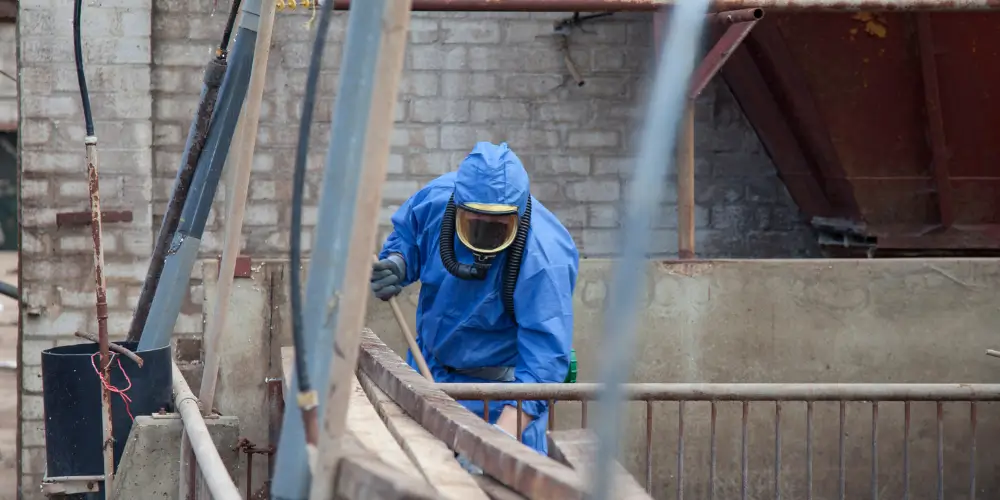
Licensing sits at the heart of the Control of Asbestos Regulations, drawing a legal line between work that only specialist licensed contractors may undertake and work that properly trained but non‑licensed workers can carry out. The distinction is not about protecting a closed profession; it is about exposure risk, material type, and duration of the work. Where risk is high, the law demands a licence, strict oversight, and deeper regulatory control.
Licensable work typically involves higher‑risk asbestos insulation, asbestos insulating board, and lagging, especially when these materials are damaged or will be considerably disturbed. Such tasks usually generate substantial airborne fibres and may last for longer periods, increasing cumulative exposure.
Non‑licensable work covers lower‑risk activities, such as brief disturbance of firmly‑bound asbestos cement or textured coatings, where fibre release is limited and predictable. Even then, training, control measures, and respect for the material remain essential to safeguard both freedom and health.
Practical Steps to Comply With CAR
Who does the control of asbestos regulations apply to? Whether asbestos work is licensable or not, compliance with the Control of Asbestos Regulations ultimately comes down to a series of methodical steps rather than labels alone. An organisation that understands these steps gains more control over its projects, avoids unnecessary disruption, and protects people’s long‑term freedom to live and work without health damage.
- Survey and assess Commission competent asbestos surveys, keep registers current, and conduct written risk assessments before disturbing any material.
- Plan the work. Develop a job‑specific plan of work, including access, control measures, emergency procedures, waste routes, and decontamination.
- Equip and train people.e Provide task‑appropriate RPE, PPE, tools, and containment; guarantee workers receive role‑specific training and fit‑testing.
- Control, monitor, and document. Implement air monitoring where required, maintain enclosure integrity, manage licensed contractors, and retain clear records of surveys, plans, medicals, training, and waste consignment notes.
Frequently Asked Questions
Can Homeowners Face Criminal Penalties for Breaching Control of Asbestos Regulations (CAR)?
Yes, homeowners can face criminal penalties if they act as “dutyholders” or conduct work breaching CAR. Liability usually arises where they manage non‑domestic areas, employ workers, or knowingly create unsafe asbestos exposure conditions.
How Do CAR Requirements Differ Between England, Scotland, Wales, and Northern Ireland?
Requirements differ mainly because Northern Ireland has separate CAR 2012 regulations, while England, Scotland and Wales share GB rules. Enforcement bodies, guidance wording and some licensing procedures vary, but core duties to prevent asbestos exposure remain aligned.
What CAR Records Must Be Kept and for How Long?
They must keep MOT certificates, insurance, V5C logbook details, service and repair invoices, plus mileage and modification records. Typically, records are retained for at least six years, though MOT history and logbook details should effectively be kept indefinitely.
Does CAR Apply to Historic or Listed Buildings Undergoing Restoration?
CAR does apply to historic or listed buildings under restoration. Any work disturbing asbestos triggers duties: surveys, risk assessments, licensed contractors, training, and record‑keeping, regardless of heritage status, to protect workers’ freedom from hazardous exposure.
How Does CAR Interact With Insurance Requirements for Asbestos-Related Risks?
CAR sets legal duties; insurers then price and define cover around compliance. When dutyholders follow CAR surveys and management plans, licensed removal insurers usually grant broader cover; non‑compliance risks exclusions, higher premiums, or refusal of asbestos-related protection.
Conclusion
Who does the control of asbestos regulations apply to? In summary, understanding is essential for legal compliance and for protecting health. Dutyholders, landlords, employers, managing agents, and self-employed trades all carry clear responsibilities under CAR. Distinguishing between licensable and non-licensable work guarantees appropriate controls are used. By identifying asbestos, evaluating risks, and implementing robust management plans, organisations and individuals can meet their duties, safeguard workers and occupants, and minimise the risks posed by asbestos exposure.