A boiler leaks water for several common reasons: failed seals, corroded joints, loose fittings, a faulty pressure‑relief valve, leaking pipework, blocked or frozen condensate drains, or internal component failure, such as a worn pump or cracked heat exchanger. Immediate steps include isolating water and power, containing the spill, and checking pressure and visible joints. Small weeps can be temporarily taped, but many issues need a Gas Safe engineer. Continue for practical checks, causes and repair guidance.
Key Takeaways
- Leaks at joints or valves usually mean loose fittings or corroded seals; tighten or replace fittings promptly.
- Continuous pressure loss or PRV discharge indicates overpressure or thermal expansion; check pressure gauge and PRV pipe for blockages.
- Pooled water beneath the boiler often indicates a leaking heat exchanger or a pressure relief component that needs urgent inspection.
- Drips or weeps from pumps and internal seals suggest aged or failed components; arrange replacement of the parts within 24–48 hours.
- Any leak accompanied by a gas smell, a CO alarm, or heavy corrosion requires immediate intervention by a Gas Safe engineer.
Table of Contents
Quick Triage: Where the Water Is Coming From and What It Means
When water appears around a boiler, its origin offers the fastest clues to the underlying problem: seepage from pipe joints or valves usually indicates a localized fitting failure, condensation or surface rust suggests temperature or ventilation issues, and pooled water beneath the unit often points to a leaking heat exchanger, pressure relief valve, or a failed tank component. A visible drip at a joint generally signals a loose connection, degraded seal, or corroded fitting that may be repairable without major component replacement. Dampness on external surfaces or thin films of water can result from condensation when warm flue gases meet cooler surfaces or from inadequate room ventilation. Isolated puddles beneath the appliance warrant urgent attention: they may indicate internal component failures that allow system water to escape. Inspecting the fault location, checking nearby fittings, and noting whether the leak correlates with system pressure changes or heating cycles help narrow down likely causes and guide the decision between simple maintenance and professional service.
Immediate Safety Steps and Temporary Leak‑Stoppers
Shut off the boiler’s power and isolate its water supply immediately to minimize damage and risk; this includes setting the unit to the off position, closing the system’s feed valve, and, if present, closing any nearby isolation valves. After isolation, assess visible leaks from joints, pipes, or the boiler body without touching hot surfaces. Contain water with buckets and towels, and protect surrounding flooring and electrics.
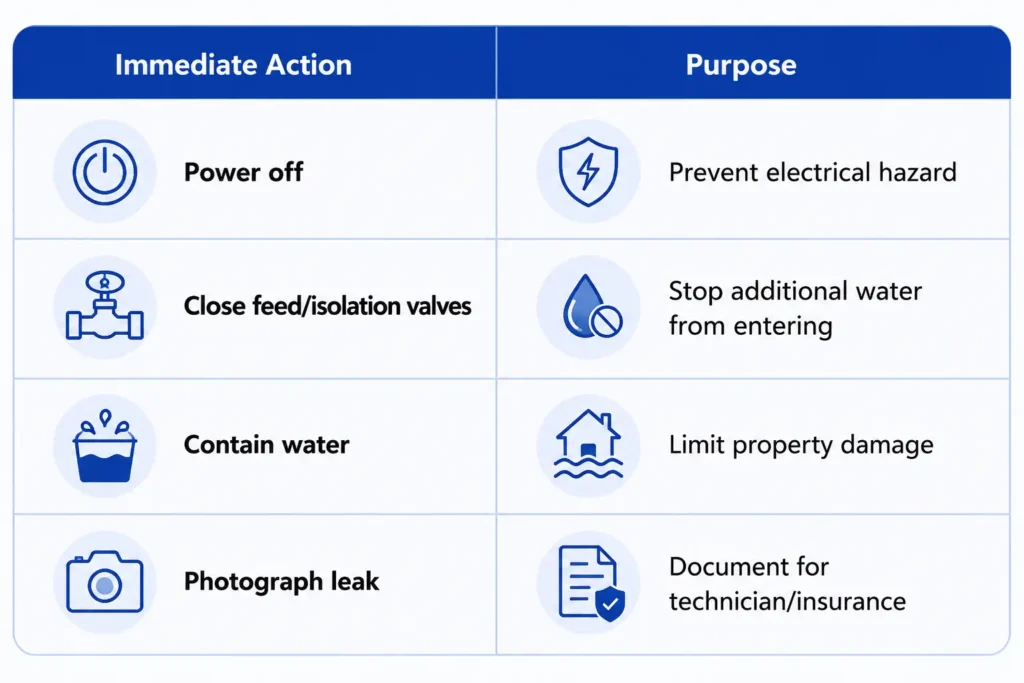
Temporary stopgaps may reduce flow: wrap a soft cloth around a leaking joint and apply plumber’s tape or use a pipe repair clamp rated for temporary use. For small weeps, epoxy putty designed for plumbing can hold until a professional repair. These measures are temporary; arrange a qualified service visit promptly to diagnose and perform permanent repairs. Here you can find what happens in boiler service.
Pressure-Relief Valve Leaks: Causes and DIY Checks
After isolating power and water and applying temporary measures, attention should turn to the pressure‑relief valve (PRV), a safety device that releases excess boiler pressure; a leaking PRV often signals overpressure, thermal expansion issues, a faulty valve, or debris preventing a proper seal. The PRV discharges a small steady stream or drips when system pressure exceeds its set point or when thermal expansion raises pressure during heating. First, check the boiler pressure gauge at both cold and operating temperatures; readings consistently above the recommended range indicate overpressure. Inspect the PRV discharge pipe for mineral deposits or corrosion that can prevent sealing. A visible leak during heating suggests expansion issues, an absent or failed expansion vessel or a valve that no longer seats. DIY checks include recording pressure changes, gently lifting the PRV lever to flush debris (briefly, with a container in place), and ensuring the discharge pipe is clear. If the valve leaks after flushing or pressure remains high, arrange for professional replacement. Boiler repair or replacement: learn the rule of thumb.
Pipework and Joint Leaks: Spotting Corrosion and Damage
Pipework and joints are common sources of leaks, with corrosion, mechanical damage, and failed fittings producing visible drips or slow weeps along runs and at connections. The article examines typical signs: green or reddish staining indicating metal corrosion, white crust from mineral deposits, damp patches on pipe insulation, and tiny beads of water at soldered or threaded joints. Movement-induced fatigue shows as hairline fractures or loose compression fittings; overt damage includes crushed or abraded sections. Attention is drawn to valve tails, radiator feeds, and boiler connection points where vibration or thermal cycling stresses seals. Basic recommended checks are visual inspection, feeling for cold spots along pipes, and gently tightening accessible nuts, avoiding over-tightening. For corroded sections, pinhole leaks, or inaccessible joints, replacement of the affected pipe or coupling is advised rather than patching. Professional assessment is advised when corrosion is extensive, when gas or electrical components are nearby, or when there is uncertainty about isolation.
Condensate and Frozen-Flue Leaks (Winter Fixes)
While corroded joints and damaged runs account for many leaks, winter brings a different set of failures centred on condensate drainage and external flues. Condensing boilers produce acidic condensate that must exit via a condensate pipe; in freezing weather, this pipe can ice up, block, and cause backflow or overflow at the appliance. External flues can also collect ice or snow, restricting exhaust and causing condensation to pool and drip from connections. Symptoms include water pooling near the boiler, dripping from the condensate trap, or visible ice on external pipework. Typical remedies are to thaw blocked condensate pipes safely using warm water or a hairdryer at the exterior run insulating vulnerable pipework, fitting trace heating where allowed, and ensuring fall and connection integrity so condensate drains away. If the condensate trap is damaged or flue terminations are obstructed, a qualified engineer should inspect and repair to prevent corrosion or appliance shutdown.
Seals, Pump Failures and Other Internal Causes of Boiler Leaks
Several internal components worn seals, failed pumps, and degraded internal joints are common sources of boiler leaks. Seals and gaskets age and harden under heat and pressure, allowing small but persistent weeps at joints, valve glands, or around the pressure relief assembly. A failing circulating pump can develop shaft seal leaks or loosened flanges, producing drips near the pump housing or electrical connections. Internal pipework and soldered or brazed joints may corrode from chemical imbalance or oxygen ingress, leading to pinhole leaks that appear slowly and intermittently.
Detecting these issues requires visual inspection for corrosion, damp patches, and drip patterns, as well as listening for unusual pump noise or vibration. Pressure tests and isolating sections of the system help locate the source. Small seal or joint failures are often repairable by replacing gaskets or re-torquing fittings; pump shaft seals usually need pump repair or replacement. Always recommend a qualified heating engineer for internal component diagnosis and safe, compliant repairs.
Cracked Heat Exchanger: Signs, Risks and When It’s Critical
A crack in the boiler’s heat exchanger is a distinct failure mode that differs from leaking seals or pump faults because it involves the primary pressure vessel where combustion heat transfers to the water. When the heat exchanger fractures, water can escape internally or externally; symptoms include persistent low pressure, unexplained wetness around the casing, and degraded combustion performance. Corrosion, thermal stress, or manufacturing defects commonly cause fractures, and small cracks may be intermittent.
- Observable signs: rust-coloured deposits, steady pressure loss, and unusual burner behaviour.
- Risks: contamination between combustion gases and water, increased carbon monoxide risk, and rapid escalation to major failure.
- Critical indicators: sudden large leaks, rapid pressure drops, or visible flame instability.
A cracked heat exchanger typically requires immediate attention because repair is often impractical; replacement is commonly the only safe long-term solution. Early detection reduces collateral damage to surrounding components and the property.

When to Call a Gas Safe Engineer and What to Expect
When should a Gas Safe engineer be contacted, and what should homeowners expect upon their arrival? A Gas Safe engineer should be contacted immediately if a boiler leak is accompanied by gas smells, carbon monoxide alarms, persistent pressure loss, or visible corrosion and suspected cracked components. For minor leaks without gas indications, arranging a prompt inspection within 24–48 hours is advisable. Upon arrival, the engineer will verify credentials, isolate the gas and water supply if necessary, and conduct a visual and diagnostic assessment using pressure gauges, flue checks, and leak detection tools.
The engineer will explain findings, classify risk, and recommend repairs or part replacements, providing a written estimate and safety report. Emergency repairs may be completed on site; otherwise, the boiler may be made safe and left isolated until parts arrive. Homeowners should expect clear communication about risks, timelines, costs, and any temporary measures needed to maintain safety and heating provision.
Frequently Asked Questions
Can a Leaking Boiler Cause Carbon Monoxide Poisoning?
Yes. A leaking boiler can indirectly increase carbon monoxide risk if combustion pathways, ventilation, or flue integrity are compromised. The observer should stop use, ventilate, install a CO alarm, and call a qualified engineer immediately.
Will My Home Insurance Cover Boiler Leak Damage?
Coverage depends on the policy: many standard home insurance plans cover sudden, accidental boiler leak damage to structures and contents, but neglect-related or maintenance failures are usually excluded; the homeowner should check their specific policy and contact their insurer.
Can I Temporarily Use an Electric Heater if the Boiler Is Off?
Yes, they can, provided circuits handle the load. They recommend using portable electric heaters temporarily, monitoring for overload, ensuring adequate ventilation, and avoiding prolonged use if pipes risk freezing; contact an electrician for safety concerns.
How Often Should a Boiler Be Professionally Serviced?
A boiler should be professionally serviced at least once a year. A qualified engineer inspects, cleans and tests safety components, ensuring efficiency, spotting leaks or pressure issues early, and maintaining warranty and safe operation for occupants.
Can a Leaking Boiler Be Fixed Under Warranty?
Yes, a leaking boiler can sometimes be repaired under warranty. The manufacturer’s terms, cause of leak, and whether the unit was serviced per requirements determine coverage; proof of maintenance and authorised technician diagnosis are usually required.
Conclusion
When a boiler leaks, identifying the source quickly guides safe, effective action: small condensate leaks or pipe-joint drips can often be managed temporarily, while pressure-valve faults, internal seal failures, or pump failures indicate professional attention is required. Cracked heat exchangers pose serious carbon monoxide and flooding risks and require an immediate Gas Safe engineer assessment. Prioritize shutting off the power and isolating the water, use temporary drip containment, and arrange a prompt certified inspection to diagnose defects and perform lasting repairs.