How Long Does a Boiler Service Take usually takes around 45 to 60 minutes, but timing varies by boiler type, fuel, and access. Combi boilers are often finished in 30–60 minutes, while system boilers typically take 45–75 minutes and regular boilers 60–90 minutes. The engineer checks for leaks and ventilation issues, inspects controls and safety devices, tests flue integrity, and confirms combustion performance. Older units, tight spaces, or heavy soiling can extend the visit. More details on what affects timing follow.
Key Takeaways
- Most boiler services take 45–60 minutes for modern, accessible combi boilers.
- System boilers usually need 45–75 minutes, while conventional boilers often take 60–90 minutes due to extra components.
- Gas boiler services typically last 30–60 minutes; oil boiler services often take 60–90 minutes because of additional cleaning.
- Poor access, heavy soiling, worn parts, or cooling time can extend the visit beyond the average.
- A service includes visual checks, safety and flue tests, internal inspection/cleaning, combustion readings, and updating the service record.
Table of Contents
How Long Does a Boiler Service Take on Average?
Most boiler services take around 45 to 60 minutes on average, though the exact duration depends on the boiler type, accessibility, and whether any minor adjustments are needed. For a straightforward, modern combi boiler in an easy-to-reach location, the visit often stays within that window. System and conventional boilers can take a little longer, commonly 60 to 90 minutes, because they typically involve more components and may be installed alongside cylinders or tanks that affect access.
Older boilers may also extend the appointment if covers are difficult to remove, parts are heavily worn, or documentation is missing. Timing is also influenced by practical factors: tight cupboards, restricted pipework, poor lighting, or the need to wait for the boiler to heat up and cool down for safe checks. If repairs are required, the service can become a longer call-out or a separate visit, depending on parts availability.
What Happens in a Boiler Service?
A boiler service typically follows a set sequence of safety checks, performance tests, and component inspections carried out by a qualified engineer to confirm that the appliance is operating efficiently and in compliance with manufacturer and gas safety standards “Gas Safety (Installation and Use) Regulations 1998“. The engineer begins with a visual assessment for corrosion, leaks, ventilation issues, and correct clearances, then checks boiler controls, safety devices, and the integrity of the flue.
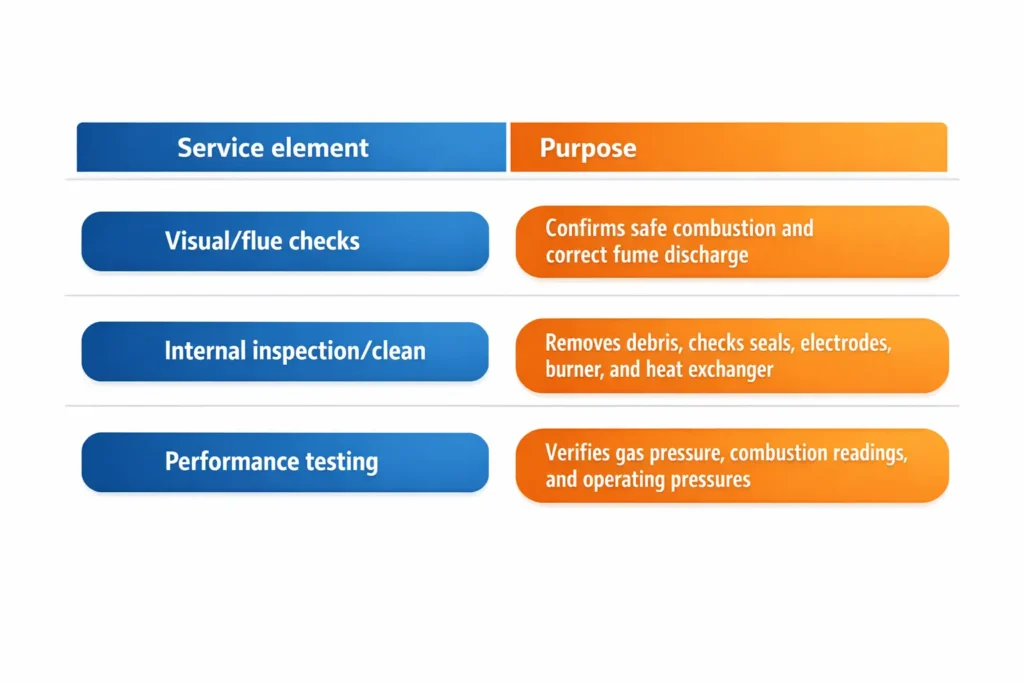
How Long Does a Boiler Service Take: Next, key components are opened as permitted, cleaned or adjusted, and gaskets are inspected for wear. Water pressure, expansion-vessel charge (where fitted), and pump operation are reviewed to ensure stable heating performance. The engineer records readings, notes any remedial work required, and may provide guidance on maintaining correct system pressure and using controls efficiently. A service record is updated for compliance and warranty support.
How Long Is a Boiler Service by Boiler Type (Combi, System, Regular)?
Although the core checks are broadly similar, boiler service duration varies by boiler type because access, component layout, and the presence of external cylinders or tanks affect how long inspections, cleaning, and performance testing take.
A combi boiler service is often quickest, typically 30–60 minutes, because hot water is produced on demand and there is no separate cylinder to inspect. Time is mainly spent checking combustion, seals, the condensate route, safety devices, and internal components such as the fan and heat exchanger (where accessible).
A system boiler service commonly takes 45–75 minutes. In addition to the boiler itself, the engineer may need to assess the cylinder controls, pumps, valves, and system pressure equipment, which adds steps and access time.
A regular (conventional) boiler service can take 60–90 minutes. Extra time may be needed to review the feed and expansion arrangement, cold-water storage connections, and associated pipework, especially where components are distributed across different locations.
Gas vs Oil Boiler Service: How Long Does Each Take?
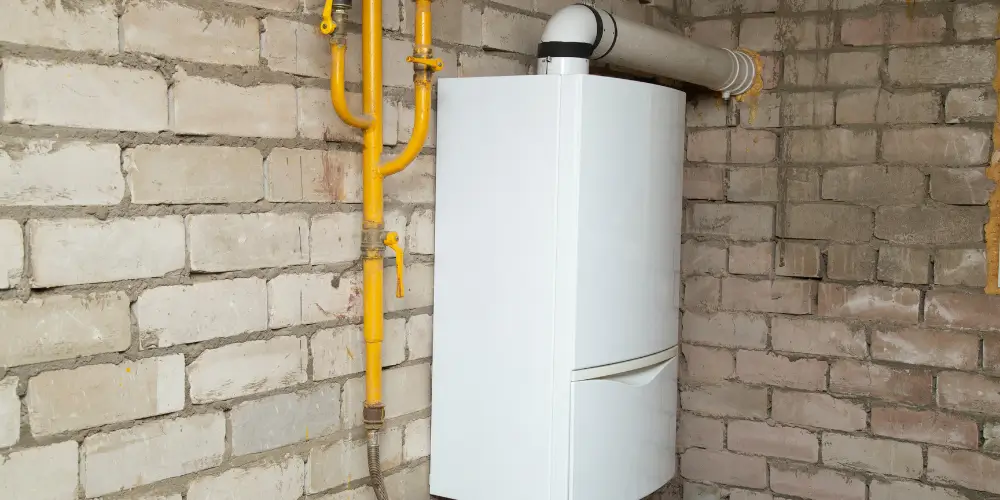
Since the service checklist varies by fuel system and testing requirements, gas and oil boiler appointments often take different lengths of time, even when the boiler sizes are similar. A typical gas boiler service commonly lasts around 30–60 minutes. The engineer generally checks combustion readings with a flue gas analyser, inspects the burner and heat exchanger, verifies ventilation and flue integrity, and confirms safe operation of controls and safety devices. If you want to know more about servicing the gas boiler service, visit our blog What You Need to Book a British Gas Boiler Service.
Oil boiler services often take about 60–90 minutes. In addition to general safety and performance checks, the technician usually cleans or replaces the oil nozzle, inspects and adjusts the burner settings, checks the oil pump pressure, replaces the fuel filter where fitted, and may clean soot deposits from the combustion chamber and baffles. Because oil combustion can produce more residue, servicing tends to involve more hands-on cleaning and component handling than many gas systems.
What Can Make a Boiler Service Take Longer?
Service times vary not only by fuel type but also by the boiler’s condition and the practicalities of the visit. A well-maintained appliance with clear access can be checked, cleaned, and tested efficiently, whereas older or heavily used systems may need more careful inspection and slower disassembly. Modern installations can also extend appointments when additional safety checks and documentation are required.
- Restricted access (boxed-in units, cluttered cupboards, awkward flue routes) slows safe removal of covers and visual examination.
- Heavy soiling, scale, or sludge requires longer cleaning of burners, heat exchangers, filters, and condensate traps to restore proper airflow and drainage.
- System complexity, multiple zones, added controls, low-pressure symptoms, or sealed-system top-ups add time to confirm settings, verify readings, and complete benchmark records.
External factors can also contribute, such as waiting for the boiler to cool, ensuring stable combustion readings, or accommodating tenant access and site inductions.
When Does a Boiler Service Turn into a Repair?
Sometimes, a routine boiler service turns into a repair the moment the engineer finds a fault that must be fixed to restore safe, reliable operation, such as a dangerous flue issue, a failed safety device, a significant leak, or a defective component that prevents correct combustion and testing.
At that point, the appointment stops being a checklist inspection and becomes fault-finding, parts assessment, and remedial work, which can extend the visit beyond the typical service window. A service also becomes a repair when required readings cannot be completed because the boiler will not run correctly, will not hold pressure, or repeatedly locks out.
If the engineer identifies worn seals, a failing pump, a sticking diverter valve, blocked condensate components, or abnormal gas-rate and combustion figures, corrective action may be necessary before the boiler can be signed off. Where parts are unavailable or authorisation is needed, the engineer may isolate the appliance and schedule a return visit later.
How Can You Make a Boiler Service Quicker?
Although the engineer controls most of the timeline, a boiler service can be made quicker by ensuring clear access to the appliance, controls, and flue route, having key paperwork ready (last service record, warranty details, and any fault notes), and making sure the system can be run for checks (heating on, hot water available, and correct pressure visible) so readings and safety tests can be completed without delays.
Small practical steps also reduce interruptions and repeat visits, especially in busy households.
- Clear the cupboard area and remove stored items so panels can be opened immediately.
- Confirm someone can grant access to thermostats, programmers, and any smart controls.
- Keep the condensate pipe and external flue terminal unobstructed, and note any recent unusual noises or pressure drops.
If the property uses multiple zones or a hot-water cylinder, having valve locations identified helps the engineer isolate and test efficiently. Pets should be secured, and parking or entry instructions should be shared in advance to avoid time lost on arrival.
How Often Should You Book a Boiler Service?
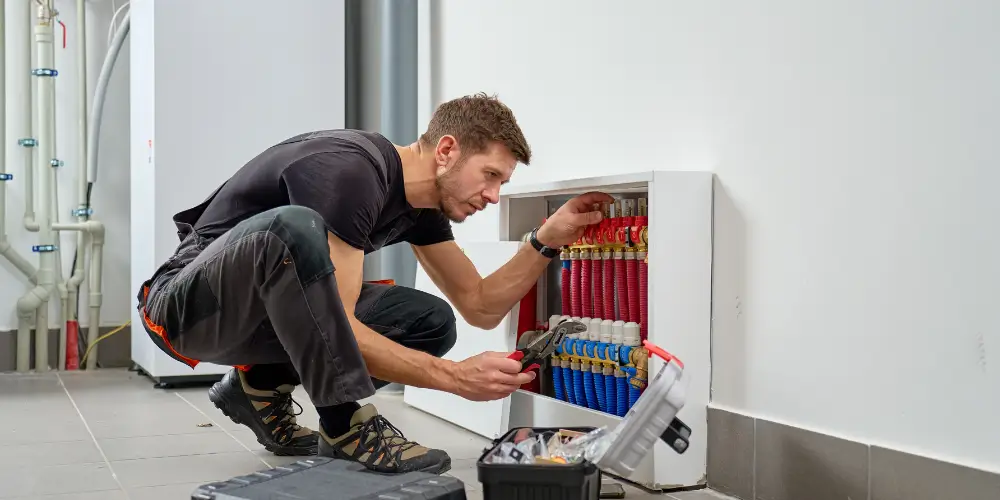
How often should a boiler be serviced to stay safe and reliable? Most manufacturers and safety bodies recommend an annual service, and many warranties require it.
Yearly checks help spot worn parts, leaks, pressure issues, and combustion problems before they become breakdowns, higher bills, or carbon monoxide risks. Regular servicing can also keep efficiency closer to the boiler’s rated performance, especially in colder months when demand is highest. Some situations justify more frequent attention. Older boilers, systems that lose pressure, make unusual noises, or heat unevenly may benefit from an interim check.
Homes with hard water can see faster scaling, which may shorten component life if untreated. Landlords must arrange annual Gas Safety checks for any gas appliances, and pairing this with a boiler service is common. For low-use properties, annual servicing still remains the safest baseline for continued coverage.
Frequently Asked Questions
Will a Boiler Service Affect My Home Insurance or Warranty Coverage?
A boiler service can support home insurance and warranty coverage by providing maintenance. Some policies require annual servicing by qualified engineers and records. Missed servicing may invalidate claims, while documented servicing helps protect eligibility.
Do I Need to Be Home During the Boiler Service Appointment?
Yes, someone usually needs to be home to provide access, answer questions, and authorise any work. If a trusted adult can attend instead, that’s often acceptable. Leaving keys may work only with prior arrangement.
Can the Engineer Service My Boiler if the Cupboard Is Cluttered?
Yes, but clutter may prevent safe access. The engineer may refuse or postpone the service until the area is cleared. Adequate space, ventilation, and visibility around the boiler are required for thorough checks.
Will a Boiler Service Improve Energy Efficiency and Reduce Bills?
A boiler service can improve energy efficiency and may reduce bills by ensuring safe, clean combustion and correct settings. Engineers check components, pressures, and flue performance to spot faults early. Savings vary with condition, usage, and controls.
How Do I Choose a Gas Safe or OFTEC Registered Engineer?
Choose a Gas Safe or OFTEC engineer by checking current registration numbers on the official registers, confirming qualifications for the specific appliance, reviewing insurance and recent references, comparing written quotes, and ensuring clear service documentation and guarantees.
Conclusion
How Long Does a Boiler Service Take: Most boiler services take around 45–60 minutes, though the exact time depends on boiler type, fuel, access, and the unit’s condition. A standard service involves safety checks, cleaning key components, testing performance, and confirming correct operation. Combi boilers are often quicker, while system and regular boilers can take longer. If faults are found, a service may extend into diagnostic work or repairs. Regular annual servicing helps minimise disruption, improve efficiency, and support safe running.