Where to place a carbon monoxide alarm? For maximum safety, carbon monoxide alarms should be installed on every level of your property, including basements and attics, and especially near bedrooms to facilitate quick alerts during sleep. Alarms must be mounted at least 5 feet above the ground, near the ceiling, and at least 15 feet from any fuel-burning appliances to prevent false alarms and ensure effective detection. It is also recommended to install an alarm in the hallway outside sleeping areas and in living areas with combustion devices. Proper placement guarantees accurate monitoring and timely alerts, helping safeguard against the dangers of carbon monoxide poisoning. Further insights will clarify how to optimise the safety and functionality of your alarms.
Key Takeaways
- Install CO alarms on every level of the property, including basements and attics, to ensure comprehensive coverage.
- Position alarms near bedrooms and living areas to facilitate quick alerts, especially during sleep.
- Keep alarms at least 15 feet away from fuel-burning appliances to avoid false alarms and ensure accurate detection.
- Mount alarms at least five feet above the floor or on the ceiling, avoiding obstruction by furniture or decor.
- Place additional alarms in areas with combustion appliances, such as kitchens and garages, to effectively monitor these high-risk zones.
Table of Contents
What Is a Carbon Monoxide Alarm and Why Is It Important?
A carbon monoxide alarm is an essential safety device designed to detect carbon monoxide, a colourless, odorless, and potentially lethal gas, and alert residents to the possible danger. In the UK, the installation of these alarms is not just a safety measure but a legal requirement in certain settings.
These devices provide early warning of carbon monoxide accumulation, which is critical since the gas is undetectable without specialised equipment. Without such an alarm, individuals might unknowingly be exposed to toxic levels of carbon monoxide, leading to serious health issues or even death. Symptoms of exposure can be non-specific and misleading, often resembling those of common illnesses, which makes the role of a carbon monoxide alarm even more essential in preventing accidental poisoning.
Understanding the crucial role and legal importance of carbon monoxide alarms helps guarantee residential and commercial safety, protecting lives against this silent killer. Learn more about Why Every Property in the UK Needs a Smoke Alarm and Carbon Monoxide Detector.
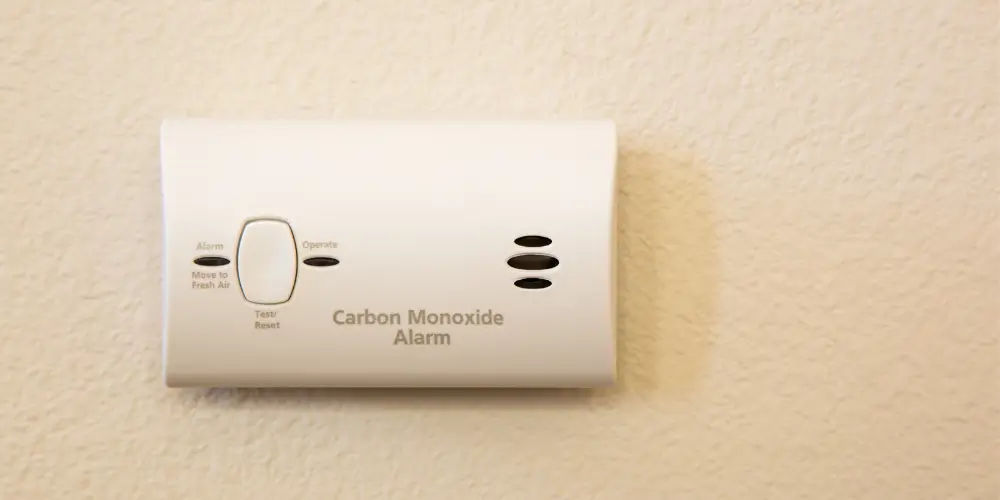
Should a carbon monoxide alarm be placed high or low?
The question “where to place a carbon monoxide alarm” arises whether to place carbon monoxide alarms high or low. Carbon monoxide (CO) has a slightly lighter density than air, allowing it to mix freely within the environment. This characteristic suggests that CO does not strictly rise or sink, but spreads evenly throughout a room.
Considering this, it is advisable to install CO alarms at a height that ensures they are not obstructed and can accurately detect carbon monoxide. Typically, placing alarms on or near the ceiling, or at least 5 feet from the ground, is effective. This placement avoids potential interference from furniture and other objects while remaining easily accessible for maintenance, such as battery replacement or testing.
Moreover, it is essential to avoid placing the alarms too close to the ground, as other gases heavier than air might interfere with the device’s proper functioning. Confirming the alarm is placed at a breathing level or higher on each level of the home optimises detection and increases safety.
Distance Between Carbon Monoxide Alarms and Fuel-Burning Appliances
To guarantee effective monitoring and safety, carbon monoxide alarms should be positioned no closer than 15 feet from any fuel-burning appliance. This recommended distance is vital to avoid false alarms, which can occur if the detector is placed too near the appliance during normal operation. By maintaining this distance, homeowners confirm that the alarms provide a reliable indication of hazardous carbon monoxide levels.
Furthermore, this spacing helps distinguish between normal appliance operation and actual CO accumulation, which could pose a serious risk. It’s important to consider the direction of airflow in the home, as well as any drafts that could carry carbon monoxide from the appliance to the detector prematurely. Strategic placement ensures the alarm will sound only when there is a genuine need to alert occupants to an escalating threat, providing significant lead time to evacuate and address the issue safely.
Additionally, maintaining this distance minimises the risk of damage to the CO detectors from heat and contaminants produced by the appliances’ combustion processes. This approach not only extends the life of the detectors but also ensures their operational effectiveness and reliability in detecting elevated carbon monoxide levels.
Where’s the best place to put a carbon monoxide alarm in your house?
Selecting the ideal placement for carbon monoxide alarms in your home requires careful consideration of several factors to guarantee maximum effectiveness and safety. The primary goal is to detect CO levels early, providing ample time to evacuate and take action. Installation near sleeping areas is essential, as carbon monoxide incidents can occur during the night when residents are least aware. It is recommended to install alarms on every level of the home, including the basement, ensuring no part of the house is unprotected.
Additionally, placement near the ceiling, or at least 5 feet from the ground, capitalises on carbon monoxide’s slightly lower density relative to air, allowing the alarm to detect gas accumulations promptly. However, avoid positioning alarms right next to or directly above combustion appliances, as this could trigger false alarms or miss other sources of CO. Keeping the alarms away from high-humidity areas like bathrooms or very dusty spaces such as garages is also important to avoid malfunctions.
Where to Install Carbon Monoxide Alarms in Commercial Buildings
While the placement of carbon monoxide alarms in residential settings primarily focuses on personal safety during sleeping hours, the approach in commercial buildings must also account for the varied structures and uses of these spaces. In commercial environments, it is vital to install carbon monoxide alarms in locations that maximise the safety of all occupants. Key areas include near heating systems, garages where vehicles may idle, kitchens with gas stoves, and any space that houses fuel-burning appliances.
It is advisable to place alarms in areas where employees spend considerable time, such as main workspaces, break rooms, and near any potential sources of carbon monoxide. Alarms should be installed at least 5 feet above the ground to ensure they are not obstructed and can adequately monitor the air people breathe. Additionally, placing alarms near the ceiling or on walls approximately a foot below the ceiling can also be effective, as carbon monoxide can mix with warm air rising.
For larger commercial properties, it is imperative to have multiple alarms distributed throughout the premises to guarantee no area is left unprotected. Regular maintenance and testing of these alarms are paramount to ensure they function correctly and provide the necessary protection against carbon monoxide poisoning.
Where Not to Place a Carbon Monoxide Alarm
Understanding where not to place a carbon monoxide alarm is essential for ensuring its effectiveness and reliability. Incorrect placement can lead to false alarms or worse, a failure to detect the gas, putting occupants at serious risk. Firstly, avoid placing carbon monoxide alarms in high-humidity areas, such as bathrooms or kitchens. Excessive moisture can damage the sensor. Similarly, it’s advisable to keep the device away from direct sources of steam or vapor.
Furthermore, alarms should not be located near windows, doors, or other areas where drafts can occur. Drafts can dilute carbon monoxide concentrations, impairing the alarm’s ability to detect hazardous levels of CO. It’s also vital to avoid placing the alarm in the immediate vicinity of heating or cooking appliances. These devices can emit a small amount of carbon monoxide upon startup, potentially causing false alarms if the detector is too close.
Lastly, do not place the alarm in dead air spaces, such as room corners or near the ceiling. Carbon monoxide mixes with air, and placing alarms in these spots might delay or prevent the detection of this dangerous gas.
UK Regulations for Carbon Monoxide Alarm Installation
In the United Kingdom, strict regulations govern the installation of carbon monoxide alarms to enhance safety in both residential and commercial properties. These rules are designed to mitigate the risks associated with carbon monoxide (CO) exposure. Under the Building Regulations (England and Wales), it is mandatory to install CO alarms in any room containing a solid-fuel-burning appliance. This includes appliances like wood burners, coal fires, and stoves.
The law was further strengthened by the Smoke and Carbon Monoxide Alarm (England) Regulations 2015, which require landlords to install carbon monoxide alarms in rooms with any type of combustion appliance (excluding gas cookers). This applies to both new and existing tenancies. The alarms must be checked at the start of each tenancy to guarantee they are in proper working order. Failure to comply can result in substantial fines.
In Scotland, similar requirements were introduced under the Housing (Scotland) Act. The regulations demand that carbon monoxide detectors be installed when any new or replacement fixed combustion appliance is fitted.
These regulations underscore the critical nature of proper CO alarm installation to prevent potentially fatal carbon monoxide poisoning incidents, emphasizing a proactive approach to residential and commercial safety.
How Many Carbon Monoxide Alarms Should a Property Have?
Determining the appropriate number of carbon monoxide alarms for a property depends on several factors, including the home’s layout and the number of fuel-burning appliances. Ideally, an alarm should be installed on every level of the home, including the basement and attic, if they are used frequently. This guarantees that no area is left unprotected, especially where people sleep.
For homes with multiple bedrooms, it is advisable to place an alarm in the hallway outside the bedrooms or in each bedroom if doors are usually closed during sleep. This setup helps to alert everyone in the home as quickly as possible in the event of carbon monoxide detection. Additionally, any room that contains a fuel-burning appliance should have a dedicated alarm. This includes kitchens, living rooms with fireplaces, and garages if they house gas engines or heaters.

Common Mistakes When Installing Carbon Monoxide Alarms
Installing carbon monoxide alarms improperly can greatly undermine their effectiveness in safeguarding households from potentially lethal gas exposure. Key installation errors often include placing alarms in inappropriate locations, overlooking the manufacturer’s instructions, and neglecting the environmental conditions that might affect the alarm’s sensors.
One common mistake is installing carbon monoxide alarms too close to fuel-burning appliances, such as heaters or stoves, which can trigger false alarms or damage the sensor. Additionally, placing alarms in overly humid areas, such as bathrooms, or in very dusty spaces, like unfinished basements, can lead to malfunctions.
To highlight the emotional and safety impacts of these common errors, consider the following table:
| Common Mistake | Potential Consequence |
| Near fuel-burning appliances | False alarms, desensitisation to alerts |
| In humid or dusty areas | Sensor malfunction, unreliable readings |
| Ignoring the manufacturer’s guidelines | Increased risk of unnoticed CO buildup |
| Improper height placement | Missed CO detection, delayed warnings |
| Lack of multiple devices | Zones without coverage, incomplete safety |
Each of these mistakes can considerably compromise the reliability of a carbon monoxide alarm, potentially leading to tragic outcomes. By strictly adhering to installation guidelines and considering your home’s specific environment, you can ensure maximum protection against carbon monoxide poisoning.
Testing and Maintaining Carbon Monoxide Alarms for Long-Term Safety
Regular testing and maintenance are essential for guaranteeing the long-term effectiveness of carbon monoxide alarms. Homeowners and property managers should perform routine checks to ensure that these critical safety devices are functional and accurately detect carbon monoxide (CO) levels. It is recommended that CO alarms be tested at least once a month by pressing the unit’s test button. This simple action ensures the alarm is operational and helps identify any malfunctions or battery failures.
Additionally, carbon monoxide alarms have a limited lifespan, typically 5 to 7 years, after which they must be replaced, even if they appear to be working. Check the manufacturer’s instructions for your device’s specific lifespan and follow these guidelines to maintain peak protection.
Dust and debris can accumulate on the sensors over time, potentially hindering the alarm’s sensitivity. To prevent this, it is advisable to gently vacuum the exterior of the CO alarm every six months. Avoid using cleaning agents or solvents, as they can damage internal components.
Frequently Asked Questions
Can Carbon Monoxide Alarms Detect Other Types of Gases?
Carbon monoxide alarms are specifically designed to detect carbon monoxide and will not reliably detect other gases, such as natural gas, propane, or smoke, unless explicitly stated by the manufacturer.
What’s the Lifespan of a Typical Carbon Monoxide Alarm?
The typical lifespan of a carbon monoxide alarm is approximately 5 to 7 years. Manufacturers generally recommend replacing the unit after this period to guarantee continuous and effective monitoring of carbon monoxide levels.
Are There Interconnected Carbon Monoxide Alarm Systems Available?
Yes, interconnected carbon monoxide alarm systems are available, allowing multiple units to communicate and sound simultaneously. This feature enhances safety by ensuring occupants are alerted universally, regardless of their location within the property.
How Do Weather Conditions Affect Carbon Monoxide Alarm Functionality?
Weather conditions can impact carbon monoxide alarm functionality; high humidity and extreme temperatures may affect sensor accuracy. It’s vital to ensure alarms are not exposed to direct weather conditions to maintain their effectiveness.
What Should I Do if My Carbon Monoxide Alarm Goes Off?
If your carbon monoxide alarm sounds, immediately evacuate all occupants to fresh air, call emergency services, and do not re-enter the premises until professionals have declared it safe and addressed the source of exposure.
Conclusion
To summarise, the strategic placement and maintenance of carbon monoxide alarms are critical for ensuring safety within residential and commercial properties. Adherence to UK regulations and guidelines regarding the installation and upkeep of these devices is essential. By avoiding common installation errors and conducting regular tests, property owners can significantly reduce the risks of carbon monoxide exposure, thereby safeguarding occupants’ health and well-being.