Emergency lighting is installed to illuminate escape routes and exits when normal power fails or smoke reduces visibility. It provides clear orientation, highlights doors and stairs, and supports orderly evacuation while reducing panic. Systems use self-contained units, centralised supplies, or inverters with battery backups sized to local codes. Regular testing and maintenance confirm functionality and legal compliance, and owners must document results and fix faults promptly. Continue for practical guidance on selection, testing, and troubleshooting.
Key Takeaways
- Emergency lighting provides reliable illumination of escape routes and exits during power loss or smoke-filled conditions.
- It guides occupants to safety, reducing panic and enabling orderly evacuation.
- Systems must meet legal requirements for specific building types and occupancy risks.
- Regular testing, maintenance, and 90-minute battery backups ensure readiness during emergencies.
- Prompt repairs or specialist intervention address dead batteries, lamp failures, and wiring faults.
Table of Contents
Why Emergency Lighting Matters for Evacuation and Safety
Because visibility collapses during power outages and in smoke-filled corridors, emergency lighting serves as an essential guide that enables orderly evacuation and reduces panic. It delineates escape routes, highlights exits, and maintains orientation when normal cues fail, allowing occupants to move decisively toward safety. Consistent illumination levels and strategically placed fixtures prevent bottlenecks by making stairs, ramps, and doorways unmistakable. In addition to guiding people, emergency lighting supports first responders by preserving scene awareness and reducing search times. Reliable activation whether automatic on power loss or linked to fire alarm systems ensures functionality when it matters most. Battery-backed sources, self-contained luminaires, and centralised inverter systems provide redundancy to withstand failures. Regular testing and maintenance verify performance, addressing depleted batteries, burned bulbs, or damaged circuits before an incident. By reducing confusion and expediting egress, properly designed and maintained emergency lighting markedly lowers injury risk and enhances overall evacuation effectiveness, contributing to a safer built environment.
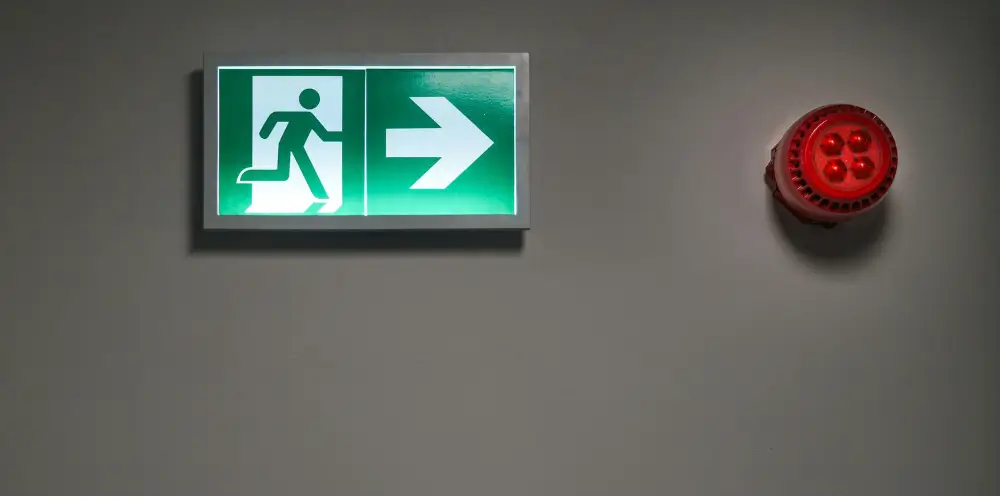
Which Buildings Legally Require Emergency Lighting?
BS 5266-1 provides recommendations for emergency lighting in premises where occupants may be at risk if normal lighting fails. This commonly includes buildings such as residential care homes, hospitals, schools, high-rise residential buildings with communal escape routes, theatres, shopping centres, and other commercial or public buildings.
The need for emergency lighting depends on factors such as the type of occupancy, number of occupants, escape route design, building layout, and the findings of a fire risk assessment. Legal duties for suitable emergency lighting are supported by the Regulatory Reform (Fire Safety) Order 2005 and the Building Regulations 2010, while BS 5266-1 provides guidance on appropriate design, installation, and maintenance. Owners, landlords, and dutyholders are commonly assigned responsibility for installation, maintenance, and recordkeeping. Smaller domestic dwellings are usually exempt unless converted into multiple-occupancy units. Local amendments and national variations affect exact requirements, so compliance depends on jurisdictional interpretation of codes and on fire authority guidance. Regular consultation with qualified designers and local enforcement guarantees that required installations meet legal and safety expectations.
Plan Emergency Lighting: A Step‑by‑Step Checklist
Having established where emergency lighting is legally required, the next step is to plan the installation with a practical, ordered checklist. The checklist guides assessment, placement, power, testing, and documentation. Each item emphasizes compliance, visibility of escape routes, and minimal disruption to building operations. Responsible parties should confirm load calculations, battery backup duration, and access for maintenance. Coordination with electrical contractors and fire safety officers guarantees the layout aligns with evacuation procedures. A straightforward schedule for installation, commissioning, and routine testing reduces risk and demonstrates due diligence.
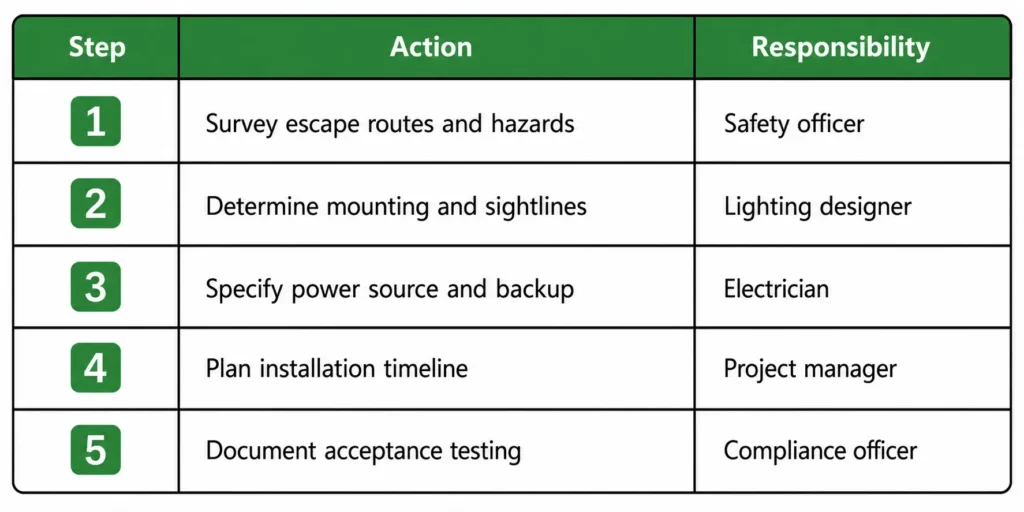
Final records should include plans, test results, and maintenance intervals to support ongoing safety and legal compliance.
Emergency Lighting Types: Exit Signs, Bulkheads, Luminaires – Where to Use Each
Where should different emergency fittings be used to provide clear egress and comply with regulations? Exit signs mark routes and doors; they are installed above exits, at decision points, and where corridors change direction, ensuring occupants can identify escape paths quickly. Bulkhead fittings provide low-level, wide-area illumination in corridors, stairwells, and open-plan spaces where wall-mounted light is ineffective; they help maintain surface contrast and reveal trip hazards. Dedicated emergency luminaires deliver focused lighting to stair treads, ramps, and landing areas, enhancing step visibility and reducing fall risk. High-level corridor luminaires maintain general route illumination, while recessed or pendant emergency fittings suit finished ceilings without obstructing headroom. Decorative or architectural fixtures with emergency configurations can be used in lobbies and assembly areas if they meet brightness and duration requirements. Placement should consider sightlines, occupancy type, and travel distances so that each fitting type complements others to create a continuous, intelligible escape environment.
Power Options and Battery Backup for Emergency Lighting
Because emergency lighting must operate reliably during power loss, selecting appropriate power options and battery backups is fundamental to system performance and code compliance. Systems typically rely on either centralised power with remote batteries, self-contained units with integral batteries, or central inverter systems; each approach balances reliability, maintenance complexity, and cost. Battery technologies sealed lead‑acid, nickel‑cadmium, and increasingly lithium‑ion offer different energy densities, life spans, temperature tolerances, and maintenance needs; choice depends on expected discharge duration, environmental conditions, and replacement cycles. Hold‑time requirements and local codes dictate minimum run times, often 90 minutes, and influence battery capacity sizing and charger specifications. Monitoring and testing provisions, including automatic weekly and annual tests, guarantee readiness and meet regulatory inspection criteria. Redundancy strategies, such as dual feeds, transfer switches, or battery backup zones, reduce single‑point failures. Proper ventilation, accessible battery compartments, and labeling support safe maintenance. Selecting compatible components and planning maintenance schedules maximises uptime and guarantees emergency lighting performs when most needed.
Design Emergency Lighting for Visible, Continuous Escape Routes
Designing emergency lighting for visible, continuous escape routes requires arranging fixtures and controls so occupants can clearly perceive and follow a safe path from any point in a building to an exit under emergency conditions. The layout prioritises uninterrupted lines of sight, consistent light levels, and unambiguous signage to reduce confusion. Fixtures are positioned at corridor intersections, stairways, doorways, and along long passages to maintain luminance and avoid dark gaps. Contrast and glare control enhance recognition of exits and directional signs; low-level aisle lighting can guide movement without impairing vision. Controls and zoning guarantee illumination remains steady or shifts predictably during incidents, while redundancy prevents single-point failures from creating blind spots. Placement considers furnishings, permanent obstructions, and expected occupant flow to ensure the route remains perceivable when smoke or power loss occurs. Coordination with architectural features and signage standards produces a coherent visual sequence that supports quick, orderly egress under adverse conditions.
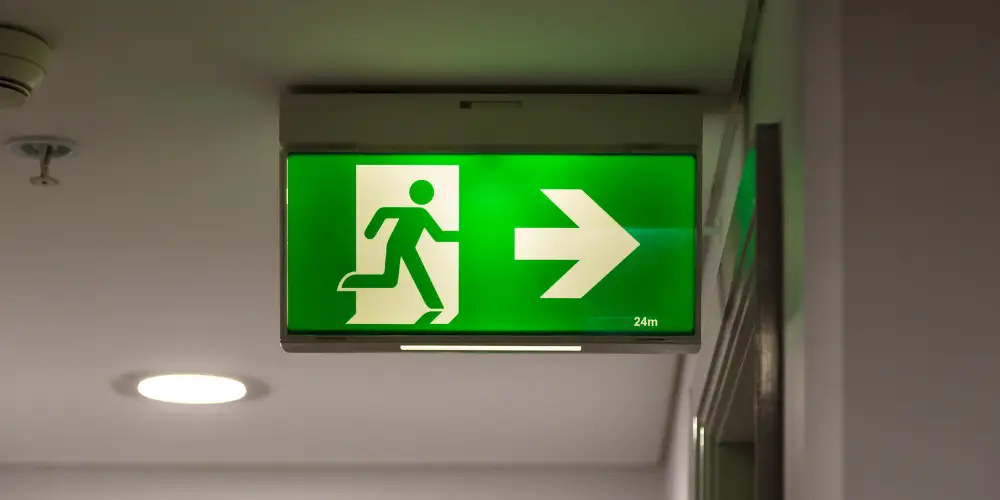
Testing and Maintenance Checklist for Reliable Emergency Lighting
Having established layout and control strategies that keep escape routes visible and continuous, attention turns to a systematic testing and maintenance checklist that confirms those provisions perform when needed. The checklist outlines routine inspections, functional tests, and documentation practices to verify that emergency luminaires, exit signs, batteries, and control gear remain reliable. Visual checks identify damage, cleanliness, and proper aiming; monthly functional tests validate autonomy and lamp operation; annual full-duration tests affirm battery capacity and system endurance. Records track test dates, results, corrective actions, and responsible personnel to meet regulatory requirements and support audits. Prioritisation guarantees critical escape paths receive prompt attention, while spare parts and replacement schedules minimise downtime. Training for maintenance staff covers safe isolation, test procedures, and interpreting test data, enabling informed decisions without immediate specialist involvement. The approach emphasises proactive, documented maintenance to sustain illumination performance and occupant safety over the life of the installation.
- Monthly functional test and record
- Annual full-duration discharge test and replacement plan
- Visual inspection, cleaning, and corrective action logging
Common Problems, Troubleshooting, and When to Call a Specialist
Identify common faults quickly to limit downtime and preserve safe egress. The section describes typical failures, dead batteries, lamp burnout, corroded connections and concise first-step checks: confirm mains power, run a manual test, and inspect indicators. Simple fixes include battery replacement, lamp swap, and tightening terminals; document each action and retest. Persistent issues such as repeated battery failure, flickering lights, or control gear overheating signal deeper faults.
| Symptom | Likely Cause | Immediate Action |
| No illumination on test | Battery or charger fault | Verify mains, check battery voltage |
| Flicker or dim output | Lamp aging or ballast issue | Replace lamp, inspect driver |
| Indicator LED off | Faulty PCB or wiring | Trace wiring, check fuses |
When replacements or wiring investigations are required beyond basic swaps, engage a qualified specialist. Certified technicians perform load tests, replace sealed components, and guarantee compliance with regulations, reducing liability and restoring reliable egress lighting.
Frequently Asked Questions
How Does Emergency Lighting Affect Insurance Premiums?
Properly installed and maintained emergency lighting can lower insurance premiums by reducing risk, demonstrating regulatory compliance, and potentially qualifying for discounts; insurers often view it as evidence of proactive loss prevention, which influences underwriting and rates.
Are Emergency Lights Required Outdoors in Large Campuses?
Yes, outdoor emergency lights are often required on large campuses where egress, pathways, and assembly points need illumination. Codes, local authorities, and campus risk assessments determine exact requirements and placement, varying by jurisdiction and occupancy.
Can Smart Building Systems Integrate Emergency Lighting Controls?
Yes, the system can integrate emergency lighting controls, allowing centralised monitoring, automated testing, fault reporting, and prioritised power management while preserving mandated fail-safe operation and complying with relevant codes and certification requirements.
What Are the Environmental Disposal Rules for Old Emergency Batteries?
They must be treated as hazardous waste and recycled or disposed of through certified e-waste or battery collection programs; regulations require segregation, labeling, and transport by licensed handlers, with local laws dictating specific recycling or disposal procedures.
Do Emergency Lighting Standards Differ Internationally for Ships or Planes?
Yes. He notes maritime and aviation regulations differ: SOLAS and flag-state rules govern ship emergency lighting, while ICAO, EASA, and FAA standards govern aircraft, each specifying distinct performance, testing, installation, and documentation requirements.
Conclusion
Emergency lighting plays an essential role in guiding occupants to safety during incidents, ensuring escape routes remain visible and usable. Regulations determine where installations are required, and careful planning—selecting appropriate types, power supplies, and placement maximises effectiveness. Regular testing and maintenance prevent failures, while prompt troubleshooting and specialist intervention address complex issues. Prioritising reliable emergency lighting reduces risk, supports compliant buildings, and enhances overall occupant safety during evacuations and power disruptions.