Effective fire‑spread prevention relies on prompt containment, safe storage, and engineered controls. Close doors and use extinguishers aimed at the base of the flames. Segregate and ventilate flammable materials, label containers, and use spark‑free tools. Choose fire‑resistant structures and finishes, maintain clear, marked escape routes, and control airflow to limit smoke. Install and test interconnected smoke and heat detectors, sprinklers, and portable suppression devices. Regular maintenance, training, and tailored plans reduce risk, and further guidance explains how to implement them in practice. Describe practices that prevent fires from spreading.
Key Takeaways
- Close doors and compartmentalise spaces to limit oxygen and slow the spread of fire and smoke.
- Maintain and use appropriate fire detection and automatic suppression systems to enable rapid alerting and control.
- Store flammable materials in ventilated, labeled areas away from ignition sources and incompatible substances.
- Keep escape routes, exits, and firefighting access clear and clearly marked for safe evacuation and response.
- Use fire-resistant construction, finishes, and intumescent coatings, and perform regular inspections and maintenance.
Table of Contents
Quick Actions to Stop Fire Spread Now
Act immediately to contain a small fire by closing doors to limit oxygen flow, using a fire extinguisher aimed at the base of the flames, and activating a nearby sprinkler or alarm; if the fire is large or spreading rapidly, evacuate the area and call emergency services while alerting others. The observer assesses risk quickly, choosing direct intervention only when escape remains unimpeded and the extinguisher type matches the fuel. Doors and barriers are used strategically to compartmentalise smoke and heat, slowing spread without relying on others’ permission. Portable suppression tools are deployed with decisive, practiced motions; aim low, sweep steadily, retreat if effectiveness wanes.
Describe practices that prevent fires from spreading. Electrical power to affected circuits is cut when safe, limiting re-ignition. Communication is concise: announce status, direct evacuation routes, and confirm emergency response contact. Afterward, the scene is left to professionals; actions are documented for accountability and learning. These measures preserve autonomy by prioritising informed, swift choices that protect life and property.

Store and Handle Flammable Materials Safely
After immediate containment actions, attention turns to preventing future incidents by strictly controlling the storage and handling of flammable materials. Responsible parties segregate incompatible substances, label containers clearly, and keep quantities on-site to the minimum necessary for operations. Containers are sealed, grounded, and placed in well-ventilated areas away from ignition sources; transfer procedures employ spark-free tools and equipment. Regular inventory checks, leak inspections, and securely locked storage limit unauthorised access while preserving individual autonomy to manage personal property responsibly.
Training emphasises safe handling, proper use of personal protective equipment, and clear emergency procedures so personnel can act decisively if a leak or spill occurs. Approved safety data sheets and signage remain accessible. Waste and residues are disposed of promptly using approved methods. Periodic audits and continuous improvement guarantee practices evolve with changing needs and technologies, balancing regulatory compliance with respect for freedom in daily operations.
Use Fire‑Resistant Materials and Finishes
Specify and install fire‑resistant materials and finishes to reduce ignition risk and slow fire spread, prioritising noncombustible structural elements, treated or inherently fire‑resistant claddings, and interior finishes with tested flame‑spread ratings. Designers and occupants favor durable, low‑maintenance options that preserve aesthetic choice while limiting fuel for a fire. Use masonry, steel, concrete, and approved fire‑rated assemblies where structure and code permit. Select exterior sidings and roofing with documented resistance to flame transfer and ember attack.
For interiors, choose wall coverings, ceiling materials, and floorings with low flame‑spread and smoke‑development classifications; prefer Class A or equivalent ratings. Apply intumescent coatings and fire‑retardant treatments on exposed combustible components when replacement is impractical. Verify products carry recognised certification and are installed per manufacturer instructions to retain performance. Regular inspection and timely repair preserve the protective qualities of finishes. This approach balances individual liberty in material choice with collective responsibility to contain fire and protect property and lives.
Keep Escape Routes Clear and Control Ventilation
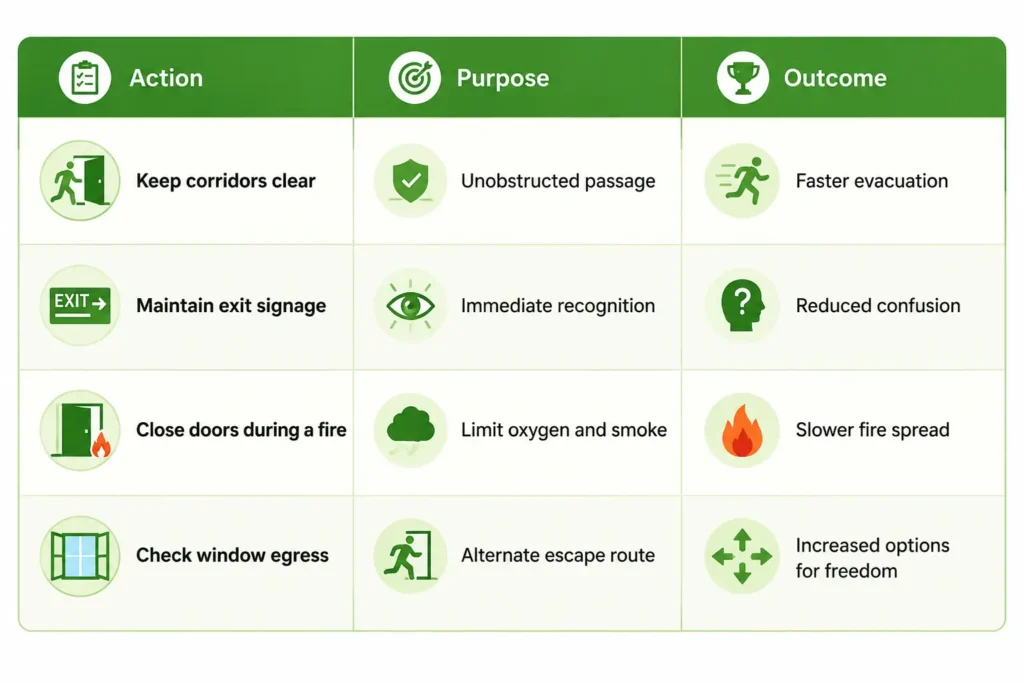
Keep escape routes unobstructed and manage ventilation to preserve clear, breathable paths for evacuation and to limit fire growth. The guidance emphasises routine inspections, removal of clutter, and deliberate control of airflow to support rapid egress and reduce fire intensity. Occupants are encouraged to keep doors and corridors free of storage, mark exits clearly, and ensure windows intended for escape operate smoothly. Ventilation strategies such as closing doors, using dampers correctly, and avoiding uncontrolled openings help contain heat and smoke while preserving survivors’ freedom to leave safely. Coordination with building design and occupant behavior enables resilient evacuation without unnecessary restraint.
Install and Test Smoke/Heat Detection Systems
Install and routinely test smoke and heat detectors to provide the earliest reliable warning of a fire. The building manager verifies that detectors are chosen to suit each space: photoelectric for smoldering fires, ionisation for fast-flame detection, and heat detectors for kitchens or dusty areas. Devices are interconnected, so an alarm at any location alerts all occupants, enabling swift, autonomous evacuation. Maintenance follows a schedule: monthly functional tests, battery checks, annual professional inspections, and prompt replacement per manufacturer guidance. Records of tests and corrective actions support accountability and readiness.
- Select detectors matched to hazards and environment.
- Interconnect devices for whole-occupancy alerting.
- Implement routine testing, battery replacement, and documentation.
- Arrange professional inspection and timely device replacement.
This approach preserves occupants’ freedom to act by delivering clear, early warning, minimising loss, and reinforcing personal responsibility without restricting movement or choices.
Choose and Place Extinguishers, Sprinklers, and Blankets
After ensuring reliable detection, attention shifts to selecting and locating fire suppression tools that match likely fuels and occupant capabilities. The choice of extinguisher water, foam, CO2, dry chemical, or wet-spray should align with anticipated fire classes so interventions remain effective without creating new hazards. Read out the Types of Fire and Fire Extinguisher: What You Need to Know.
Sprinkler systems are positioned to cover high-risk zones and arranged for straightforward maintenance access; their design prioritises rapid activation and minimal interruption to occupants’ liberty to use spaces safely. Portable blankets are kept near stoves, grills, and charging stations for immediate smothering of small blazes or clothing fires, stored visibly and within reach.
Placement decisions balance reach, legal codes, and unobtrusive integration, enabling individuals to act decisively when needed. Clear signage indicates locations, while size and ratings of devices reflect room volumes and fuel loads. This practical, rights-respecting approach empowers people to limit fire spread promptly and confidently without undue constraint.

Maintain Systems and Train Staff to Contain Fires
Regular inspection and routine maintenance of suppression equipment, combined with targeted staff training, guarantee fires are contained quickly and safely. Systems are tested, sensors calibrated, and access routes kept clear so response tools function without delay. Training emphasises decision-making autonomy, clear roles, and the authority to act before escalation. Records document tests and drills, enabling continuous improvement and individual accountability. Communication protocols are simple, direct, and supportive of swift action.
- Schedule: implement regular inspections, parts replacement, and documented testing cycles.
- Skills: train staff in equipment use, situational assessment, and safe evacuation leadership.
- Authority: empower personnel to initiate suppression measures and call for assistance without bureaucratic delay.
- Review: conduct after-action reviews, update procedures, and address equipment or training gaps.
This approach balances technical reliability with human initiative, preserving safety while respecting autonomy and ensuring fires are contained with minimal harm. Here is the guidance to Identify Seven Basic Fire Safety Control Measures to Protect Your Workplace.
Tailor Prevention Plans for Homes, Workplaces, and High‑Risk Sites
Effective fire prevention plans reflect the specific risks, occupancy patterns, and resources of homes, workplaces, and high‑risk sites so measures are proportionate and practical. The approach differentiates residential priorities, escape routes, smoke alarms, and safe storage from workplace needs like evacuation procedures, fire doors, and trained coordinators. High‑risk sites such as chemical plants or warehouses require layered controls: engineered suppression, zoning to limit fuel and ignition, rigorous permitting, and specialised training.
Assessment drives choices: inspections identify hazards, mapping shows egress and firefighting access, and schedules set maintenance and drills. Plans favor simple, robust measures that enable autonomy, clear signage, manual overrides, and accessible extinguishers while integrating automatic systems where justified. Accountability is assigned without bureaucracy: designated stewards maintain checks, report deficiencies, and update plans after incidents or layout changes. Regular review cycles adjust controls to evolving use patterns and technologies. The result preserves individual freedom through informed choices while reducing the likelihood and impact of fire spread.
Frequently Asked Questions
Can Fire-Resistant Clothing Help Prevent the Spread of Fire in Buildings?
Yes. He notes fire-resistant clothing reduces ignition risk for occupants and first responders, limiting personal involvement in interior fires; it slows garment combustion, aiding evacuation, but does not replace structural measures or active fire suppression systems.
How Do Wildfires Affect Nearby Structures’ Spread Risks?
Wildfires increase the risk of spread to nearby structures by generating embers, radiant heat, and wind-driven flames; defensible space, ember-resistant materials, and proactive evacuation reduce vulnerability while preserving occupants’ autonomy and property through informed, voluntary preparedness.
Are Electric Vehicle Fires Handled Differently for Containment?
Yes. Responders treat electric vehicle blazes differently: they prioritise battery cooling, isolation, and specialised suppression techniques, accepting scaled evacuation autonomy while coordinating with regulations and vendors to neutralise thermal runaway and prevent reignition or hazardous spread.
Can Plants and Landscaping Reduce Fire Spread Risk?
Yes, they can. Thoughtful plant selection, spacing, and maintenance create defensible space, reduce fuel continuity, and slow fires. Native, fire-resistant species, regular pruning, and removing dead material empower property resilience while respecting personal autonomy.
What Legal Liabilities Exist for Inadequate Fire Prevention Measures?
Liability arises from negligence, statute breaches, or failure to meet building codes; owners, managers, and contractors can face civil suits, fines, and criminal charges when inadequate fire prevention causes harm, especially if warnings or regulations were ignored.
Conclusion
Describe practices that prevent fires from spreading. Effective prevention hinges on layered, consistent measures that stop fires from spreading and protect lives and property. Rapid actions, safe storage and materials, clear egress and controlled ventilation, reliable detection and suppression equipment, and routine maintenance all work together. Regular training guarantees occupants act decisively, while tailored plans address specific home, workplace, or high‑risk needs. When these practices are combined and sustained, the likelihood and impact of fire spread are substantially reduced.