There are five main fire classes: A (ordinary combustibles), B (flammable liquids/gases), C (energised electrical), D (metals) and K/F (cooking oils). Matching them with the right extinguisher is essential: water or foam for Class A, foam or CO₂ for B, CO₂ or dry powder for C, specialist agents for D, and wet chemical for K/F. Fire blankets help with small pan or clothing fires. The key distinctions become clearer as the guide progresses.
Key Takeaways
- Fires are classified mainly as A, B, C, D, and K, based on the fuel burning: solids, liquids, electrical, metals, and cooking oils.
- Using the wrong extinguisher can spread the fire or cause shock, especially on flammable liquids or energised electrical equipment.
- Common extinguisher types include foam, dry powder, CO₂, and wet chemical, each suited to specific fire classes and environments.
- Multi-class ABC or BC extinguishers provide versatile protection for homes, vehicles, and small workplaces with mixed fire risks.
- Always assess fire size and escape routes; if in doubt or if the fire grows, evacuate immediately and call emergency services.
Table of Contents
Fire Classes and What Each One Means
Fire classes provide a systematic way to identify different types of fires based on the fuel that is burning, helping determine the safest and most effective method of extinguishment. This framework lets individuals respond confidently instead of depending on rigid rules or guesswork.
Class A involves ordinary combustibles such as wood, paper, cloth, and many plastics.
Class B covers flammable and combustible liquids and gases, like gasoline, solvents, and propane.
Class C refers to fires involving energised electrical equipment, where live current introduces extra risk.
Class D addresses fires in combustible metals, including magnesium, titanium, and sodium, often found in specialised workshops or industrial settings.
Class K (or F in some regions) focuses on high‑temperature cooking oils and fats common in commercial and home kitchens.
The Right Extinguisher for Each Fire Class
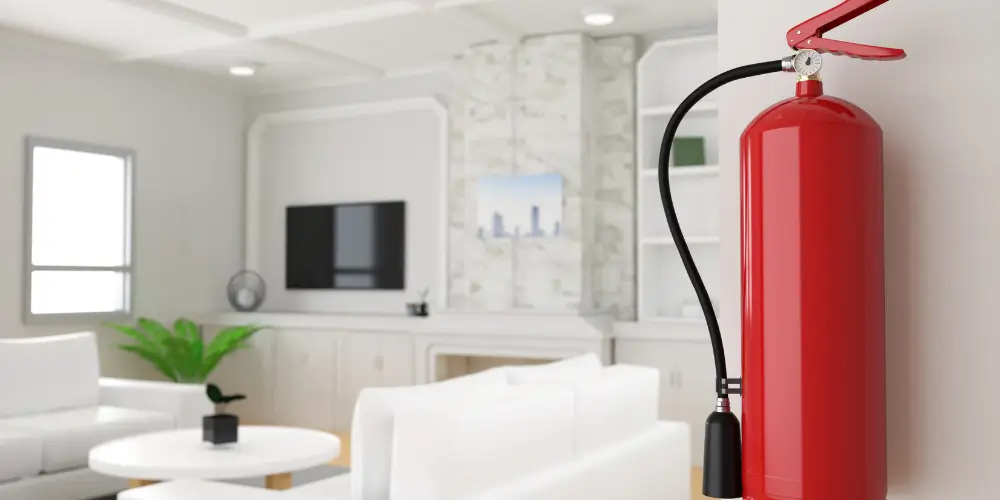
Choosing the correct extinguisher for each fire class is critical because using the wrong agent can worsen the situation or create new hazards. Someone who values independence needs clear options, not guesswork, when facing flames that threaten their space, gear, or journey.
To visualise this, imagine:
- A wooden cabin wall igniting: the right extinguisher targets ordinary combustibles, knocking back flames without scattering burning debris.
- A fuel spill near a motorbike: a misused water-based agent could spread burning liquid, while the correct one forms a barrier that smothers it.
- An overloaded power strip sparking at a minimalist workstation: the right choice interrupts the fire without conducting electricity through the user.
- A small gas flare in a compact workshop: the appropriate agent cools and chokes the flame without blowing the burning gas toward an exit route.
Correct matching preserves escape routes, property, and personal autonomy.
Main Types of Fire Extinguishers at a Glance
A quick overview of extinguisher types helps translate abstract “classes” of fire into concrete tools a person can actually buy, store, and use. Instead of feeling locked into confusion, a person can scan the label, match it to likely hazards, and move on with life. The main types are usually labelled by their extinguishing agent. Foam extinguishers blanket flammable liquids and solids, cutting off oxygen.
Dry powder units interrupt chemical reactions across many fire types, making them popular in settings with varied risks. Carbon dioxide (CO₂) extinguishers displace oxygen and cool equipment, useful where residue would be a problem. Wet chemical extinguishers are tailored for cooking oils and fats, forming a soapy barrier on the burning surface.
Finally, multi‑class “ABC” or “BC” extinguishers combine versatility with compact size, appealing to those who want broad coverage in vehicles, workshops, or small homes without filling every corner with different cylinders.
Water Fire Extinguishers: Safe Uses and Risks
Understanding water fire extinguishers starts with recognising that not every cylinder is designed for every flame. Water models are tailored for Class A fires solid combustibles like wood, paper, textiles, and many plastics. They cool burning materials, stripping heat away and restoring control when used correctly.
To picture their best and worst uses, imagine:
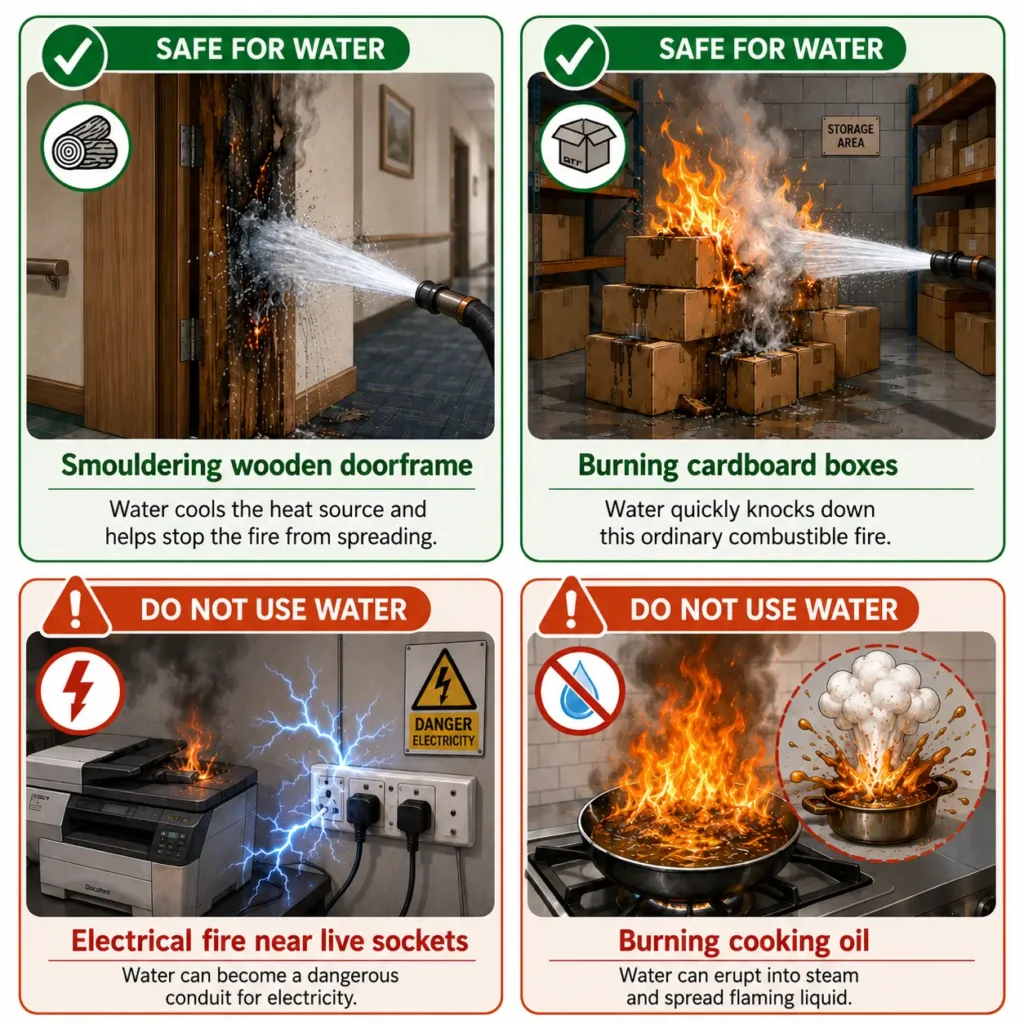
For people who value independence, knowing these limits matters: water brings liberation from many everyday fires, yet demands disciplined refusal when electricity, flammable liquids, or gases are involved.
Foam Fire Extinguishers for Solids and Liquids
While water excels at cooling simple solid fires, foam fire extinguishers add an essential advantage: they can also smother many flammable liquids. AFFF and related foams create a floating blanket over burning fuel, cutting off oxygen and stopping vapour release. This makes them effective on most Class A (solids like wood, paper, textiles) and Class B (flammable liquids such as petrol, diesel, and some solvents) fires.
Foam extinguishers are typically identified by a cream-coloured label. They are commonly placed in workshops, garages, warehouses, and areas where people store or handle fuels, giving occupants a practical tool to protect their own space before a fire grows uncontrollable.
Users must avoid spraying foam directly into a burning liquid with high force, as this can splash fuel and spread flames. Instead, the jet is directed against a nearby surface, allowing the foam to flow gently across the fire.
CO2 Extinguishers for Electrical and Fuel Fires
CO2 fire extinguishers tackle flames by displacing oxygen with a concentrated blast of carbon dioxide gas, starving the fire in seconds. This method leaves no residue, allowing people to protect equipment and space without feeling bound by messy cleanup or collateral damage.
They are particularly suited to energised electrical fires and small flammable liquid fires where precision and speed matter.
- A server room hums in the dark; a CO2 jet shrouds live equipment without soaking circuits or leaving powder behind.
- A fuel spill ignites in a workshop; a controlled CO2 discharge smothers the vapours, restoring calm and control.
- An office printer bursts into flames; a compact CO2 unit cools and clears the area, preserving freedom of movement.
- A laboratory bench flashes with solvent fire; CO2 drives away oxygen, ending the flare-up while protecting sensitive instruments.
Dry Powder Extinguishers: Flexible, but Not for Every Fire
Where CO₂ extinguishers focus on clean, targeted suppression, dry powder models offer broad capability across multiple fire types, but with notable trade-offs.
They typically tackle Class A (solids), Class B (flammable liquids), and Class C (gases), and some formulations handle metal fires, giving users a sense of flexibility when conditions change fast.
Dry powder works by interrupting the chemical reaction of combustion and forming a barrier over burning material. However, the same powder that grants freedom from single‑purpose units can quickly coat equipment, vehicles, and interiors, creating costly cleanup and possible damage to sensitive components.
Visibility is another issue: once discharged indoors, the cloud can obscure exits and hazards, complicating a rapid retreat. In confined spaces, inhalation concerns also rise. For these reasons, dry powder extinguishers are often best suited to open areas, workshops, and vehicle bays, where mess matters less than quickly stopping a fire.
Wet Chemical Extinguishers and Kitchen Fire Safety
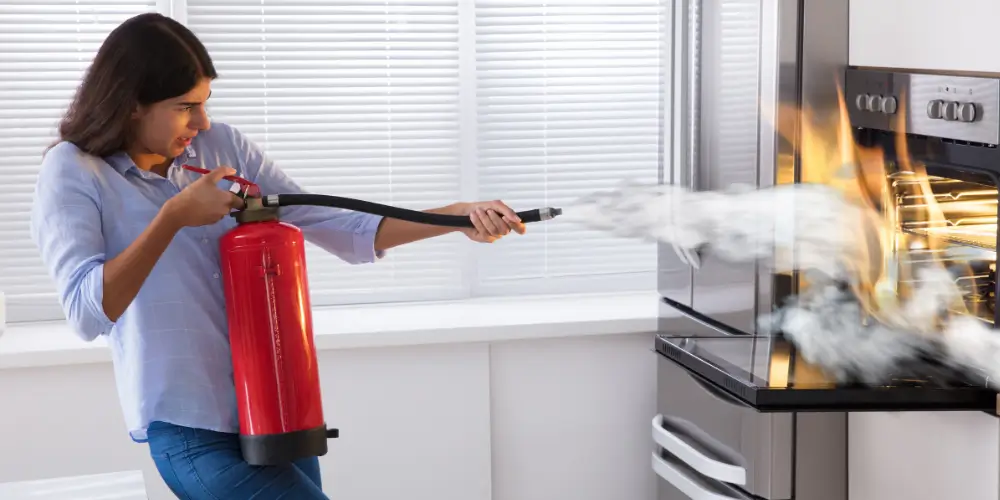
Although many extinguishers struggle with cooking‑oil incidents, wet-chemical models are specifically engineered for kitchen fires involving deep-fat fryers and high‑temperature oils (Class F). They allow people to cook boldly while still respecting the risks of super‑heated oils. The extinguisher’s lance nozzle delivers a gentle, controlled spray that avoids splashing burning fat, giving occupants room to act without feeding the flames.
Wet chemical agents work in two ways: they cool the oil and create a soapy surface layer (saponification) that seals in vapour and prevents re‑ignition.
To imagine their role in a liberated, high‑energy kitchen, consider:
- A busy fry station where one slip of a basket ignites the oil.
- A compact food truck galley with barely a step between flame and exit.
- A home cook experimenting fearlessly with deep‑fried recipes.
- A commercial range running nonstop during a festival rush.
Fire Blankets vs Extinguishers for Small Fires and How to Choose/Use Them Safely
Choosing between a fire blanket and an extinguisher for a small fire depends on what is burning, where it is located, and who is using the equipment.
A fire blanket is often safer for pan fires, burning clothing, or small contained blazes. It works by smothering flames and cutting off oxygen, with minimal mess and no discharge to inhale.
Extinguishers are suitable for slightly larger fires or situations where reaching the base of the flames from a distance matters. For small indoor fires, a multi‑purpose dry-powder or foam unit is common, while a wet-chemical unit is used for cooking oil fires. Safe choice begins with honest self‑assessment: if escape is uncertain, evacuation outranks suppression.
When using a blanket, it should be opened fully, held as a shield, then placed gently over the fire and left in place. With extinguishers, users must remember “pull, aim, squeeze, sweep” and never turn their back on the fire.
Frequently Asked Questions
How Often Should Fire Extinguishers Be Inspected and Professionally Serviced?
They should be inspected monthly and professionally serviced at least annually. This schedule respects people’s right to safe, self‑reliant spaces while ensuring equipment works when needed, without imposing excessive interference or unnecessary regulatory overreach on everyday life.
Where Should Fire Extinguishers Be Mounted in a Home for Best Accessibility?
They should be mounted near exits, along escape routes, and in the kitchen, garage, and workshop, 3–5 feet high, clearly visible, unobstructed, and away from stoves or heaters so occupants can retreat while grabbing them.
What Training Is Recommended Before Using a Fire Extinguisher Safely?
Basic extinguisher training is advised: reading manufacturer instructions, PASS technique practice (Pull, Aim, Squeeze, Sweep), awareness of fire classes, escape route planning, and supervised hands‑on drills through local fire departments or safety courses.
How Do I Dispose of or Recycle an Old or Discharged Extinguisher?
They should never dump it in regular trash; instead, they contact local fire departments, hazardous‑waste sites, or metal recyclers, ensuring it’s fully depressurised, safety‑pinned, and labelled, so it’s responsibly reclaimed rather than controlled by landfills.
Are There Legal Requirements for Fire Extinguishers in Small Businesses or Rentals?
Yes. Small businesses and rentals usually face legal obligations on extinguisher type, placement, inspection, and documentation. Exact rules depend on local fire, building, and insurance codes, so independent verification with authorities is essential.
Conclusion
Understanding fire classes and matching them with the correct extinguisher or fire blanket is essential for a safe, effective response by recognising the type of fire, whether solid, liquid, electrical, or cooking-related individuals can choose water, foam, CO₂, dry powder, wet chemical extinguishers, or blankets appropriately. Proper selection, regular maintenance, and basic training greatly reduce risk, helping prevent small incidents from becoming major emergencies and supporting a safer home or workplace environment.