A Type 2 Fire Risk Assessment is a formal, systematic evaluation for medium-sized, multi-occupancy or complex premises that identifies fire hazards, evaluates occupant vulnerability, and examines escape routes, detection and suppression systems, and compartmentation. It produces prioritised, actionable recommendations and records to support legal duties and management decisions. Property managers or owners typically commission one when building complexity, occupancy mix, or incident history exceeds the scope of a simple assessment. Further detail explains the scope, assessor qualifications, commissioning, and the use of the findings.
Key Takeaways
- A Type 2 Fire Risk Assessment evaluates medium-sized, multi-occupancy residential or commercial buildings for fire risks, escape routes, and safety systems.
- It balances safety with occupant autonomy, offering pragmatic, prioritised recommendations rather than prescriptive mandates.
- Commission one when building complexity, occupants, or history suggests existing arrangements may be insufficient or unclear.
- Assessors are accredited fire-safety professionals with independence, technical experience, and sample reports available on request.
- Use findings to create a prioritised action plan, assign legal responsibilities, and schedule reviews to maintain compliance.
Table of Contents
What Is a Type 2 Fire Risk Assessment?
When a Type 2 fire risk assessment is conducted, it systematically evaluates medium-sized premises, typically multi-occupancy residential buildings or commercial properties with multiple tenancies, to identify fire hazards, assess occupant vulnerability and escape routes, and recommend proportionate measures to reduce risk. It defines the scope, inspects common areas, circulation routes, and compartmentation, and reviews fire detection, alarm systems, and emergency lighting. The assessor considers occupancy patterns, presence of people with reduced mobility, and potential ignition sources, balancing safety with reasonable autonomy for occupants and managers.
Findings are recorded, prioritised, and presented as practical actions and maintenance requirements, enabling responsible parties to make informed choices. Recommendations focus on achievable upgrades, procedural changes, and training rather than prescriptive constraints, preserving operational freedom while improving resilience. The report also sets review intervals and notes legal or guidance references, equipping decision-makers with clear, actionable information to manage fire risk proportionately and confidently.
Do You Need a Type 2 Fire Risk Assessment?
Why consider a Type 2 fire risk assessment? A property owner or manager evaluates whether this more detailed, system-focused assessment is appropriate when existing arrangements, building complexity, or changes suggest standard checks may be insufficient. The decision hinges on factors such as building size, occupancy type, presence of high-risk materials, recent alterations, or regulatory triggers that demand stricter scrutiny.
Those responsible for safety weigh consequences: greater autonomy comes with choosing assessments that match risk, avoiding unnecessary constraints while ensuring legal compliance and protection. Organizations seeking operational freedom prefer proportional measures that address real hazards without imposing rigid, one-size-fits-all controls. Read our blog post Who Has Ultimate Responsibility for Producing a Fire Risk Assessment.
A pragmatic review of current fire safety performance, incident history, insurer or regulator recommendations, and planned modifications guides the choice. When uncertainty remains, commissioning a Type 2 assessment can clarify obligations and reduce liability, enabling occupants and managers to preserve liberty in how spaces are used while maintaining robust protection.
What a Type 2 Assessment Covers (Scope and Examples)
Although focused on systems and operational details rather than solely on premises, a Type 2 fire risk assessment systematically examines design, detection, and suppression systems; compartmentation and escape routes; management procedures; human factors; and the interface between building services and fire safety strategy. It details fire alarm zoning, sprinkler coverage, smoke control, firefighting access, and integrity of fire-resisting elements. Operational controls such as hot work, maintenance regimes, and contractor management are reviewed alongside evacuation plans, signage, and staff training. Human factors, occupant load, behaviour under alarm, and vulnerable groups are assessed to test practical escape timelines.
Examples include analysing a hospital wing’s phased evacuation capability, verifying interlocks between ventilation and smoke control in a data centre, and checking fire-stopping continuity where services penetrate walls. Findings identify deficiencies, risk-ranking, and pragmatic mitigation options that respect operational freedom while ensuring compliance. The scope consequently links technical appraisal with actionable recommendations tailored to maintain safe, flexible use of the building and its systems.
Who Can Carry Out a Type 2 Assessment: Qualifications and Accreditation
Qualified professionals with relevant expertise in fire safety and building services should conduct Type 2 fire risk assessments. The assessor typically holds recognised qualifications in fire engineering, chartered building services, or accredited fire risk assessor certifications and maintains up-to-date CPD. Independence and impartiality are emphasised so decisions remain free from operational pressures.
Selection criteria focus on demonstrated experience with complex systems, regulatory knowledge, and evidence of formal accreditation from national bodies or industry schemes. Organisations often require professional indemnity insurance and clear reporting standards. Collaboration with multidisciplinary teams is common when addressing mechanical, electrical, and structural interfaces.
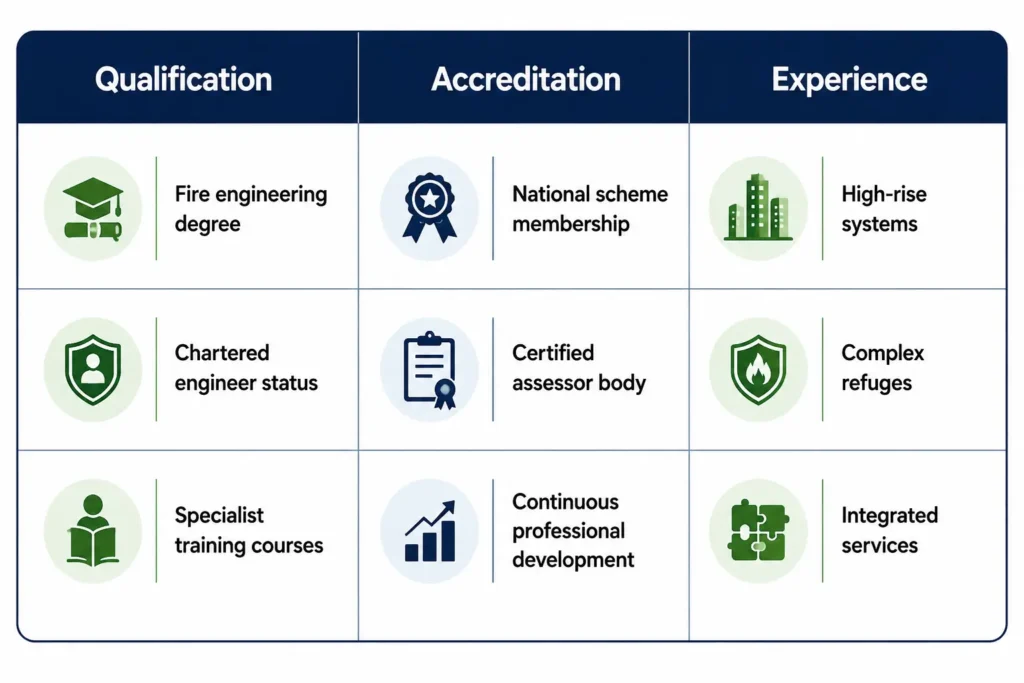
Clients seeking freedom in choice should verify credentials, request sample reports, and confirm scope before engagement to ascertain assessments are rigorous, transparent, and legally defensible.
Type 2 Vs Type 1: Key Differences and When to Choose Each
Having established who should perform a Type 2 assessment, the discussion now contrasts Type 2 and Type 1 approaches to clarify their distinct purposes, scope, and outputs. The comparison highlights when each is preferable, focusing on practical choice rather than regulatory theory. Type 1 is a compliance-driven, checklist-style evaluation for buildings with standard risks; Type 2 is a bespoke, evidence-based appraisal for complex, higher-risk, or non-standard properties. Decision factors include building complexity, stakeholder autonomy, and desired depth of analysis.
- Scope: Type 1 covers typical fire safety elements; Type 2 examines systems, materials, and atypical hazards in depth.
- Purpose: Type 1 assures minimum compliance; Type 2 enables risk reduction strategies and informed freedom in management choices.
- Evidence: Type 1 relies on inspection and checklists; Type 2 uses investigation, measurements, and professional judgement.
- When to choose: Opt for Type 1 for routine assets; choose Type 2 for complex, novel, or high-consequence premises where tailored controls matter.
Explore Fire Risk Assessment Types and How to Choose the Right One.
What a Type 2 Report Should Include (Components & Evidence)
A Type 2 fire risk assessment report should present a structured, evidence-led record that enables informed decisions about complex or non-standard buildings. It must succinctly state scope, limitations and methodology, clarifying who commissioned the work, inspection dates and any areas excluded. Clear building description and occupancy profiles follow, with plans and annotated photographs to show layout, fire compartments, escape routes and hazards.
Risk findings should be itemised: ignition sources, combustible materials, fire spread potential, detection and suppression systems, and means of escape effectiveness. Evidence should include test records, maintenance logs, and photographs linked to observations. Recommendations must be prioritised, pragmatic and time-bound, distinguishing immediate actions from strategic measures.
A conclusion summarises overall risk level and residual risk after proposed controls. Appendices contain qualifications of assessors, statutory references, referenced standards and raw data. The tone remains objective, enabling owners to act with autonomy and clarity.
Cost, Timescale and How to Commission a Type 2 Assessment
Costing and timetable considerations for a Type 2 fire risk assessment hinge on building complexity, scope and required specialist inputs; larger or atypical properties with multiple compartments, high-risk occupancies or bespoke systems typically incur higher fees and longer delivery times. Costs are usually quoted as fixed fees or day rates; estimates should specify tasks, deliverables and any travel or testing charges. Typical lead times range from a few days for straightforward surveys to several weeks for complex sites requiring specialist inspections or multiple stakeholder consultations. Commissioning follows a clear sequence to preserve freedom of choice and guarantee accountability.
- Request detailed proposals from accredited assessors, comparing scope, exclusions and qualifications.
- Agree timetable and milestones, including on-site survey dates and draft report deadlines.
- Confirm access arrangements, documentation provision and any required third-party testing.
- Execute a written engagement letter or contract outlining fees, deliverables, confidentiality and cancellation terms.

Using Type 2 Findings to Reduce Risk and Meet Legal Duties
Translate Type 2 findings into a clear, prioritised plan that aligns with statutory duties and practical risk reduction. The assessor’s evidence should be distilled into actions ranked by severity, likelihood, and feasibility. Legal obligations, duty holder responsibilities, evacuation procedures, and maintenance requirements must be mapped to each action so compliance is explicit. Assign owners, deadlines, and measurable outcomes to avoid diffusion of responsibility.
Implement quick wins first: temporary controls, signage, and closing immediate hazards to preserve freedom of occupation while longer works proceed. Schedule medium and long-term interventions compartmentation upgrades, escape route modifications, and system overhauls so disruption is minimised, and residents retain autonomy. Maintain transparent records of decisions, rationale, and verification checks to demonstrate due diligence. Regular review cycles and resident engagement guarantee measures remain proportionate, effective, and compatible with occupants’ desire for independence, reducing risk while fulfilling legal duties. Check out the details of Fire Safety Regulations and Fire Risk Assessment Explained Clearly.
Frequently Asked Questions
How Often Should Type 2 Assessments Be Reviewed After Major Building Changes?
They should be reviewed promptly after major building changes, typically immediately upon change completion,n and reassessed within weeks to confirm controls; subsequent reviews occur whenever alterations affect fire safety, ensuring occupant freedom and minimal imposed risk.
Can Insurers Mandate a Type 2 Assessment for Policy Compliance?
Yes, an insurer can require a Type 2 assessment for policy validity; the insurer retains contractual freedom to set risk-management conditions, and the insured must comply or negotiate terms to maintain coverage or seek alternate providers.
How Do Type 2 Assessments Interact With Evacuation Drills and Staff Training?
They guide evacuation drills and staff training by informing realistic scenarios, identifying weaknesses, and setting priorities; organizations remain free to adapt programs, but must align exercises and training content with recommendations to guarantee effective, auditable preparedness.
Are Type 2 Assessments Applicable to Temporary or Pop-Up Structures?
Yes. They apply to temporary or pop-up structures when those premises present a distinct fire risk or host public activity; assessors evaluate materials, layout, occupancy, ignition sources, means of escape, and duration to determine proportional measures.
What Liability Do Assessors Hold if Recommendations Are Ignored?
Assessors bear limited legal liability if recommendations are ignored; responsibility typically shifts to duty-holders. However, assessors may face reputational, contractual, or professional consequences, and potential negligence claims if advice was inadequate or improperly documented.
Conclusion
To summarise, a Type 2 fire risk assessment provides targeted, expert analysis for specific building elements or non-domestic premises where standard Type 1 surveys are insufficient. It is required when complex risks, phased works, or atypical uses demand deeper scrutiny. Conducted by qualified assessors, the Type 2 report outlines hazards, vulnerable people, mitigation measures, and evidence. Acting on its recommendations helps dutyholders meet legal obligations, reduce fire risk, and demonstrate that they have taken reasonable, proportionate steps to protect life and property.