How Would A Potential Ignition Source Be Described in the workplace? A potential ignition source is any device, action or condition that can produce heat, sparks, flame or electrical energy sufficient to ignite flammable atmospheres or combustible materials. The description names the item or activity, explains the energy-release mechanism, locates it near combustibles, notes hazardous conditions that increase risk, and lists likely initiators. It also assesses energy levels and frequency to prioritise controls, while further guidance outlines practical prevention and mitigation measures.
Key Takeaways
- Name the device, tool, or phenomenon and state its normal function in the workplace.
- Describe the mechanism of energy release (e.g., electrical arc, friction sparks, hot surface).
- Specify the exact location and proximity to combustible materials or flammable atmospheres.
- List hazardous conditions and contextual factors that increase ignition risk (ventilation, housekeeping, static).
- Assess energy level, frequency/intermittency, likelihood of ignition, and potential consequences for risk ranking.
Table of Contents
What Is a Workplace Ignition Source?
How Would A Potential Ignition Source Be Described in the workplace? A workplace ignition source is any object, process or condition capable of producing enough heat, spark, flame or electrical energy to ignite a flammable atmosphere, combustible material or volatile substance present in the work environment. It can include static discharge, open flames, hot surfaces, friction, welding and cutting operations, electrical faults or chemical reactions that release heat. Machinery and equipment that generate heat or sparks during normal operation or failure can also contribute to risk. Human activities, such as smoking, using non intrinsically safe tools and carrying out improper hot work, may create hazards. The presence of flammable vapours, dust layers or loosely stored combustible materials increases vulnerability when ignition sources exist.
Identifying ignition sources requires observing equipment design, maintenance status, operating procedures, and typical work practices. Clear characterisation supports risk assessment and targeted controls. Understanding what constitutes an ignition source enables employers and safety professionals to prioritise prevention measures and reduce the likelihood of fires or explosions. Here are the Seven Basic Fire Safety Control Measures to Protect Your Workplace.

How to Describe Ignition Sources: 5 Essential Attributes
Because clear identification underpins effective mitigation, describing ignition sources requires a consistent, concise framework that captures what the source is, how it generates heat or energy, where it occurs, under what conditions it becomes hazardous, and who or what can initiate it.
First, plainly name the device, tool, or phenomenon and state its normal function. Second, explain the mechanisms of energy release, such as electrical arcs, hot surfaces, friction, and chemical reactions, specifying typical temperatures, sparks, or energy outputs when known. Third, locate the source within the workplace: fixed equipment, portable tool, vehicle, or work area, including proximity to combustible materials. Fourth, define hazardous conditions: presence of flammable atmospheres, confined spaces, poor ventilation, high dust concentrations, or improper maintenance that elevate risk.
Fifth, identify potential initiators, operators, maintenance actions, malfunctions, or environmental triggers and note frequency and controllability. This structured description supports risk assessment, targeted controls, and clear communication among safety personnel.
Common Ignition-Source Categories and Examples
When reviewing workplace ignition hazards, grouping sources into clear categories streamlines recognition and control. Ignition sources commonly fall into electrical, mechanical, thermal, chemical, and human-action categories. Electrical sources include faulty wiring, overloaded circuits, switches, and static discharge. Mechanical sources comprise friction, impact, and sparks from grinding, cutting, or rotating equipment.
Thermal sources cover hot surfaces, open flames, heating elements, and overheated machinery. Chemical sources involve reactive mixtures, peroxides, and spontaneous combustion from materials like oily rags or certain solvents. Human-action sources encompass smoking, hot work (welding, brazing), use of non-intrinsically safe tools, and improper equipment maintenance. Each category can produce sparks, heat, or sufficient energy to ignite flammable atmospheres or combustible materials.
Identifying category-specific examples aids targeted prevention: electrical inspections, guarding and maintenance of mechanical systems, temperature controls, chemical storage protocols, and procedural controls and training to minimise risky human behaviors.
Where and When Ignition Sources Appear in the Workplace
Ignition sources appear throughout workplaces wherever energy, heat, or reactive materials intersect with flammable atmospheres or combustible surfaces. They commonly occur near process equipment, maintenance areas, and routine operations: motors and electrical panels produce sparks or heat; hot work such as welding or cutting creates high-temperature sources; and charging stations or batteries can overheat. Timing often coincides with peak activity, start-up, shutdown, or human error during repairs.
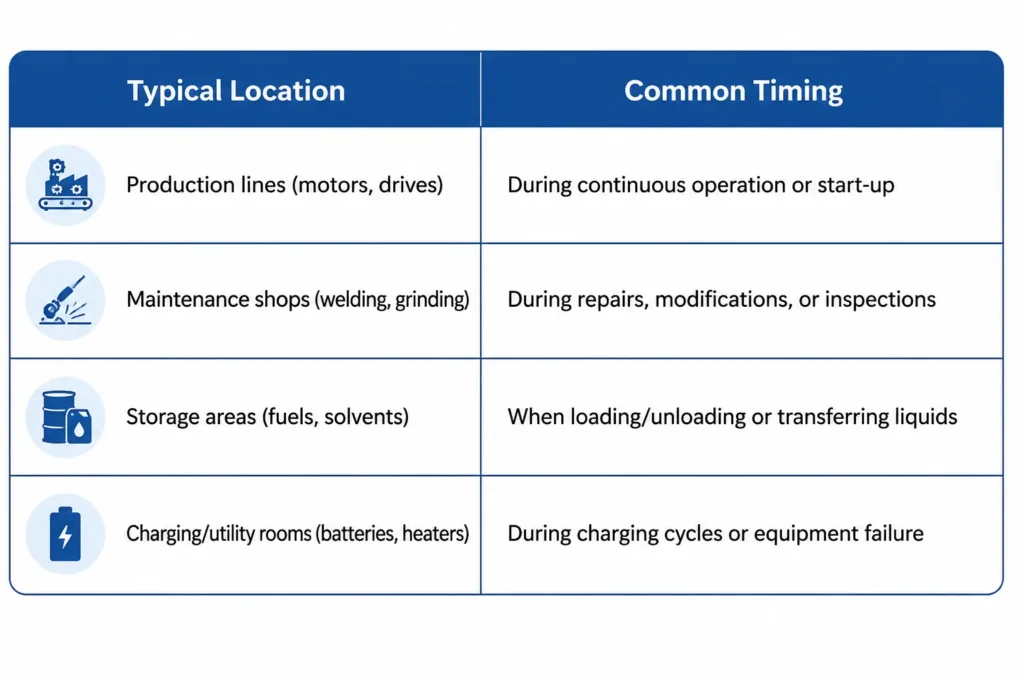
Recognition of where and when ignition sources appear enables targeted controls: isolation, procedural safeguards, and proper permitting for hot work.
How Environment and Materials Increase Ignition Risk
Although environmental conditions and material properties are distinct factors, they interact to raise the likelihood that an ignition source will initiate a fire or explosion. Elevated temperature, low humidity, and confined spaces increase vaporisation, concentration, and retention of flammable gases or dust. Airflow patterns and ventilation affect dispersion; stagnant zones can lead to accumulations, while turbulent flows can transport ignitable mixtures to remote hot surfaces.
Material characteristics, such as flash point, volatility, particle size, moisture content, and chemical reactivity, determine how readily substances form combustible atmospheres or ignite on contact. Surface conditions, such as contamination, corrosion, or coating buildup, alter ignition thresholds by creating hot spots or sustaining smoldering.
Physical layout and storage practices influence the proximity between potential ignition sources and vulnerable materials, while mechanical processes (friction, impact) can generate sparks in the presence of reactive materials. Understanding these interdependencies helps identify situations in which modest ignition energy can trigger rapid escalation, thereby informing risk assessment and targeted controls without prescribing procedural steps.
How to Write an Ignition-Source Description : Step-by-Step
A clear ignition-source description succinctly identifies the device, activity, or condition that could initiate combustion and explains its role in creating an ignitable atmosphere or providing sufficient energy to start a fire or explosion. Begin by naming the source precisely (e.g., “portable angle grinder,” “static discharge during transfer”) and state its location and typical operating conditions. Describe the energy mechanism (heat, spark, friction, electrical arc) and quantify where possible (surface temperature, spark energy, voltage).
Note the likelihood and frequency of occurrence, referencing tasks or shifts when it is present. Identify nearby fuels, vapors, dusts, or confined spaces that influence risk without prescribing controls. Record any existing safeguards that affect exposure or energy release. Keep language objective and measurable, using observable indicators rather than opinions. Conclude with a brief statement of residual uncertainty or data gaps to guide further assessment or monitoring. Creating an Effective Fire Safety Plan For Your Workplace is essential for human lives and building’s safety.

Use Ignition-Source Descriptions to Choose Controls (Eliminate, Substitute, Barrier)
With a clear ignition-source description established, evaluators can select controls that remove the hazard, reduce its energy or isolate it from fuels. The description guides a hierarchy: elimination first, substitution second, and barriers third. If the ignition source can be removed without impairing operations, elimination is prioritised. When removal is impractical, substitution seeks lower-energy alternatives or less reactive equipment identified in the description. Where neither is feasible, barriers and administrative measures isolate the source from combustible materials or limit exposure time.
Descriptions should specify ignition mechanism, energy levels, intermittency, location, and proximity to fuels; these attributes determine which control is effective and proportionate. For example, continuous high-energy sources near flammable vapors may require both substitution and fixed barriers, while sporadic low-energy sources might be managed by guarding and work rules. Clear, objective descriptions enable targeted, justifiable control choices and support effective implementation and verification without unnecessary constraints.
Quick Checklist: Inspect, Describe, and Control Ignition Hazards
Begin inspections by visually surveying work areas and equipment for potential ignition sources, noting their type, energy level, frequency, and proximity to combustible materials. The checklist organises observation, description, risk ranking, and control selection. Inspectors record sparks, hot surfaces, open flames, electrical faults, and static-prone operations; describe measurable attributes (temperature, voltage, duration) and contextual factors (ventilation, housekeeping). Rank hazards by likelihood and consequence to prioritise actions. Controls follow the hierarchy: eliminate, substitute, isolate, engineer, administrate, and provide Personal Protective Equipment (PPE) when residual risk remains. Verification guarantees controls are effective and maintained. The checklist supports communication between safety staff, supervisors, and workers, enabling timely corrections and training.
| Item | Action |
| 1. Identification | List source type and location |
| 2. Measurement | Note energy, duration, frequency |
| 3. Context | Record nearby combustibles, ventilation |
| 4. Risk Rank | Assign likelihood and consequence |
| 5. Control | Specify elimination/substitution/barrier |
Frequently Asked Questions
Who Is Legally Responsible for Documenting Ignition Sources?
The employer is legally responsible for documenting ignition sources, though delegated safety officers or supervisors may perform the recordkeeping. Regulatory bodies, inspectors, and corporate safety programs also influence documentation requirements and verification.
How Often Must Ignition-Source Descriptions Be Reviewed?
They should be reviewed at regular intervals, typically annually and after significant changes, incidents, or process modifications. The responsible safety manager or designated competent person initiates reviews to ensure descriptions remain accurate, complete, and aligned with current workplace conditions and regulations.
Are Ignition-Source Descriptions Admissible in Incident Investigations?
Yes. Investigators may admit ignition-source descriptions as factual observations, provided they are documented, verifiable, and derived from neutral sources. Their evidentiary weight depends on accuracy, chain of custody, and corroboration with forensic findings and witness statements.
Can Contractors Use Different Ignition-Source Controls Than Employees?
Yes. The organisation allows contractors to use different ignition-source controls when contract terms, risk assessments, and site-specific procedures justify variance; oversight guarantees equivalent risk mitigation, documented responsibilities, training, and compliance with applicable regulations.
What Training Is Required to Write Ignition-Source Descriptions?
The organisation requires personnel to complete hazardous energy and hot work training plus specific ignition-source description instruction; competency is demonstrated by written assessments, supervised practicals, and periodic refresher courses aligned with site procedures and regulatory standards.
Conclusion
A concise description of a potential ignition source clarifies its nature, location, and conditions of activation, enabling precise risk assessment and control selection. By noting energy type, intensity, persistence, proximity to fuels, and frequency of occurrence, safety professionals can prioritise elimination, substitution, or isolation measures. Regular inspection and clear documentation integrate these descriptions into hazard controls and emergency planning, reducing the likelihood of ignition and supporting safer workplace practices through targeted, evidence-based interventions.