An electric boiler for hot water only can suit UK flats, small homes, and off-grid properties needing compact, quiet water heating without gas. Most systems work best with a hot water cylinder, especially for off-peak tariffs and a steady supply. Units typically cost £500 to £2,500, with fitted prices around £1,000 to £4,000. They are efficient and low maintenance, but electricity can be costly. Alternatives include immersion heaters, heat pump water heaters, and solar thermal systems.
Key Takeaways
- Electric hot-water boilers suit flats, small homes, and off-grid properties, offering quiet, compact installation without flues or fuel deliveries.
- Most hot-water-only electric boilers work best with a cylinder, helping store water efficiently and use cheaper off-peak electricity tariffs.
- Direct electric boilers, system boilers, and flow boilers suit different demand levels, so choose output and cylinder size carefully.
- Expect fitted costs of roughly £1,000 to £4,000, with higher running costs than gas unless managed with smart controls and tariffs.
- Immersion heaters are cheaper and simpler, while heat pump water heaters or solar thermal can offer lower long-term energy costs.
Table of Contents
What is an Electric Boiler for Hot Water Only, and Is it Right for You?
How does an electric boiler for hot water only differ from other heating systems in the UK? It uses electricity to heat water for taps and household use, rather than powering radiators or burning gas or oil. That makes it compact, quiet, and free of flue gases, fuel deliveries, and combustion emissions at home.
For people seeking simpler living and fewer infrastructure constraints, that appeal is clear. Whether it suits a property depends on priorities. It can work well in smaller homes, flats, annexes, or off-grid settings where mains gas is unavailable or undesirable.
Installation may be straightforward, and maintenance needs are often lower than with fossil-fuel systems. However, electricity prices can raise running costs. It is best matched to homes with modest hot water demand and a preference for low-complexity systems.
Do You Need a Cylinder With an Electric Boiler?
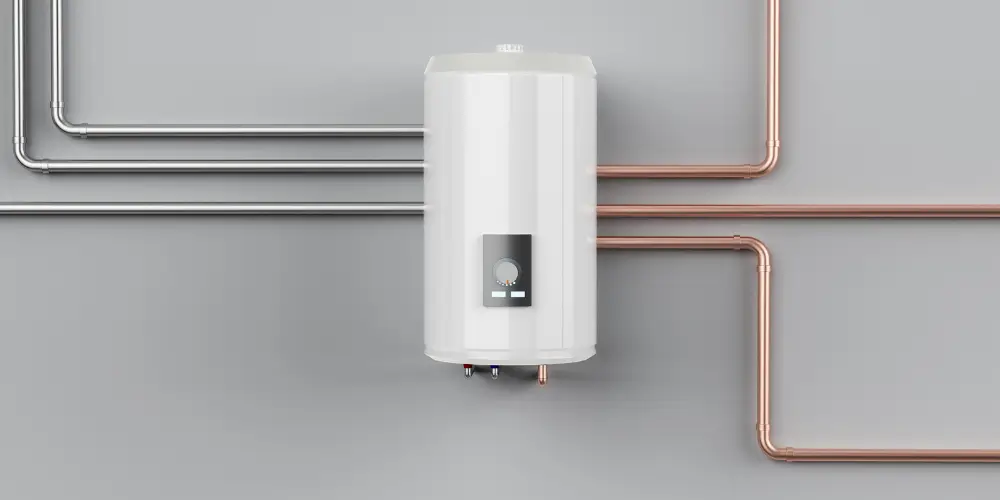
A common next question is whether an electric boiler for hot water only must be paired with a cylinder. In most UK setups, the answer is yes. Hot-water-only boilers usually heat and store water for later use, so a cylinder provides that reserve and gives households more control over when water is heated and how it is used. Some integrated units include built-in storage, but they still rely on the same principle.
- A cylinder stores heated water for taps, baths, and showers.
- It can support off-peak tariffs, helping users choose cheaper periods for running.
- Size matters because undersizing limits freedom while oversizing wastes space and energy.
For anyone wanting flexible hot water without gas, the cylinder is often central. The right match depends on demand, space, and lifestyle choices.
Electric Boiler or Immersion Heater: Which Is Better?
Whether an electric boiler or an immersion heater is better depends on the household’s hot water demand, budget, and preferred level of control. Electric boilers suit homes wanting steady output, quicker recovery, and independent scheduling. Immersion heaters appeal where simplicity, lower upfront cost, and backup flexibility matter most. For households valuing freedom from tight routines, the better choice is the one that best matches daily habits.
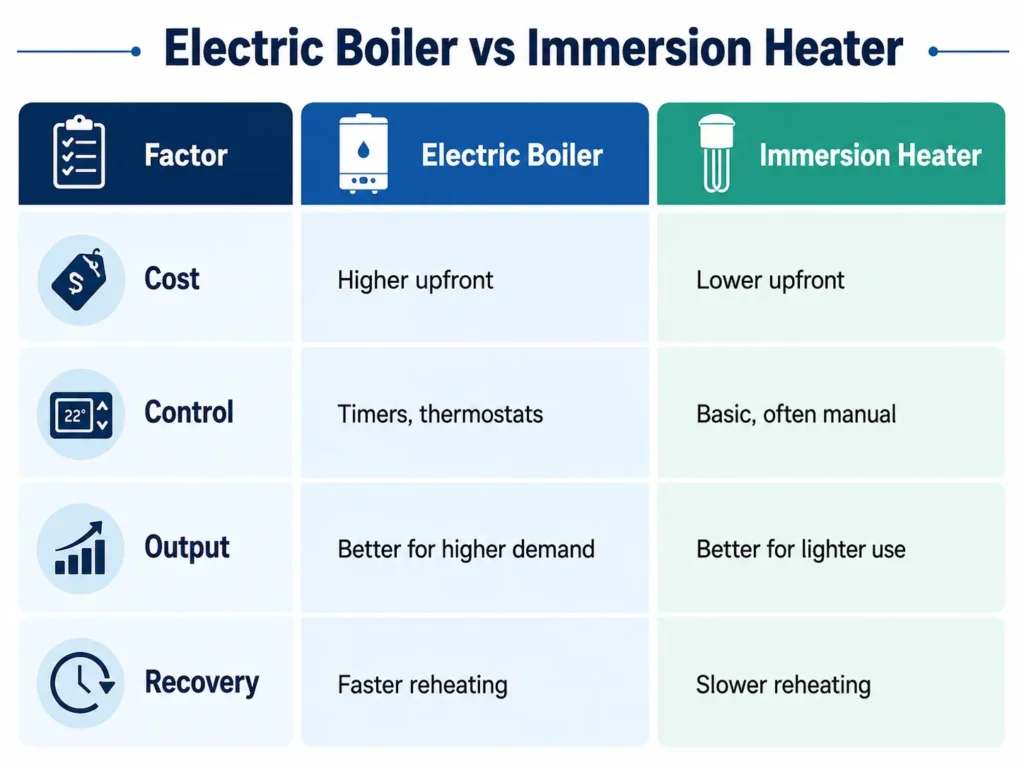
In practical terms, boilers feel like a wider-open tap on demand, while immersion heaters resemble a slower, steadier reservoir. Choice rests on priorities and lifestyle.
How Does a Hot Water Only Electric Boiler Work?
Inside the unit, electrical elements heat water as it passes through or is stored within a cylinder, depending on the system design. A thermostat monitors temperature and switches power on or off to maintain a chosen level without burning fuel. When a tap opens, hot water is delivered directly or drawn from stored reserves, giving households independent control over timing and usage. Because no gas combustion occurs, operation is quiet, clean, and straightforward.
- Electricity powers heating elements rather than a burner.
- Thermostats and safety cut-outs regulate temperature and protect the system.
- Hot water reaches taps from instant heating or a stored supply.
In UK homes, these boilers are often paired with cylinders, timers, and controls that support flexible routines. This suits people seeking greater autonomy over comfort, costs, and daily schedules without relying on mains gas supplies.
What Size Electric Boiler Do You Need?
The size of an electric boiler depends on hot water demand, cylinder capacity, and the number of people using the system each day. For hot water only, sizing is usually simpler than for full heating systems, but it still matters. A small flat with one or two occupants may manage with 6-9kW, while a larger household often needs 12kW or more to recover stored water quickly.
The key question is how fast the cylinder must reheat after baths, showers, and washing up. Homes that value flexibility and dislike waiting should lean toward higher output. Properties with modest daily use can choose smaller units and avoid unnecessary running costs. An installer can match boiler output to cylinder size, incoming electrical supply, and realistic lifestyle patterns.
Best Types of Electric Boilers for Hot Water Only
For hot water only, the best type of electric boiler usually depends on the property’s water demand, available space, and the existing hot water storage. In many UK homes, direct electric boilers suit simple setups, while electric system boilers work well with cylinders for a steadier supply. Flow boilers can suit smaller properties wanting more control without oversized equipment. Choice often comes down to flexibility, layout, and how independently the household wants to manage hot water use.
- Direct electric boilers: compact, straightforward, suited to lower demand.
- Electric system boilers: pair with cylinders to support greater stored hot water availability.
- Flow boilers: efficient for smaller spaces and selective, on-demand use.
The most suitable option is the one that gives reliable hot water without limiting the property’s freedom to adapt later.
How Much Does an Electric Boiler for Hot Water Only Cost?
Cost is usually the next factor once the right type of electric boiler has been identified. In the UK, a hot-water-only electric boiler typically costs £500 to £2,500 for the unit itself, depending on output, brand, controls, and build quality. Compact entry-level models sit at the lower end, while premium units with smarter features and stronger warranties command more.
Installation usually adds £500 to £1,500, though straightforward replacements can be cheaper and complex upgrades can rise higher. Total fitted costs consequently often land between £1,000 and £4,000. Extra expenses may include a hot water cylinder, upgraded electrics, a programmer, a thermostat, safety components, or labour to relocate pipework. For buyers seeking flexibility and fewer fuel-related constraints, electric boilers can offer a clear upfront path, provided the full installation scope is priced before commitment.
What Are Electric Boiler Running Costs?
While electric boilers are often praised for near-100% point-of-use efficiency, their running costs in the UK are usually shaped more by electricity tariffs than by the appliance itself. Because electricity is typically more expensive than gas per kWh, hot water can cost more unless users remain disciplined and time their use well.
- Peak-rate electricity quickly raises daily hot water costs.
- Smart controls help users heat water only when needed.
- Better cylinder insulation reduces waste and protects choice.
A typical household’s annual running cost depends on hot water demand, tariff type, and whether off-peak rates are available. Economy-style tariffs can lower bills if heating is scheduled overnight. Maintenance costs are generally low, which supports predictable budgeting. For those seeking greater independence from gas infrastructure, careful tariff selection and controlled consumption remain the keys to keeping electric boiler running costs manageable overall.
Which UK Homes Are Best for Electric Boilers?
Which homes tend to suit an electric boiler best in the UK? Properties without access to mains gas are often the strongest match, especially rural homes, small flats, annexes, and compact new builds. These homes can gain straightforward hot water without relying on oil deliveries, LPG storage, or solid fuel handling. Electric boilers also suit households seeking a simpler setup, lower maintenance demands, and more control over space use.
Flats with limited external space, listed buildings where flues are difficult to access, and well-insulated homes with modest hot water demand can benefit most. They are also practical in properties using solar electricity or off-peak tariffs, where owners value flexibility and independence from fossil fuels. In general, the best fit is a home needing reliable hot water with minimal infrastructure and fewer installation constraints overall.
How to Choose the Right Electric Boiler
How should the right electric boiler be chosen for hot water only in a UK home? Selection depends on household demand, available space, cylinder compatibility, and electrical capacity. A compact unit may suit a flat, while larger homes often need higher output and stronger flow support. Efficiency ratings, controls, warranty terms, and installation standards also matter. The aim is dependable hot water without tying the household to unnecessary complexity or oversized running costs.
Key checks include:
- Correct kW output for daily bathing, washing, and simultaneous use
- Compatibility with the existing hot water cylinder, immersion setup, and consumer unit
- Smart timers and thermostats that give users greater control over usage and cost
A qualified installer should confirm load requirements, safety compliance, and tariff suitability before purchase to ensure flexible, reliable performance for years to come. Our team at Landlord Certifications will provide you the best guidance.
Alternatives to Electric Boilers for Hot Water Only
Alternatives to an electric boiler for hot water only include immersion heaters, heat pump water heaters, solar thermal systems, and gas-fired water heating, where a mains connection is available. Each option offers a different balance of cost, control, installation complexity, and running efficiency for households seeking greater independence from a single energy source. Immersion heaters are simple and cheap to install, but electricity costs can be high.
Heat pump water heaters use less power and suit owners focused on long-term savings. Solar thermal systems reduce reliance on the grid and appeal to those seeking greater energy freedom, though performance varies with sunlight availability. Gas-fired water heating can deliver lower running costs where gas is available, but it ties the property to fossil fuel infrastructure. The best alternative depends on budget, location, habits, and priorities.
Frequently Asked Questions
Can an Electric Boiler Use Off-Peak Tariffs Like Economy 7?
Yes, an electric boiler can use off-peak tariffs like Economy 7, provided it heats water during cheaper hours and stores it effectively. Suitability depends on controls, tank capacity, household usage patterns, and tariff structure.
Are Electric Hot Water Boilers Noisy During Operation?
Yes, electric hot water boilers are usually quiet during operation, offering households more peace and control. Noise generally comes only from pumps or water movement, making them far less intrusive than many gas or oil-based systems.
What Maintenance Does an Electric Boiler Need Each Year?
An electric boiler typically needs an annual inspection of wiring, controls, pressure, seals, and heating elements, plus descaling if required. A qualified technician guarantees safe, efficient operation, helping the owner stay worry-free, independent, and in control.
Can Solar Panels Help Power an Electric Boiler?
Yes, solar panels can help power an electric boiler, reducing grid dependence and running costs. Their contribution varies by panel size, season, and storage. Greater autonomy usually comes from pairing panels with batteries or diverters.
How Long Does an Electric Boiler Typically Last?
An electric boiler typically lasts 10 to 15 years, though well-maintained models may reach 20. Lifespan depends on water quality, usage, and servicing, giving homeowners more freedom when proactive care helps avoid premature replacement and disruption.
Conclusion
An electric boiler for hot water only can be a practical solution for smaller UK homes, flats, and properties without mains gas, especially where space-saving, quiet operation, and low maintenance are priorities. The right choice depends on hot water demand, cylinder requirements, running costs, and available alternatives such as immersion heaters or heat pumps. By carefully comparing system size, efficiency, and installation needs, homeowners can decide whether an electric hot water boiler is the best long-term fit.