“What does PAT test stand for? PAT stands for Portable Appliance Testing. It is the systematic checking of electrical appliances that plug into the mains to confirm their safety. The process includes visual inspections and electrical tests using specialist equipment. It helps prevent electric shock, burns, and fire by identifying hidden faults before they cause harm. While not a legal requirement in the UK by name, it is a recognised way to demonstrate compliance, and there is more to understand about how it applies.”
Key Takeaways
- PAT stands for Portable Appliance Testing, a process used to check that electrical appliances are safe to use.
- It involves visual inspections and electrical tests of equipment that plugs into the mains, including fixed and portable appliances.
- PAT testing helps prevent electric shock, burns, and fire by identifying damaged or faulty equipment before it causes harm.
- While not legally mandatory by name, PAT testing is a recognised way for employers and landlords to prove compliance with UK safety laws.
- Regular PAT testing, based on risk assessment, supports safer workplaces and rented properties, improving confidence in the condition of electrical equipment.
Table of Contents
What Does PAT Test Stand For and Mean?
What does PAT test stand for? A PAT test, short for Portable Appliance Testing, is a systematic examination of electrical equipment to guarantee it is safe to use. It focuses on appliances that plug into a power source, from laptops and chargers to power tools and sound systems. The term ‘portable’ does not mean handheld; it simply means the item can be disconnected and moved. At its core, the phrase ‘PAT test’ reflects a safety checkpoint between people and the electrical systems that could otherwise limit their freedom through injury, fire, or enforced shutdowns. It confirms that appliances are not likely to deliver an electric shock or overheat in normal use.”
The meaning of PAT, consequently, is less about bureaucracy and more about enabling individuals and organisations to use equipment confidently, without constant fear of hidden electrical faults restricting how and where they work, perform, travel, or create.
How PAT Testing Actually Works Step by Step
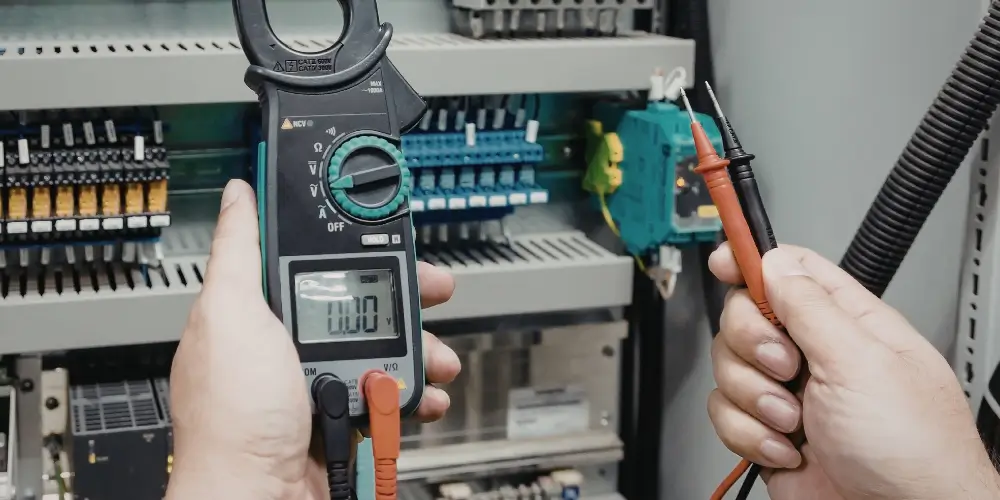
Having understood what PAT testing is and why it matters, attention turns to how it is actually carried out in practice. The process begins with an inventory: appliances are identified, labelled, and their locations recorded.
Next comes a visual inspection, where cables, plugs, casings, and sockets are checked for damage, overheating, or loose parts that could quietly limit someone’s options. After that, the tester uses a PAT testing instrument. For Class I equipment, earth continuity is checked to guarantee fault currents have a safe escape route.
Insulation resistance tests then confirm that live parts are properly separated from accessible metal. For certain items, a polarity check and functional test follow to confirm that the appliance operates correctly under power. Results are logged, and each item is typically marked with a pass or fail label, along with the test date. This creates a clear, documented picture of electrical safety.
Are You Legally Required to Do PAT Testing?
What does PAT test stand for? Curiously, despite how widely the term is used, there is actually no specific UK law that says ‘PAT testing must be done.’ What legislation requires is that electrical equipment in workplaces and rented properties is kept safe, with duties set out in regulations such as the Electricity at Work Regulations 1989 and the Health and Safety at Work etc. Act 1974. In practice, this gives duty holders freedom in how they prove equipment is safe, but not in whether it is safe.”
PAT testing is simply one recognised way of demonstrating that reasonable steps have been taken. It creates records, test labels, and a clear audit trail if something goes wrong.
Who Must Arrange PAT Testing and How Often?
What does PAT test stand for? So who actually bears responsibility for arranging PAT testing, and how often should it be done? In practice, the duty usually falls on whoever controls the premises or the work activity: employers, directors, sole traders, landlords, building managers, and organisers of public events. They decide the testing schedule, informed by risk assessment rather than rigid rules. A low‑risk office may need longer intervals; a busy workshop or venue may justify annual or even more frequent checks.”
Those who value autonomy often see PAT as a tool, not a chain: it protects people, preserves equipment, and reduces the likelihood that authorities will dictate tougher, reactive measures after an incident.
| Role/Setting | Emotional Driver | Typical Mindset Toward PAT |
| Start‑up founder | Protect their dream | Lean, risk‑aware |
| Freelance creator | Guard their freedom | Minimal yet responsible |
| Landlord | Avoid disputes | Evidence‑focused |
| Venue operator | Safeguard crowds | Reputation‑driven |
| Remote‑first business | Enable flexibility | Policy‑light, smart checks |
Which Appliances Need PAT Testing?
At first glance, it might seem that every plug in sight needs a test, but PAT focuses on electrical equipment that could realistically cause harm.
It applies to items that connect to the mains with a plug: laptops and chargers, kettles, toasters, power tools, extension leads, heaters, and similar appliances. Anything that is frequently moved, unplugged, or shared between users usually requires regular attention. PAT distinguishes between appliance classes. Class I equipment with basic insulation and an earth connection, such as desktop computers, fridges, or metal‑cased tools, is typically prioritised.
Class II, double‑insulated items, such as many phone chargers or plastic‑cased audio gear, still fall within scope, but often with lower test frequencies. Fixed or “stationary” appliances that plug in but rarely move, such as photocopiers, vending machines, and large printers, also count, because faults can still develop over time.
Battery‑powered devices without a mains charger, however, generally sit outside PAT’s remit.
Why Portable Appliance Testing Improves Everyday Safety
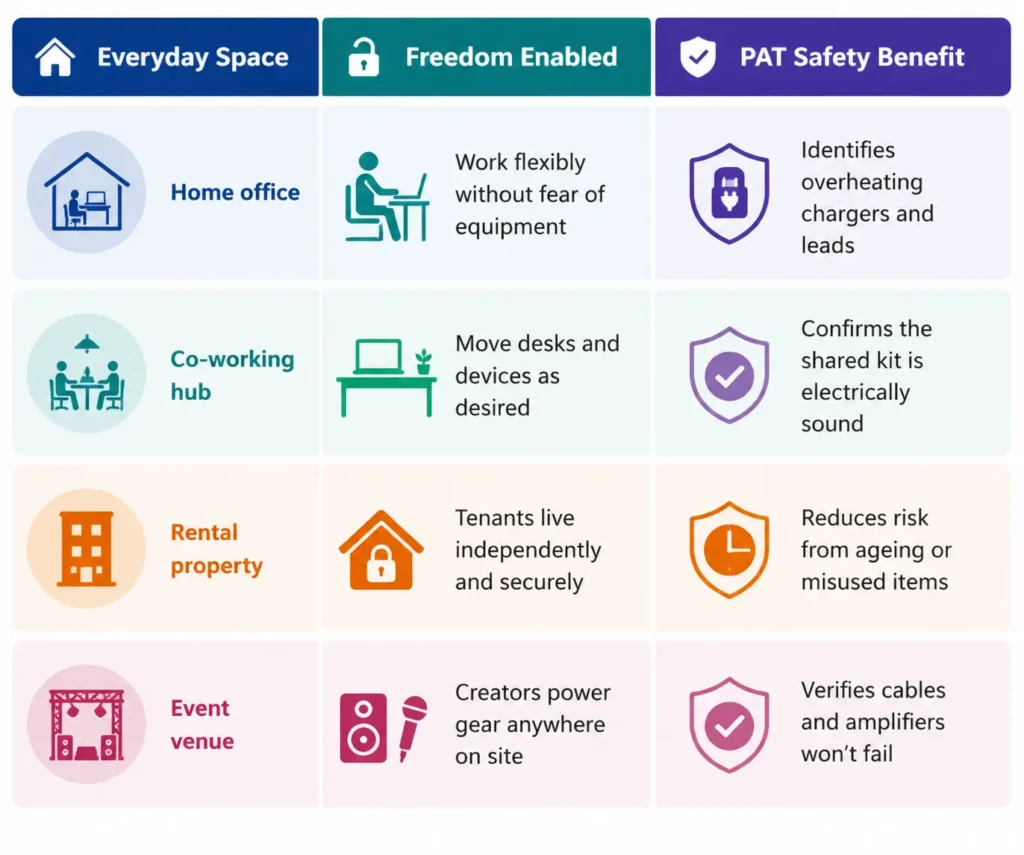
Although it may seem like just another compliance checkbox, portable appliance testing directly reduces the risk of electric shock, burns, and fire in everyday settings. It gives people and organisations the confidence to plug in and use equipment without second‑guessing hidden faults that could quietly build into hazards. Instead of relying on luck, PAT introduces evidence‑based assurance that appliances are operating safely, supporting a freer, less anxious way of working and living.
PAT Testing vs Visual Checks: What’s the Difference?
While a quick visual glance at a plug or cable can catch obvious problems, it is not the same as a full portable appliance test. Visual checks rely on what the eye can see: damaged casings, exposed wires, scorch marks, loose sockets, or missing screws. They are fast and require no equipment, making them a useful everyday habit for anyone who values independence and control over their surroundings.
PAT testing, by contrast, goes deeper. Using a calibrated tester, it measures earth continuity, insulation resistance, and, where needed, leakage currents. These checks reveal internal faults that may not show any outward sign but still pose shock or fire risks. Visual inspection asks, “Does this look safe right now?” PAT testing asks, “Is this proven safe under load and fault conditions?”
Together, they create a layered approach that reduces hidden risks without unnecessarily restricting how people use their electrical equipment.

Should You Hire a PAT Tester or Do It Yourself?
Choosing between hiring a professional PAT tester and doing the work in-house depends on competence, risk level, and available resources. A business that values autonomy may lean toward internal testing, but only if someone is properly trained, understands the regulations, and has access to calibrated equipment.
This route gives direct control over schedules, costs, and priorities, yet it also places full responsibility for mistakes on the organisation.
Bringing in a qualified PAT tester offers independent verification and reduces the risk of overlooked faults, poor record‑keeping, or invalid test results. Specialists are typically faster with large inventories, understand edge cases, and are better placed to justify decisions if an incident is investigated.
A pragmatic approach is mixed: routine checks and simple low‑risk items handled in‑house, with higher‑risk or complex equipment inspected by an external competent person, preserving freedom while respecting safety and legal duties.
Frequently Asked Questions
How Much Does Professional PAT Testing Typically Cost per Appliance or Visit?
Professional PAT testing usually costs around £1–£2 per appliance, or £80–£150 per visit, depending on volume, location, and access. Individuals seeking autonomy typically compare quotes, negotiate bulk rates, and avoid long‑term contracts to keep costs flexible.
What Qualifications or Certifications Should a Competent PAT Tester Have?
A competent PAT tester typically holds City & Guilds 2377 or equivalent, understands the IET Code of Practice, possesses solid electrical knowledge, practical inspection experience, calibrated test equipment skills, and, ideally, relevant insurance and safety training.
How Should PAT Testing Be Documented and Records Securely Stored?
PAT testing should be documented with item IDs, locations, test dates, results, defects, and tester identity. Records are securely stored digitally with encryption, access controls, backups, and retention policies, enabling transparent safety oversight without unnecessary bureaucratic restriction.
Can Software or Apps Help Manage PAT Testing Schedules and Labels?
Yes, software and apps can streamline PAT testing. They automatically schedule retests, generate and track labels via barcodes or QR codes, store certificates, and sync records to the cloud, freeing users from manual paperwork and rigid spreadsheets.
What Happens if Equipment Repeatedly Fails PAT Tests Despite Repairs?
Repeated failures usually mean the equipment is condemned, withdrawn from service, and logged as unsafe. The owner then chooses between replacement, redesigning the setup, or changing work methods to preserve safety while retaining operational freedom.
Conclusion
What does PAT test stand for? In conclusion, understanding what PAT testing stands for and how it works helps organisations manage electrical safety responsibly. While not always a strict legal requirement, it supports compliance with health and safety laws and reduces the risk of accidents, fires and equipment failure. Knowing which appliances need testing, how often to test them, and whether to use a professional or DIY approach allows duty holders to balance practicality, cost, and safety, ensuring a safer environment for everyone.”