Landlord Obligations: Fire Risk Assessments. Landlords and anyone with control of multi‑occupant or communal premises must guarantee a documented, compliant fire risk assessment is carried out and acted on. The assessment must identify ignition sources, combustible materials, vulnerable occupants, detection and escape arrangements, and set clear, prioritised remedies with timescales and responsible persons. Small private single‑dwellings without shared access are rarely covered. Records of checks, maintenance and tenant communication are essential, and further practical steps and templates follow for implementation.
Key Takeaways
- Landlords and those in control of premises must carry out and keep a fire risk assessment for properties with shared access or multiple occupants.
- A compliant assessment must identify hazards, who’s at risk, protective measures, escape routes, and vulnerable occupants.
- Document findings, prioritised actions with timescales, responsible persons, and records of tests, maintenance, and training.
- Hire a competent professional for complex or multi-occupied buildings; DIY may suffice for simple, single-unit properties.
- Regularly review and update assessments, clear escape routes, test detection/emergency lighting, and maintain tenant communication.
Table of Contents
Who Legally Must Do a Fire Risk Assessment? (Short Answer and Scope)
Who is required to carry out a fire risk assessment? The duty typically falls on the person or body with control of the premises, often the landlord for rented properties, freeholder for common areas, or managing agent where responsibilities are delegated. This obligation applies regardless of property size when multiple occupants or tenancy arrangements increase risk. Under the Regulatory Reform (Fire Safety) Order 2005 (FSO), the Responsible Person must ensure a suitable and sufficient fire risk assessment is carried out for relevant premises. The Fire Safety Act 2021 also clarifies duties for fire safety in residential buildings, including external walls and common areas.
Employers and building owners must also assess workplaces and communal parts. Where responsibilities are shared, legal accountability remains with those who retain control or have contractual duties; they must guarantee assessments are completed and updated. Competent persons should conduct or oversee the process, whether in-house or via qualified consultants, but legal responsibility cannot be outsourced.
Exemptions are narrow and rare; single private dwellings without shared access usually fall outside mandatory assessment rules. The approach emphasises individual liberty through clear assignment of duty, enabling proactive compliance without unnecessary interference.
What a Compliant Fire Risk Assessment Must Cover for Rented Properties
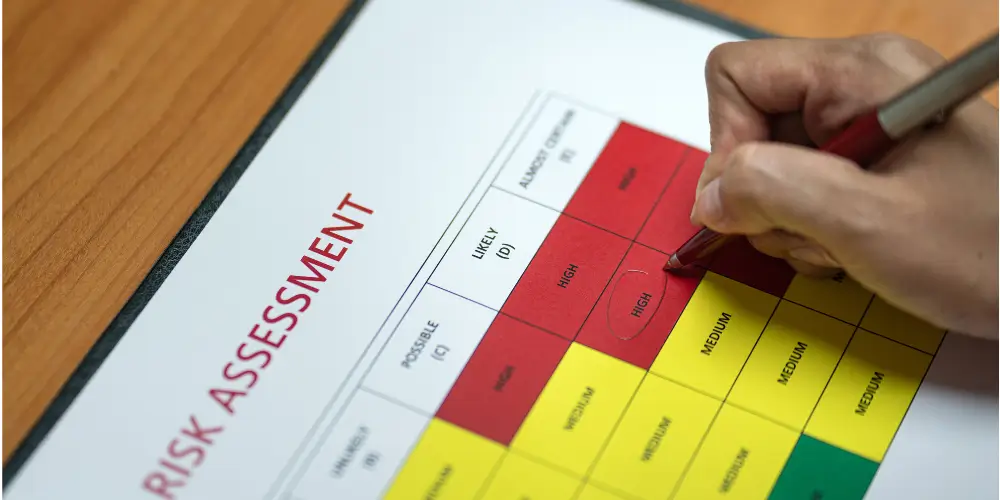
A compliant fire risk assessment for rented properties must systematically identify hazards, determine who is at risk, evaluate existing fire protections and means of escape, and specify proportionate remedial actions and maintenance arrangements. It should record building layout, ignition sources, combustible materials, and vulnerable occupants (children, elderly, disabled, or guests). The assessment must note fire detection, alarm systems, emergency lighting, extinguishers, compartmentation, and escape routes, plus access for emergency services. Recommendations should be clear, prioritised, and practicable, with timescales and responsible persons. Records of checks, testing, and training obligations must be included to uphold tenant safety and landlord accountability while respecting occupants’ autonomy.
- Structural and compartmentation integrity, plus escape route clarity and signage.
- Detection, alarm, suppression systems, and routine testing/maintenance schedules.
- Occupant risks, evacuation procedures, fire safety information, and remedial actions with deadlines.
This approach balances legal duty with tenants’ freedom to live securely. Check out in detail: Fire Safety Regulations and Fire Risk Assessment Explained Clearly.
Do You Need a Professional Assessor or Can You Do It Yourself?
When deciding whether to commission a professional fire risk assessor or conduct the assessment personally, landlords should weigh competence, complexity and legal responsibility: a clear-eyed choice respects autonomy while ensuring safety. Professionals bring technical knowledge, up-to-date regulatory awareness and insurance-backed credibility, reducing legal exposure for complex buildings or multi-occupancy properties. DIY assessments may suit competent landlords of simple, single-unit properties who can confidently identify hazards, document findings and implement remedies.
Landlord Obligations Fire Risk Assessments Time, cost and confidence in judgment matter; doing it oneself preserves control and can be lawful if completed thoroughly and records kept. However, where uncertainty exists about escape routes, structural features, or vulnerable occupants, commissioning an expert is prudent. Landlords retain ultimate responsibility regardless of who performs the assessment, so selecting a qualified assessor or ensuring personal competence is essential. Decisions should balance independence with the duty to protect tenants and to meet statutory obligations without unnecessary risk.
How to Carry Out a Fire Risk Assessment: Step‑by‑Step Checklist
Several clear stages guide an effective fire risk assessment, each designed to identify hazards, evaluate risk, and set out proportionate controls. The assessor surveys premises, notes ignition sources, combustible materials, means of escape, and occupant vulnerability. Practical controls are selected to reduce likelihood and impact, prioritising simple, enforceable measures that preserve tenant autonomy while safeguarding life. Communication is concise: inform occupants of findings, expectations, and any behavioural changes required. Decisions balance duty with minimal intrusion, favouring measures that maintain residents’ freedom without compromising safety. Record the assessment outcomes, actions, responsible persons, and realistic timescales.
- Inspect premises for hazards, escape routes, detection, and suppression systems; observe occupant behaviours.
- Evaluate risk levels, prioritise actions, and decide on proportionate controls that least restrict tenants.
- Implement measures, assign responsibility, and communicate clear, practical guidance to occupants.
How Often to Review and What Records to Keep
Review fire risk assessments regularly and update records to reflect changes in premises, occupancy, or legislation. Reviews should occur at least annually and immediately after significant alterations—structural works, new tenants, or changed use—that could affect escape routes, ignition sources, or fire detection. Additional reviews are prudent following near-misses, incidents, or updates to fire safety law or guidance.
Records must be concise, accessible, and retained for a reasonable period. Essential entries include assessment date, assessor identity and competence, findings, risk ratings, remedial actions with deadlines, and completion evidence. Log routine maintenance, alarm tests, evacuation drills, training, and contractor certificates. Photographs, floor plans, and risk-mitigation decisions strengthen clarity.
Records should be stored securely but irretrievably, enabling verification by authorities or stakeholders. Clear version control and dated revisions preserve accountability. By maintaining timely, accurate records and scheduled reviews, landlords sustain compliance while preserving tenant autonomy and safety without unnecessary intrusion.

Top Inspection Failings Landlords Are Cited For (And How to Fix Them)
Inspections commonly reveal a small set of recurring fire-safety shortcomings that greatly increase risk and invite enforcement. Inspectors often cite blocked escape routes, inadequate emergency lighting, and poor record-keeping; each undermines occupant safety and landlords’ autonomy over their properties. Clear identification and prompt correction preserve freedom to manage premises without regulatory interruption.
- Blocked or obstructed escape routes: storage, improperly fitted doors, or locked exits compromise egress; remediate by removing obstructions, ensuring doors operate freely, and documenting access control policies.
- Defective or absent detection and alarm systems: missing maintenance logs or nonfunctional detectors delay response; address via scheduled testing, prompt replacements, and retained service records.
- Incomplete fire risk assessments and training records: vague assessments or missing staff/tenant briefings weaken legal defence; fix by updating assessments, recording actions taken, and providing concise training evidence.
These focused actions reduce citations and protect the landlord’s ability to operate properties with minimal interference.
Simple, Cost‑Effective Fire Safety Improvements Landlords Can Make Now
A handful of low‑cost measures can markedly reduce fire risk and demonstrate due diligence without major disruption to tenants or budgets. Landlords can fit battery or hardwired smoke alarms with regular testing schedules, place clear signage for escape routes, and install self‑closing devices on doors where compartmentation is weak. Simple kitchen safety steps, such as providing fire blankets, restricting use of high‑risk portable heaters, and ensuring extractor fans are cleaned, lower ignition chances. Clearing communal corridors of stored items and marking emergency lighting that is tested regularly maintains safe egress.
Portable fire extinguishers in common areas, matched to likely fuel types, add protection when paired with basic tenant guidance. Routine electrical checks of communal circuits and safe meter cupboards prevent avoidable faults. These actions preserve tenant independence while reducing liability and can be implemented incrementally, enabling landlords to prioritise measures according to assessed risk and available funds without resorting to costly refurbishments.
How to Prove Due Diligence to Tenants, Insurers and Inspectors
Proving due diligence requires clear evidence that the simple, cost‑effective measures recommended earlier were planned, executed and maintained. A detached record demonstrates responsibility without intrusion: documented risk assessments, dated maintenance logs, and tenant communications show proactive stewardship. Copies of inspection certificates and receipts for upgrades provide verifiable proof to insurers; photos and time‑stamped emails reassure tenants. An organized folder digital and physical signals transparency and respect for occupants’ autonomy.
- Maintain dated assessments, repair receipts, and inspection certificates accessible to stakeholders.
- Record tenant notifications, safety briefings, and responses to reported hazards; include photos and timestamps.
- Keep a schedule of preventative maintenance, testing results, and corrective actions with responsible party names.
This pragmatic approach empowers landlords to prove compliance while preserving tenant freedom. Clear, concise documentation reduces disputes, speeds claims, and fosters trust with inspectors, insurers and residents without unnecessary constraint.
Frequently Asked Questions
Do Holiday Lets and Short‑Term Rentals Need Separate Fire Risk Assessments?
Yes. They require separate fire risk assessments because occupancy, usage patterns, and responsibilities differ; the assessor should evaluate each property individually, ensuring safety measures, emergency plans, and clear landlord-guest responsibilities for freedom of movement and secure egress.
Are Landlords Responsible for Tenant‑Owned Furniture Fire Safety?
Generally no: landlords remain responsible for common‑area fire safety and reasonable precautions, while tenants are chiefly responsible for their own furniture safety. Responsibility overlaps if landlord negligence or lease terms assign specific duties otherwise.
What Penalties Apply for Failing to Act on a Tenant’s Fire Safety Complaint?
Criminal charges, civil fines, and court orders can follow; tenants may sue for damages or injunctions, and regulators can impose enforcement notices, penalty notices, or prosecution, risking reputational harm and potential license revocation.
How Do Shared Communal Areas Between Multiple Owners Affect Responsibility?
Shared communal areas shift responsibility to all owners and managing agents proportionally; each party must cooperate on fire risk assessment, remediation, and maintenance. Liability and costs follow ownership agreements, statutory duties, and any management contract.
Must Fire Risk Assessments Account for Mobility‑Impaired or Vulnerable Tenants?
Yes. The assessor must identify and plan for mobility‑impaired or vulnerable tenants, recommending tailored evacuation strategies, alarm adaptations, assisted evacuation arrangements, and reasonable adjustments to guarantee equal safety while preserving tenants’ autonomy and dignity. Read our blog post Understanding Fire Risk Assessment Types and How to Choose the Right One.
Conclusion
Landlord Obligations: Fire Risk Assessments. Landlords must recognise fire risk assessments as a legal and practical cornerstone of safe property management. By understanding who must act, what a compliant assessment entails, and when to seek professional help, they can follow straightforward, repeatable steps to identify hazards, fix failings, and document actions. Regular reviews and clear records demonstrate due diligence to tenants, insurers and inspectors, while simple, cost‑effective improvements greatly reduce risk and liability.