First, the person should check for real danger: look for smoke, flames, or burning smells and evacuate if unsure. If it’s a false alarm, they should press and hold the unit’s “Silence,” “Hush,” or “Test” button, and ventilate the area to clear smoke, steam, or dust. For hardwired or commercial systems, they must follow panel instructions and building procedures, never blindly disabling power. Next, they can learn how to handle each alarm type more precisely.
Key Takeaways
- First, confirm there is no real fire or hazard; if there’s any doubt, evacuate immediately and call emergency services.
- Identify which alarm or panel is sounding, then use the marked “Silence,” “Hush,” or “Acknowledge” button as instructed by the manufacturer.
- For nuisance alarms caused by cooking or steam, ventilate the area by opening windows, using fans, or using extractor hoods to clear smoke or steam.
- Never disable alarms by removing batteries or cutting power as a “fix”; instead, reset the unit or panel after the cause is resolved.
- If alarms trigger frequently or won’t reset, document the issue and contact a qualified fire alarm technician or building management for inspection.
Table of Contents
Is It Safe to Turn Off the Alarm?
Although silencing a blaring alarm can feel urgent, whether it is safe to turn off a fire alarm depends entirely on confirming there is no actual fire or ongoing hazard. The alarm’s purpose is life safety; it must stay active until there is clear evidence that no one is in danger. That means treating every alarm as real until proven otherwise.
Before anyone considers shutting it off, they should look for visible signs of smoke or fire, listen for unusual sounds, and quickly check for strong burning odours from a safe position. If there is any doubt, the safest course of action is to evacuate and contact emergency services. It is only appropriate to turn off the alarm once the cause is confidently identified as non‑emergency, such as harmless cooking smoke that has fully cleared. Even then, the system should remain ready to detect any new or recurring danger.
Quick Steps to Silence a Home Fire Alarm
Once it is clear there is no fire or active hazard, attention can shift from safety checks to stopping the noise. The person should first locate the specific alarm that is sounding and follow the beeping to its source.
Standing on a stable surface, they visually confirm the device’s location and ensure they can reach it safely. Most home alarms have a clearly marked “Silence,” “Hush,” or “Test” button. Pressing and holding this button for several seconds typically quiets a nuisance alarm, such as one triggered by cooking smoke or steam.
If the alarm does not respond, the person should try pressing the button again more firmly and holding it slightly longer. If the sound continues, opening nearby windows or using a fan to clear smoke, steam, or dust from around the detector may help it reset.
Throughout the process, they should remain alert for any new signs of danger.
How to Turn Off Battery vs Hardwired Detectors
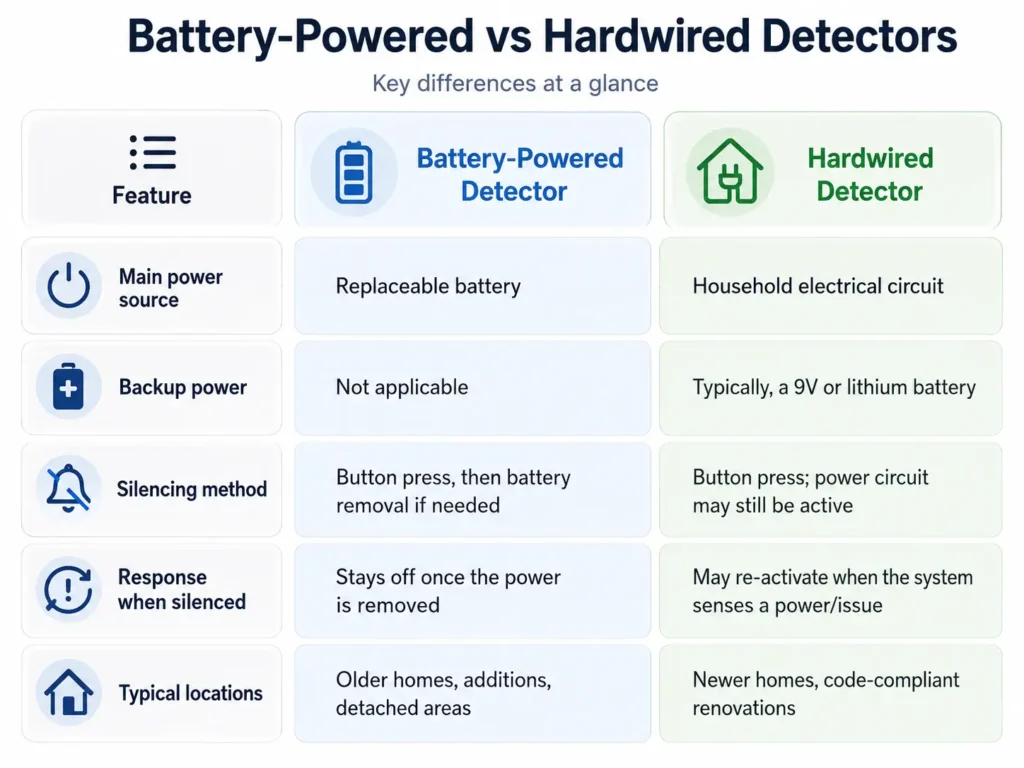
Turning off a fire alarm depends on whether it is battery-powered or connected to a home’s electrical system. Battery-operated detectors usually have a clearly marked battery compartment and a test/silence button. Hardwired detectors, by contrast, draw power from the home’s wiring and may include a battery backup, so their behaviour can differ when silenced or reset. A key distinction is how power is interrupted and how the unit behaves once quieted. The table below summarises core differences:
How to Safely Silence Hardwired Alarm Systems
Silencing a hardwired fire alarm safely starts with treating it as part of an electrical system, not just a noisy device on the ceiling.
Before touching anything, the person should confirm there is no actual fire: check for smoke, heat, or burning odours. If any doubt remains, they should evacuate and call emergency services rather than silence the alarm.
Once the environment appears safe, the power source must be addressed. The person locates the home’s main electrical panel and identifies the circuit labelled for “smoke alarms” or “fire alarm.” They switch that breaker to the OFF position, understanding this disables all detectors on that circuit.
With the power off, many interconnected alarms stop sounding immediately. If a specific unit continues to beep on backup battery power, it may be tested or temporarily silenced using the front “hush” or “silence” button, following the manufacturer’s instructions while planning a timely restoration of full operation.
How to Handle Commercial Building Fire Alarms
In commercial buildings, handling a fire alarm requires strict adherence to established procedures and local fire codes rather than ad‑hoc silencing. The system is typically tied to monitoring services, elevators, ventilation, access control, and emergency lighting, so any action must follow the site’s fire safety plan.
When an alarm sounds, occupants evacuate first; only trained staff or designated fire wardens approach the panel. They verify alarm type and location, communicate with monitoring or fire services, and visually check the indicated area from a safe position before considering silence or reset.
| Step | Key Consideration |
| Evacuate occupants | Use marked exits; assist those with mobility needs. |
| Verify alarm source | Check the panel display and the building map. |
| Coordinate with authorities | Follow directions from fire officials. |
| Silence/reset system | Only after the cause is resolved and the panel is cleared. |
Documentation of the incident and any system faults supports compliance and future safety improvements.
Stopping Chirping and Low-Battery Alarm Noises
Although loud emergency alarms draw the most attention, the persistent chirping of a smoke or CO detector usually points to a low battery, internal fault, or end‑of‑life warning that should not be ignored. To stop the noise safely, the user should first identify which unit is chirping by listening carefully and checking indicator lights or the display screen.
Once located, they should consult the label or manual to confirm what the specific chirp pattern means single beeps every 30–60 seconds commonly signal a low battery, while more complex patterns can indicate malfunction or replacement needs. For battery‑powered or backup‑battery units, replacing the battery with the correct type often resolves the issue.
If chirping continues, the user can try a full reset using the test or reset button. When resets fail or the unit is more than 7–10 years old, replacement is usually the safest solution.
Common Mistakes When Turning Off Fire Alarms
Mistakes often occur when people rush to quiet a blaring fire alarm without understanding how the system works. A common error is pressing random buttons instead of the designated silence or hush control, which can lock the alarm into a longer cycle. Some individuals remove the battery or disconnect power, assuming this will stop the noise safely, not realising it may disable critical protection throughout the home.
Others ignore the control panel or manufacturer’s instructions and rely solely on guesswork. In multi-alarm systems, people sometimes silence only one unit, overlooking interconnected devices that will continue sounding. Covering or taping over the alarm to muffle sound is another dangerous practice that interferes with detection.
Finally, many attempt to reset the alarm before confirming that no fire, smoke, or lingering hazard remains, potentially restoring the system while a genuine threat is still present.
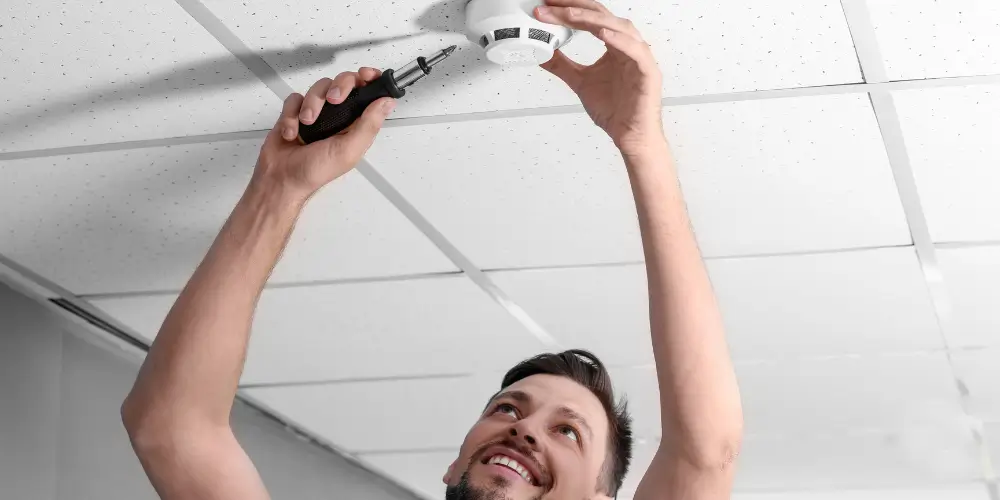
Preventing False Fire Alarms at Home
Reducing the chance of false alarms at home not only avoids panic and disruption but also prevents people from mishandling the system in frustration. To reduce nuisance triggers, occupants should first consider detector placement. Smoke alarms are best kept away from kitchens and bathrooms, where cooking smoke and steam often cause false alerts. Instead, they should be installed in nearby hallways or just outside those rooms.
Maintaining a clean environment around detectors also matters. Dust, insects, and accumulated grease can interfere with sensors, so gentle vacuuming around vents helps keep them reliable. When cooking, using extractor fans, opening windows, and using back burners can redirect smoke and steam away from alarms.
Choosing the right alarm type further reduces the risk of problems. Photoelectric alarms are less prone to cooking-related false alarms than ionisation models. Finally, occupants should regularly test alarms using the test button, ensuring they function correctly and do not rely on accidental triggers.
When to Call a Fire Alarm Professional
When a fire alarm repeatedly malfunctions, shows visible damage, or fails testing, professional assistance becomes crucial. A qualified technician can determine whether the device is repairable, must be replaced, or indicates a deeper wiring or power problem. This protects occupants from hidden hazards while avoiding unsafe, improvised fixes.
Homeowners should not attempt to bypass or permanently disable an alarm to stop nuisance beeping. Instead, they should document the behaviour, note any error codes, and contact a licensed fire alarm professional or electrician.
| Situation | Why a Professional Is Needed |
| Frequent false alarms | Detects sensor faults or placement issues |
| No response during test button checks | Diagnoses power, wiring, or device failure |
| Corroded, cracked, or smoke‑stained units | Assesses damage and recommends safe replacement |
| System tied to monitoring or smart devices | Guarantees correct programming and code compliance |
Professional intervention keeps the alarm reliable and legally compliant.
Frequently Asked Questions
Can Cooking Steam Damage a Fire Alarm Over Time?
Yes, frequent cooking steam exposure can damage a fire alarm over time. Moisture may corrode internal components, cause false alarms, and reduce sensitivity. Proper ventilation and placing alarms away from direct steam sources help preserve reliability and lifespan.
How Often Should I Test My Fire Alarm System?
They should test their fire alarm system monthly using the built‑in test button and perform full system checks annually. Regular testing verifies power, sensor function, and audibility, ensuring early warning reliability and compliance with safety recommendations.
Are There Fire Alarms Suitable for People With Hearing Impairments?
Yes. Fire alarms exist for people with hearing impairments, using bright strobe lights, vibrating bed or pillow shakers, and visual alert panels. Compatibility with existing systems and local fire safety codes should be checked before installation.
Can Smart Home Systems Accidentally Disable My Fire Alarms?
Smart home systems cannot directly disable certified fire alarms, but poor integration, incorrect wiring, muted notifications, or power issues can undermine effectiveness. Users should follow manufacturer guidance, avoid unsupported hacks, test alarms regularly, and keep life‑safety devices on dedicated circuits.
What Records Should I Keep After Repeated False Alarm Incidents?
They should document dates, times, alarm locations, suspected causes, device models, maintenance performed, technician reports, communications with the monitoring company, photos or videos, and any corrective actions, preserving everything for warranty claims, insurance, and code-compliance reviews.
Conclusion
By understanding when it’s safe to silence an alarm, how different systems work, and which mistakes to avoid, readers can respond calmly instead of panicking. Clear steps for home, hardwired, and commercial alarms help guarantee quick, safe action without compromising real fire protection. Addressing chirping issues, preventing false alarms, and knowing when to call a professional all contribute to a safer environment where fire alarms remain reliable, effective, and properly maintained.