Fire extinguishers should be visually checked at least monthly to confirm accessibility, proper pressure, and the absence of visible damage, with daily or weekly glance checks advised in busy workplaces. In the UK, the Regulatory Reform (Fire Safety) Order 2005 and BS 5306-3 require a competent person to service them at least annually, with records kept. High‑risk sites may need more frequent checks, and clear warning signs demand immediate attention. The details and practical steps are straightforward to understand next.
Key Takeaways
- Fire extinguishers should receive a brief visual check at least once a month in homes and workplaces.
- In higher-risk environments, more frequent visual checks may be needed based on specific hazards and usage.
- A competent professional must service each extinguisher at least annually to British Standard BS 5306-3.
- Daily or weekly workplace checks should confirm that extinguishers are visible, accessible, undamaged, and showing pressure in the green zone.
- Any extinguisher showing damage, leaks, broken pins, or a low-pressure gauge requires immediate inspection, repair, or replacement.
Table of Contents
How Often Should Fire Extinguishers Be Checked? (At a Glance)
In most workplaces and homes, fire extinguishers should be visually checked monthly and receive a more thorough professional inspection at least once a year. This rhythm keeps equipment ready without burying people in constant oversight. A quick monthly look confirms that each unit is accessible, fully charged, and free from obvious damage or tampering.
For those who prize independence, these checks act as a simple, empowering routine rather than bureaucratic control. Individuals can walk their own space, confirm pressure gauges sit in the green, verify safety pins and tamper seals, and ascertain clear labelling and instructions.
More detailed inspections, typically yearly, examine internal condition, weight, and overall integrity. Environments with higher fire risk, heavy use, or harsh conditions may warrant more frequent checks, by choice, to match the level of freedom they seek to protect: the freedom to work, live, and move without relying solely on external rescue.
UK Legal Standards for Fire Extinguisher Checks
Although fire safety can feel like an administrative burden, UK law sets clear, practical expectations for fire extinguisher checks rather than leaving them to chance. The key framework is the Regulatory Reform (Fire Safety) Order 2005, which requires that “responsible persons” guarantee that extinguishers are suitable, maintained, and ready for use. This applies to most non‑domestic premises, from small studios to large workplaces.
British Standard BS 5306-3 gives the recognised benchmark for maintenance. In practice, it expects a competent person to service extinguishers at least annually and keep records. New installations typically require commissioning on site, confirming they are correctly located, pressurised, and labelled before use.
The law does not micromanage every action but demands a “suitable and sufficient” regime based on risk. This approach allows owners and occupiers to protect people and property while still choosing arrangements that fit their operations, budget, and appetite for independence.
Daily and Weekly Visual Extinguisher Checks You Can Do
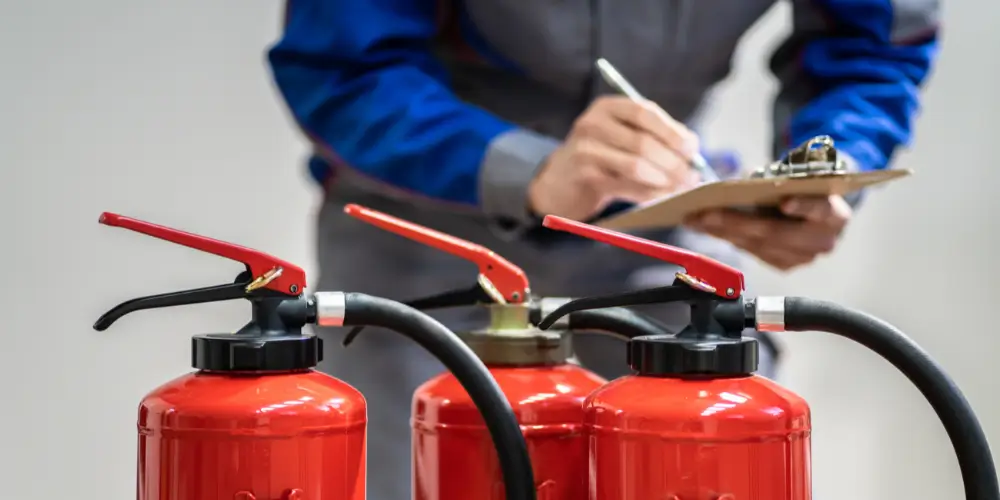
Many basic visual checks can be carried out by staff as part of daily and weekly routines, without specialist tools or training. These quick inspections help people stay in control of their own safety, rather than relying solely on external contractors or rigid schedules.
Each day, someone can confirm that extinguishers are visible, easy to reach, and not blocked by furniture, stock, or vehicles. The body of the extinguisher should be upright, with the label facing outward so the type and use are instantly clear in an emergency.
Weekly, a slightly closer look maintains confidence. Staff can verify that the safety pin and tamper seal are intact, the hose or nozzle is undamaged and unobstructed, and there are no dents, rust, or signs of leakage. The pressure gauge, where fitted, should still sit in the green zone. Any doubt, damage, or missing unit should be reported and rectified immediately.
Monthly Fire Extinguisher Checks for Homes and Small Offices
A simple monthly check gives homeowners and small office managers a structured opportunity to go beyond quick visual glances and verify that each extinguisher is genuinely ready for use. This rhythm of inspection supports independence: people know that, if something ignites, they are not waiting helplessly for luck or distant help.
During a monthly check, the user confirms that each extinguisher is in its designated location, unobstructed, and easy to grab. The pressure gauge is checked to ascertain that the needle sits in the operable range. The pin and tamper seal are inspected to verify they are intact, not loosened or broken.
The body, hose, and nozzle are examined for corrosion, dents, leaks, or cracks. Labels and instructions are verified as legible so anyone can act without hesitation. Finally, the date of the inspection is logged, creating a simple record that proves the equipment is consistently maintained.
Annual Fire Extinguisher Servicing by a Qualified Technician
When monthly checks are done correctly, they still do not replace the need for an annual service by a qualified technician. This yearly visit is what confirms that extinguishers will actually work when someone needs to act fast and protect their freedom to live and work without fear of a small fire becoming a disaster.
During an annual service, the technician follows a structured process: verifying pressure with calibrated tools, inspecting internal components, checking hoses and nozzles for blockages, confirming safety pins and tamper seals, and evaluating physical condition, labelling, and visibility.
They also verify that the extinguisher type and rating still match the risks on-site. A professional inspection documents compliance with regulations, but more importantly, it gives occupants the confidence to move, create, and operate businesses without hidden fire hazards. Annual servicing transforms extinguishers from decorative red cylinders into reliable tools for real-world emergencies.
Extended Servicing, Refills and When to Replace Extinguishers
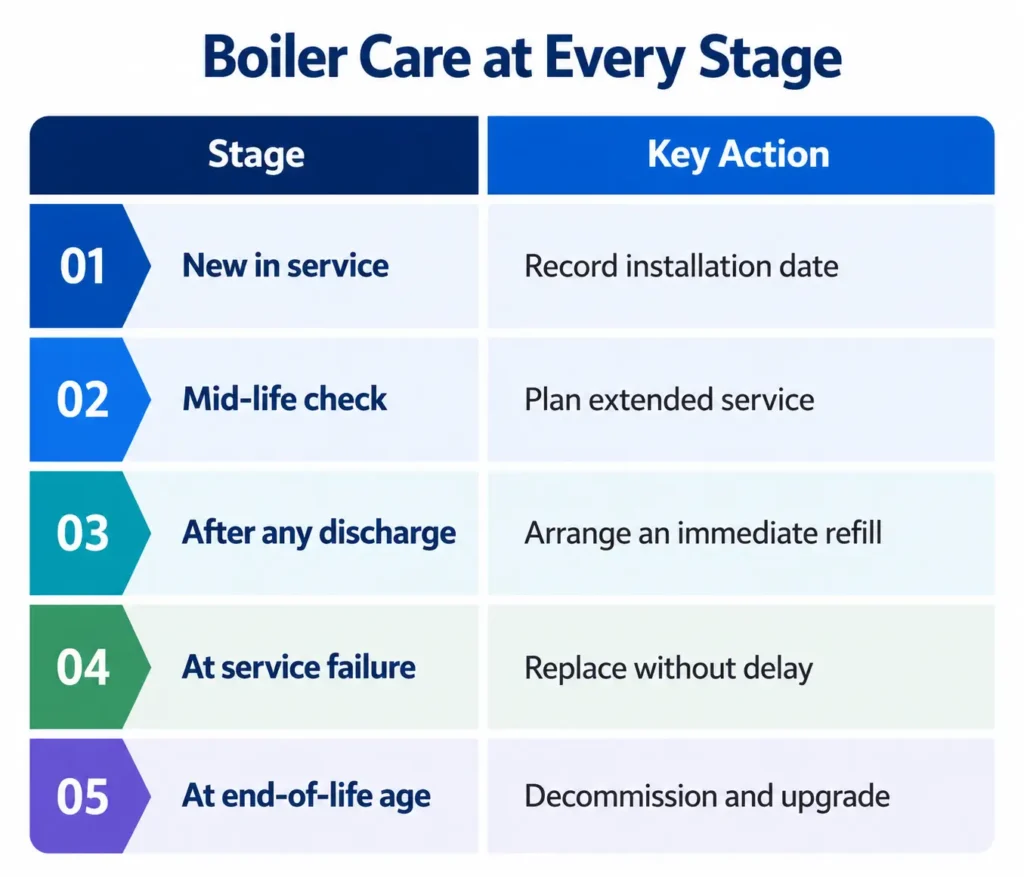
Beyond the yearly technician visit, extinguishers follow a longer lifecycle that includes extended servicing, refilling after use, and eventual replacement. Over time, internal components corrode, hoses harden, and gauges drift, all of which can quietly erode reliability. Extended servicing strips the unit down, pressure‑tests the cylinder, renews seals, and confirms that the extinguisher will actually discharge when someone needs a clear path to safety.
Whenever an extinguisher is discharged even briefly it must be refilled or replaced. A partly used unit offers only an illusion of protection and can fail just when escape depends on it. Visualising the lifecycle helps clarify when to act:
Different Check Schedules for Workplaces vs Homes
Routine takes on different shapes in workplaces and homes, and fire extinguisher checks are no exception.
In commercial settings, employers are usually bound by regulations and insurance conditions. Extinguishers are generally inspected each month visually, recorded in a log, and given an annual service by a competent technician. Larger or higher-risk sites may also schedule interim spot checks, especially where equipment is frequently moved or exposed to harsh conditions.
Homes, by contrast, are governed more by personal responsibility than formal rules. A practical rhythm is a brief check every month or two, aligned with other household safety habits such as testing smoke alarms.
Many people also add a more deliberate review at the start of each season, particularly before winter heating or summer cooking outdoors. This flexible approach lets residents maintain safety while preserving autonomy over how and when they verify their equipment.
Warning Signs Your Fire Extinguisher Needs Immediate Attention
Although regular checks reduce the chance of surprises, certain warning signs indicate a fire extinguisher may be unsafe or unreliable and require immediate attention. Anyone who values freedom of movement and independent living benefits from recognising when this key safety tool can no longer be trusted.
Obvious red flags include a missing or broken safety pin, a loose or damaged hose, or a gauge needle outside the green zone. Corrosion, dents, or leakage show that the cylinder’s integrity may be compromised and pressure lost. A clogged nozzle or a wobbly handle can also prevent proper discharge when seconds matter.
The following table summarises critical warning signs:
| Warning Sign | Why It Matters |
| Gauge not in green zone | Possible under‑ or over‑pressure |
| Visible corrosion or dents | Cylinder strength may be reduced |
| Broken pin, handle, or hose | May fail or discharge unintentionally |
| Leaks, residue, or loose nozzle | Indicates internal damage or blockage |

How to Set Up a Simple Fire Extinguisher Maintenance Schedule
Spotting warning signs is only part of extinguisher safety; a simple, consistent maintenance schedule helps prevent those problems from developing in the first place. Instead of relying on memory or random checks, a clear routine lets people move freely through their days, knowing their gear is ready if something goes wrong.
A practical schedule usually combines quick visual checks, deeper monthly reviews, and periodic professional servicing:
- Weekly: Confirm extinguishers are accessible, visible, and unobstructed; glance at pressure gauges and tamper seals while passing by.
- Monthly: Log each unit’s location, gauge reading, physical condition, and last service date; correct missing labels or mounting issues immediately.
- Annually (or per manufacturer/local code): Arrange professional inspections, internal testing, and recharging or replacement as required.
Frequently Asked Questions
Can I Perform My Own Fire Extinguisher Servicing to Save Money?
They can handle basic monthly visual checks themselves, empowering independence, but full servicing, recharging, internal inspection, and hydrostatic testing must be done by certified technicians to meet NFPA standards, legal codes, insurance requirements, and guarantee reliable operation during emergencies.
How Should I Dispose of an Old or Expired Fire Extinguisher Safely?
They should bring old or expired extinguishers to a local hazardous‑waste site or fire equipment dealer, never puncture or burn them, and confirm whether the unit must be fully discharged before recycling or professional disposal.
Do Fire Extinguisher Checks Affect My Home or Business Insurance Coverage?
Fire extinguisher checks can directly impact insurance coverage; neglected inspections may reduce or void claims. Insurers often reward documented maintenance with lower premiums, recognising responsible fire readiness as a key tool for protecting property, autonomy, and financial independence.
Are There Different Extinguisher Check Requirements for Listed or Historic Buildings?
Yes. Listed or historic buildings usually follow national extinguisher standards but may face extra rules from heritage and fire authorities, stricter documentation, limited mounting alterations, and closer coordination to balance safety with preserving original fabric.
What Training Should Staff Receive to Support Regular Extinguisher Safety Checks?
Staff should receive training in extinguisher types, inspection checklists, pressure gauge reading, tamper‑seal and pin status, damage recognition, record‑keeping, and safe operation basics, empowering them to independently spot faults and escalate issues to responsible fire safety personnel.
Conclusion
Regular fire extinguisher checks are crucial for safety at home and in the workplace. By following UK legal standards, combining simple visual inspections with annual professional servicing, and planning for extended servicing or replacement, people can guarantee that extinguishers are reliable in an emergency. Recognising early warning signs and using a clear, written maintenance schedule helps keep equipment compliant, functional and ready to use, providing essential protection for people, property and peace of mind.