
Most boiler replacements take between one and three days from the removal of the old unit to having heating and hot water back on. A like-for-like combi swap can often be completed in a single working day. More complex systems, difficult access, or flue and pipework changes can push the job into a second or third day. The boiler must also be safety-checked and commissioned before use. Many homeowners are surprised by how much the property and system details influence this timescale.
Key Takeaways
- Most boiler replacements take 1–3 days, with straightforward like‑for‑like swaps often completed in a single working day.
- Complex jobs with new pipework, cylinders, or flue routes can extend into a second or third day before heating is restored.
- Your heating and hot water are usually off for most of the installation, so plan around one to three days of downtime.
- Access, property layout, and existing infrastructure quality significantly affect how quickly engineers can complete the replacement and commissioning.
- Once installed and safety-checked, the new boiler is commissioned the same day, so it’s typically running by the time the engineers leave.
Table of Contents
How Long Does a Boiler Replacement Take?
The duration of a boiler replacement typically ranges from 1 to 3 days, depending on the job’s complexity. In most straightforward cases, the old boiler is removed, and the new unit is installed and commissioned within a single working day, allowing occupants to regain heat and hot water quickly.
More involved projects, such as those requiring reconfiguring existing connections, may extend into a second or third day. Throughout the process, the system is turned off, so planning around downtime is essential for anyone unwilling to feel constrained by cold rooms or limited hot water. Installers usually isolate the working area, keep utilities safe, and test the new boiler thoroughly before handover.
Once commissioning is complete, users are free to resume normal routines, often with improved efficiency, better control, and a system that supports rather than restricts their day‑to‑day independence.
What Affects How Long Installation Takes?
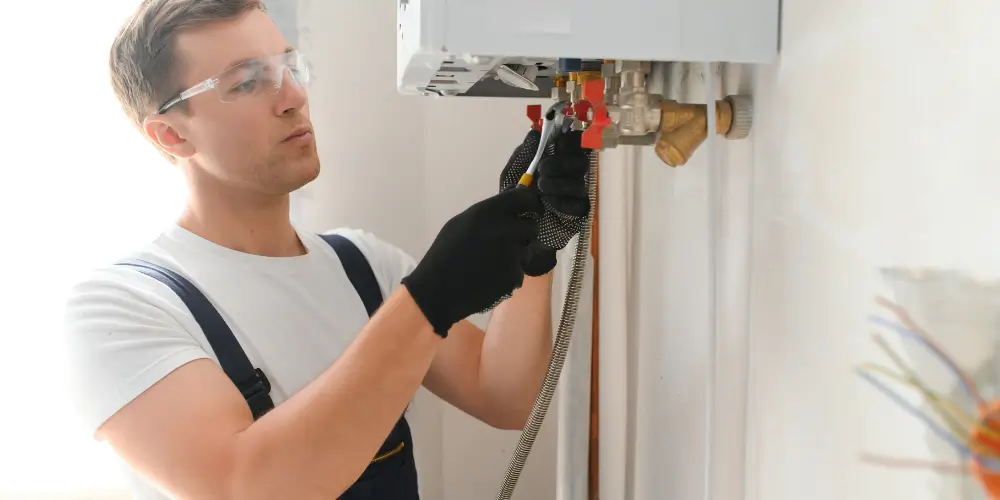
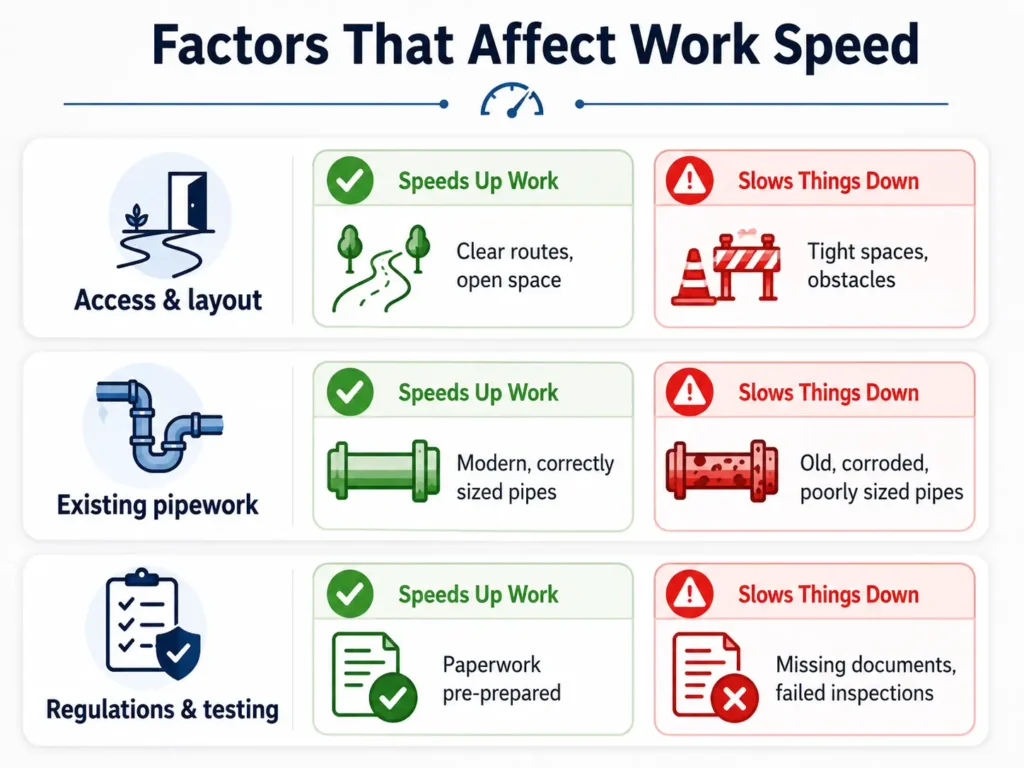
Installation time varies not only by the type of boiler but also by several site‑specific factors. Installers must first assess access to the existing boiler: tight lofts, basements with narrow stairs, or cluttered utility rooms slow everything down. Clear, safe routes for bringing in the new unit and removing the old one keep the schedule lean and predictable.
Property layout and existing infrastructure also matter. Long pipe runs, awkward flue routes, or outdated wiring add labour and coordination with electricians or builders. A home with modern pipework and compliant electrics usually sees a faster turnaround.
Permissions and safety checks can extend timelines but protect the householder’s autonomy in the long run. Gas pressure tests, water quality checks, and commissioning are non‑negotiable for reliable, low‑maintenance heat.
How Do Boiler Types and Systems Change the Timeline?
Although every project is unique, boiler type is one of the clearest predictors of how long a replacement will take. A like‑for‑like swap of a modern combi boiler is usually fastest, because it relies on fewer components and doesn’t need separate hot‑water storage.
System boilers with unvented cylinders take longer, as engineers must drain, disconnect, and reconnect more pipework and safety controls. Conventional heat‑only boilers, often tied to attic tanks and older radiators, typically demand even more time. Extra checks are needed to verify that ageing parts can safely handle the new appliance’s pressure and output.
Fuel type also shapes the schedule. Gas boilers connect to established mains (subject to safety tests), while oil boilers need tank connections and burner set‑up.
Electric boilers may be installed quickly, but can require electrical upgrades. Each system’s complexity either protects the homeowner’s schedule or consumes extra days of access, noise, and disruption.
Boiler Swap vs Full Upgrade: What It Means for Time
Because “boiler replacement” can mean very different scopes of work, timeframes vary dramatically between a simple swap and a full upgrade. A like‑for‑like swap, where the new boiler uses existing pipework, flue position, and controls, is usually the fastest route back to hot water and heating.
In straightforward properties, this can be completed within a working day, keeping disruption and dependency on installers to a minimum. A full upgrade is different. Here, the system itself is rethought: relocating the boiler, altering gas runs, upgrading flues, adding or removing tanks, or reconfiguring radiators and controls.
That bigger change often stretches work across two to three days or more, especially in larger or older homes. While slower, it can future‑proof the property, create more usable space, and improve efficiency.
The time question, then, becomes a trade‑off: quickest return to normality versus a bigger, more liberating reset.
What Happens on Boiler Installation Day?
Once the decision is made between a quick swap and a fuller upgrade, the focus moves to what actually happens on the day the work is carried out. Installers typically arrive early, confirm the agreed plan, and walk through the property layout, checking access, parking, and where tools and materials can be staged without disrupting the household’s flow.
They then isolate gas, water, and electrics, safely strip out the old boiler, and prepare the space for the new unit, keeping pipework and flue routes as neat and compact as possible to preserve usable room space.
Core stages often look like this:
| Stage | What Happens | Impact on Household |
| Arrival & brief | Plan confirmed, access agreed | Sets boundaries and timings |
| Isolation | Services switched off, made safe | Short pause in normal use |
| Strip‑out | Old boiler removed | Some noise and movement |
| Install & connect | New boiler fitted, wired, piped | Limited access to that area |
| Testing & tidy | Safety checks, workspace cleared | Home quickly feels normal |
When Will Your Heating and Hot Water Be Back?
During a boiler replacement, heating and hot water are typically off for most of the working day, but the exact downtime depends on the job’s complexity.
In a straightforward like-for-like swap, many installers aim to have hot water back by late afternoon and heating active shortly after, once the system has been filled, bled, and safety-checked.
Where pipework alterations, flue changes, or smart controls are added, the system may stay off into the evening, though reputable engineers try to avoid leaving occupants without essentials overnight.
Power and cold water are normally available, allowing people to adapt their routines. Before work begins, an installer can usually outline when hot water and heating should reasonably return, so the household can plan showers, childcare, or working hours around the disruption. Clear timing helps preserve flexibility and guarantees the upgrade feels like a brief pause, not a loss of daily independence.
What Problems Commonly Delay Boiler Replacement?
Even when an installation is well planned, several recurring issues can slow or extend a boiler replacement.
Delivery delays are common, especially for less standard models, flue kits, or smart controls, leaving households stuck without reliable heat or hot water. Hidden problems in existing pipework, gas lines, or electrics also stall progress; once exposed, these defects must be corrected before a new boiler can legally and safely run. Access constraints add more disruption.
Tight lofts, cluttered cupboards, or sealed boxing around old pipes force engineers to spend extra time creating space before they can even start fitting equipment. Structural or ventilation concerns, such as weak walls or inadequate flue routes, can demand unexpected building work or permissions.
Finally, documentation and compliance checks, gas pressure tests, system flushing, and commissioning paperwork can take longer than owners expect, particularly in older or previously altered properties.
How Can You Get Your Boiler Replaced Faster?
Homeowners cannot remove every risk of delay, but they can greatly speed up boiler replacement with the right preparation. A streamlined process lets them reclaim comfort, control, and everyday freedom with minimal disruption.
First, early planning matters. Gathering property details, photos of the existing system, and access information before quotes are requested allows engineers to design and schedule work quickly. Clear decisions about boiler type, budget, and desired controls prevent last‑minute indecision.
Next, flexible scheduling accelerates progress. Being open to weekday appointments, early starts, or short‑notice slots helps homeowners secure faster installation dates and finish sooner.
Finally, practical site readiness avoids time‑wasting obstacles. Moving furniture, clearing lofts or cupboards, and arranging parking guarantees installers can work efficiently from arrival to commissioning.
- Reduce uncertainty to win back time.
- Clear space to keep life moving.
- Decide early to enjoy the heat and freedom sooner.
Is It Faster to Repair or Replace Your Boiler?
Rarely is the choice between boiler repair and replacement just about speed, yet timing often becomes the deciding factor. Repair is usually faster: many faults can be diagnosed and fixed within a single visit, restoring heat the same day. However, that speed is only liberating if the boiler still has meaningful life left and parts are easy to source.
Replacement often takes longer, typically one to three days, including commissioning, but it can end the cycle of recurring breakdowns and repeated call‑outs. For someone who values independence from constant repair bills and emergency visits, this longer one‑off disruption may feel like the freer option.
| Situation | Usually Faster Option |
| Simple fault, parts in stock | Repair |
| Old boiler, frequent breakdowns | Replace |
| Major safety issues or leaks | Replace |
| Outdated, inefficient model | Replace (long‑term) |
Time matters, but so does reducing future interruptions.
Frequently Asked Questions
How Much Does a Typical Boiler Replacement Cost, Including Labour and Materials?
A typical boiler replacement, including labour and materials, usually costs £2,000–£4,000. Prices vary with boiler type, system complexity, and regional rates, so an independent quote comparison helps homeowners avoid restrictive, overpriced installation packages.
Do I Need Planning Permission or Building Regulations Approval for a Boiler Replacement?
They usually don’t need planning permission, but building regulations approval is required. A registered Gas Safe or OFTEC engineer self-certifies compliance, avoiding council paperwork. Planning rules may apply in conservation areas or flats for flues and exterior changes.
How Often Should a New Boiler Be Serviced After Installation?
A new boiler should be serviced once a year after installation. This yearly check keeps warranties valid, maximises efficiency, reduces bills, and lets the homeowner enjoy reliable heat without surprise breakdowns or safety worries.
Will Replacing My Boiler Increase My Home’s Energy Efficiency Rating?
Yes, replacing an old boiler typically boosts a home’s energy efficiency rating, especially with modern condensing models. Greater efficiency means lower fuel use, lower bills, and greater independence from energy suppliers and volatile fossil fuel prices.
What Paperwork and Warranties Should I Receive After My Boiler Is Installed?
They should receive installation and commissioning certificates, building regulation compliance certificates, user manuals, benchmark logbooks, warranty documents for the boiler and controls, and proof of guarantee registration, securing repair rights, performance expectations, and future freedom to switch engineers.
Conclusion
In the end, the time it takes to replace a boiler depends on system complexity, boiler type, and the condition of existing pipework and electrics. Simple like‑for‑like swaps can be completed within a day, while full upgrades naturally take longer. By preparing the property, choosing an experienced installer, and addressing potential issues early, homeowners can keep disruption to a minimum and get heating and hot water restored as quickly and safely as possible.