In the UK, fire risk assessment costs vary mainly by property size, use and complexity. Small, low‑risk premises typically start at around £75–£350, medium sites often range from £400–£800, and large, high‑risk, or multi‑site operations can exceed £1,000, especially in London and the South East. Prices also reflect the assessor’s expertise, the report’s detail, and whether ongoing support is included. Understanding these factors helps businesses judge quotes, quality and where genuine savings are possible.
Key Takeaways
- Typical costs range from £200–£350 for small low‑risk premises, £400–£800 for medium sites, and over £1,000 for large or complex properties.
- Price is driven by property size, use, layout complexity, location, and the number of sites included in the assessment.
- Assessor expertise, accreditation, and required report detail significantly influence fees and should be weighed against very low “tick‑box” quotes.
- One‑off assessments are paid as a single fee, while ongoing support uses retainers or scheduled visits, spreading costs over time.
- You can control costs by preparing documents, coordinating access, grouping sites in one contract, and promptly implementing recommendations to avoid repeat or more complex work.
Table of Contents
How Much Does a Fire Risk Assessment Cost in the UK?
When considering a fire risk assessment in the UK, cost typically depends on factors such as property size, building use, layout complexity, and location. Smaller, low‑risk premises, such as simple high‑street shops or small offices, might expect fees starting from around £75–£350.
As premises increase in size or complexity, costs generally rise, often ranging from £400 to £800 for medium-sized sites such as multi-storey offices or modest industrial units. Large, high‑risk, or multi‑site operations can exceed £1,000, particularly where significant assessor time is required on site and in report preparation. Location also matters; assessments in major cities, especially London and the South East, often attract higher rates due to travel time, demand, and operating costs.
Pricing structures vary: some assessors charge fixed fees, others use day rates, and some apply tiered bands linked to floor area or occupancy type, always reflecting the work involved.
What Does a Fire Risk Assessment Cover (and Why It Affects Price)?
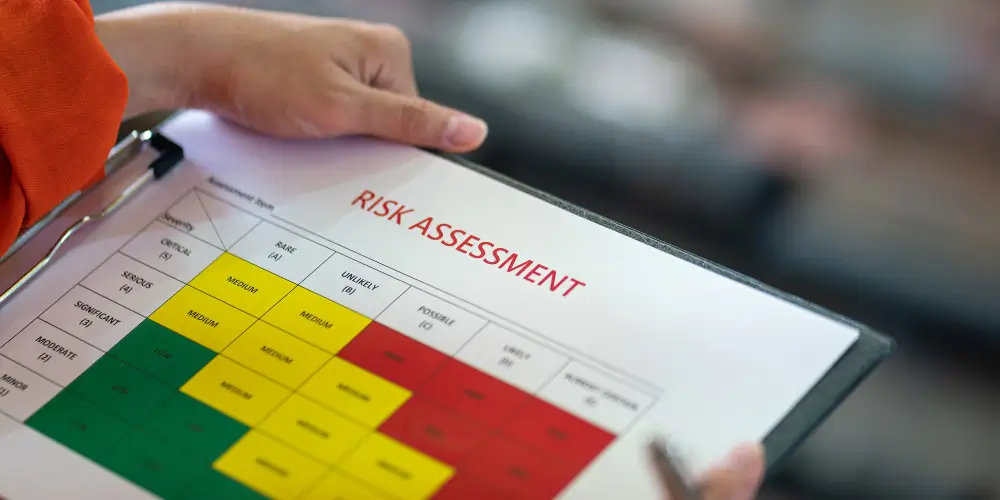
Although prices can appear arbitrary at first glance, a fire risk assessment follows a structured process that directly shapes the overall cost. An assessor does far more than “have a quick look around.”
The assessment systematically reviews the building layout, use of spaces, and people at risk, then examines ignition sources, fuel loads, and potential fire spread routes. It also evaluates existing fire precautions: alarms, detectors, emergency lighting, fire doors, extinguishers, escape routes, and signage.
The assessor then considers management arrangements, including evacuation procedures, staff training, maintenance records, and how often equipment is tested. All findings are documented, with a clear record of hazards, existing controls, and recommended actions, prioritised by risk level.
Because each of these elements must be examined thoroughly and documented clearly, the scope and depth of coverage inevitably influence how long the assessment takes and, in turn, the price a competent assessor must charge.
Main Cost Drivers in a Fire Risk Assessment
Beyond the basic scope of work, several practical factors drive the cost of a fire risk assessment. While legal duties and technical tasks set a baseline, certain elements consistently push fees up or down. Understanding these helps decision‑makers judge quotes more confidently and budget more accurately.
Typical cost drivers include:
- Assessor expertise and accreditation – Senior, highly qualified assessors command higher fees but often provide deeper analysis and clearer documentation.
- Complexity of fire safety systems – Advanced alarms, suppression systems, and smoke control require more testing, documentation review, and coordination.
- Documentation quality and availability – Missing plans, maintenance records, or previous reports lengthen evidence‑gathering and site time.
- Access and operational constraints – Restricted areas, security protocols, or 24/7 operations can force out‑of‑hours work or phased visits.
- Required reporting detail – Simple compliance summaries cost less than fully itemised action plans, prioritisation schedules, and board‑level reports.
How Building Type and Size Change Your Assessment Price
Building characteristics exert a direct and often decisive influence on fire risk assessment pricing. Assessors must tailor their approach to the physical realities of each structure, and those variations translate into time and cost. Broadly, two factors dominate: building type and building size.
Different construction types present distinct challenges. A modern steel‑frame warehouse with open spans is usually quicker to inspect than a historic, compartmented building with concealed voids and complex escape routes. Mixed‑use blocks, multi‑building sites, or premises linked by shared services add further layers of examination.
Size also matters. Larger floor areas, additional storeys, and extended basements increase the number of rooms, staircases, plant areas, and fire protection systems that must be checked and documented. More drawings, photographs, and notes are required, and reporting takes longer. Consequently, assessors often base fees on a combination of building type complexity and total floor area.
How Occupancy and Business Use Impact Assessment Cost
Occupancy and business use shape fire risk assessment costs as strongly as the fabric of the building itself. Assessors must understand who is in the building, what they do, and when they are there. Different occupancies bring different fire loads, behaviour in emergencies, and legal duties, all of which affect assessment time and complexity.
Key cost drivers linked to use include:
- Public access: Shops, venues, and healthcare settings demand closer scrutiny of escape routes, signage, and crowd management.
- Vulnerable occupants: Care homes, schools, and hospitals require more detailed evaluation of assistance, refuges, and evacuation strategies.
- High‑risk processes: Kitchens, workshops, and manufacturing introduce ignition sources that lengthen inspection and documentation.
- Storage and stock: Warehouses or retail back‑of‑house areas with dense or hazardous storage increase testing and verification needs.
- Operating hours: 24/7 or shift‑based operations require analysis of staffing levels, training, and procedures at all times of use.
What You Should See in a Quality Fire Risk Assessment Report
Although every premise is different, a quality fire risk assessment report should follow a clear, logical structure that lets a dutyholder see exactly what was checked, what the risks are, and what must be done. It will normally open with key facts about the building, its use, occupancy profile, and the date and scope of the assessment, so the reader understands the context and limitations.
A competent report then sets out the legal framework relied upon, followed by a concise description of the building layout, fire safety systems, and management arrangements. The core of the document is a systematic identification of fire hazards, people at risk, and existing control measures, presented in a way that links findings to specific locations.
Crucially, it should provide clear, prioritised actions with risk ratings and realistic timescales, plus a summary of overall residual risk, allowing dutyholders to plan remedial work and budget with confidence.
One-Off Fire Risk Assessments vs Ongoing Support Costs
Having a clear, well-structured fire risk assessment report is only part of responsible fire safety management; dutyholders must also decide whether to commission a one-off assessment or invest in ongoing support.
A one-off assessment is typically a single, fixed-cost exercise providing a snapshot of risks at a specific point in time. Ongoing support, by contrast, spreads costs over months or years and is designed to keep the assessment live as the building, occupants, and activities change.
Key distinctions include:
- Cost structure – one-off fee versus retainer or scheduled visit charges.
- Update frequency – ad‑hoc reassessment versus planned reviews and re-inspections.
- Compliance confidence – basic legal coverage versus proactive alignment with evolving standards.
- Support scope – report delivery only versus help with action plans, staff training, and policy updates.
- Risk profile suitability – stable, low‑risk premises versus complex, high‑risk, or frequently changing environments.
How to Compare Quotes and Avoid “Too Good to Be True” Prices
When multiple fire risk assessment quotes arrive, the challenge is less about price comparison and more about understanding what is and is not included. A low headline figure may exclude site visits to all buildings, a detailed review of the evacuation strategy, or follow‑up clarification, while a higher quote may include these as standard.
A careful client examines the scope: number of properties covered, level of inspection (sampled or extensive), the format and depth of the final report, and any allowance for meetings or revisions. Competence should also be assessed in relation to qualifications, professional memberships, sector experience, and insurance.
“Too good to be true” prices often rely on very short on‑site times, generic templates, or junior assessors with limited supervision. Comparing day rates or time allocations, not just totals, reveals whether a provider can realistically deliver a thorough assessment. Transparent itemised quotes, with assumptions clearly stated, usually indicate a more reliable, accountable service.
Practical Ways to Cut Fire Risk Assessment Costs Safely
Once realistic, well‑scoped quotes have been compared, attention naturally turns to how overall costs can be reduced without weakening fire safety or legal compliance. Cost control is possible, but only where efficiency does not erode the assessor’s independence, time on site, or report quality.
Sensible savings usually come from preparation, smart scheduling, and better use of existing information. Practical, safety‑conscious measures often include:
- Collecting building plans, maintenance records, and previous reports in advance so the assessor spends less time gathering basics.
- Ensuring key staff are available on the day to avoid chargeable delays or repeat visits.
- Grouping multiple sites into one contract, gaining economies of scale from a single provider.
- Agreeing on realistic review intervals based on risk level, not arbitrary annual cycles.
- Implementing recommendations promptly, reducing future assessment complexity and the likelihood of costly remedial work or enforcement.
Frequently Asked Questions
Can I Do My Own Fire Risk Assessment Instead of Hiring a Professional?
They can complete a basic fire risk assessment themselves, but legal duties, building complexity, and technical standards often make professional input safer, more thorough, and defensible, especially for workplaces, flats, or higher‑risk, publicly accessible premises.
How Often Should a Fire Risk Assessment Be Reviewed or Updated?
A fire risk assessment is typically reviewed annually, or sooner if building layout, occupancy, processes, or legislation change. Significant incidents, near-misses, or introduction of new equipment or materials should also trigger an immediate review and update.
What Qualifications Should a Competent Fire Risk Assessor Have?
A competent fire risk assessor typically holds recognised fire safety qualifications, professional accreditation, practical experience in relevant premises, knowledge of current fire safety legislation and standards, and evidence of ongoing training or continuous professional development in fire risk management.
What Legal Penalties Can I Face for Not Having a Suitable Assessment?
They may face enforcement notices, prohibition notices, unlimited fines, and, in serious or persistent breaches, imprisonment. Liability can extend to both the organisation and responsible individuals, particularly if non‑compliance contributes to injury, death, or serious property damage.
How Should I Prepare My Premises for the Assessor’s Visit?
They should clear escape routes, open all areas, test alarms and lighting, gather maintenance records, train key staff on procedures, remove obvious hazards, update floor plans, and guarantee the assessor can safely access every part of the premises.
Conclusion
In conclusion, fire risk assessment costs in the UK vary with building type, size, occupancy and business use, as well as the depth and quality of the report. While cheaper quotes may seem attractive, they often signal limited scope or inexperience. By understanding key cost drivers, comparing like‑for‑like quotations and considering ongoing support, duty holders can control costs safely while still meeting legal obligations and ensuring a robust, defensible approach to fire safety.