In the UK, the Cost Of Installing A Consumer Unit typically costs £350–£900 for a straightforward swap, with larger homes or higher-capacity boards often reaching £900–£1,500+. Prices rise if extra circuits are needed or if testing uncovers wiring faults requiring remedial work. Quotes should include the unit type (RCD or RCBO), surge protection if specified, isolation, installation labour, full testing, and an Electrical Installation Certificate, plus VAT clarity. The factors that change the final bill are explained next.
Key Takeaways
- Typical consumer unit replacement costs £350–£900, rising to £900–£1,500+ for larger homes or complex upgrades.
- Extra costs come from new circuits, earthing/bonding upgrades, tail upgrades, or fault-finding discovered during testing.
- London and the South East often cost more due to higher labour rates and access constraints in flats or tight meter cupboards.
- RCBO boards cost more than RCD boards but reduce nuisance tripping and improve fault isolation by protecting each circuit separately.
- Quotes should include isolation, full testing, an Electrical Installation Certificate (EIC), clear assumptions, labour hours, VAT, and provisional sums.
Table of Contents
Typical Consumer Unit Installation Costs (UK Price Ranges)
Although prices vary by region and the condition of the existing wiring, typical consumer unit installation costs in the UK generally range from £350 to £900 for a straightforward replacement. This range typically covers replacing an older fuse box with a modern consumer unit in an accessible location, with no major remedial work.
Costs rise when a property needs additional circuits, upgraded earthing and bonding, or fault-finding to address insulation or continuity issues before energising the new board. Larger homes with many circuits, electric showers, EV chargers, or heat pumps may require higher-capacity units and more time, pushing totals to roughly £900–£1,500+.
Flats can be cheaper if circuits are limited, but may increase where access, isolation, or landlord requirements add labour. London and the South East often sit at the upper end due to higher labour rates, while some regions tend to be lower.
What a Consumer Unit Installation Quote Should Include
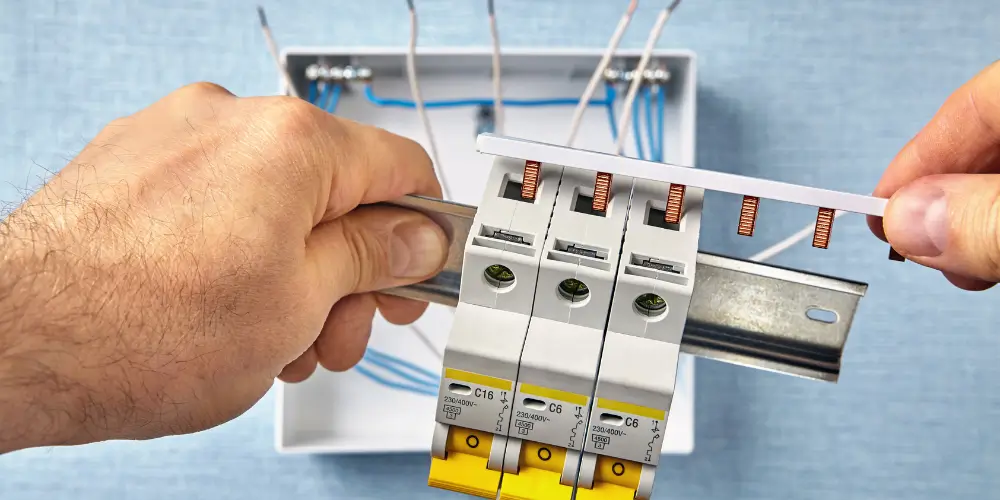
Before any work is booked, a consumer unit installation quote should clearly set out what is being supplied, what is being done, and what is excluded. It should list the make and rating of the new unit, the required main switch, surge protection (if included), labels, and ancillary materials such as glands, tails, earth-bonding clamps, and fixings.
Labour should specify isolation, safe removal of the old board, mounting, termination, and making good, plus disposal of waste. Testing and certification must be included, covering full inspection, results, and issue of an Electrical Installation Certificate and Part P Building Regulations notification where applicable.
The quote should state assumptions about existing wiring conditions, the number of circuits, and whether meter tails or earthing/bonding upgrades are required. It should also confirm access requirements, planned duration, payment terms, and call-out provisions for unforeseen faults. VAT status and guarantees should be explicit.
RCBO vs RCD Boards: Costs and Which to Choose
Choice is often the biggest cost lever in a consumer unit upgrade, and the main decision is between an RCD split‑load board and an all‑RCBO board. A split‑load unit groups circuits under one or two RCDs, typically lowering material cost but increasing the chance that a single fault trips multiple circuits. An all‑RCBO unit gives each circuit its own combined RCD/MCB protection, usually costing more upfront but improving selectivity and reducing nuisance outages.
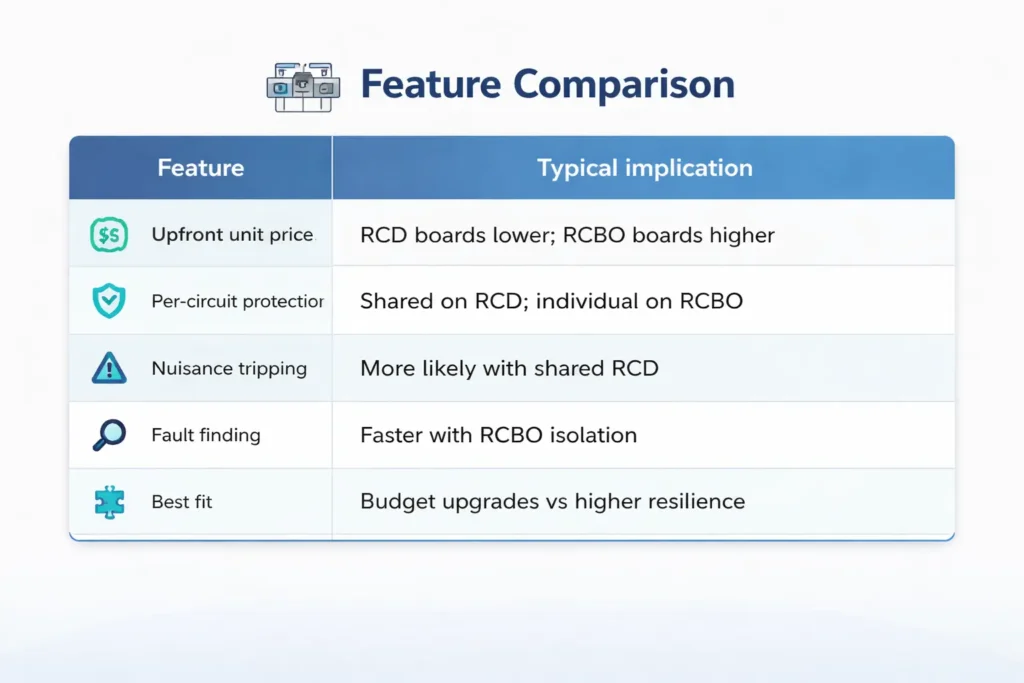
Selection often follows priorities: minimum spend and simplicity point to split‑load; continuity and easier troubleshooting point to RCBOs.
Cost Drivers: Access, Wiring Faults, and Compliance Upgrades
Three factors tend to move a consumer unit installation from a straightforward swap to a higher‑cost job: access to the existing board, hidden wiring faults uncovered during testing, and compliance upgrades needed to meet current standards. Access affects labour time. A board buried in a cupboard, boxed‑in trunking, awkward cable runs, or limited working space can slow safe isolation, removal, and re‑termination.
Temporary removal of shelving or panelling may be required to achieve clearance and maintain safe working practices. Cost Of Installing A Consumer Unit: Wiring faults commonly appear during insulation resistance, polarity, and continuity checks. Degraded insulation, mixed conductor sizes, borrowed neutrals, loose terminations, or overheating signs can prevent energisation until remedial work is completed, adding time and materials.
Compliance upgrades can also change the scope. Current rules may require surge protection, arc‑fault protection in specific situations, fire‑resistant fixings, improved labelling, and updated test documentation. Where the existing arrangement cannot be certified, additional measures are priced in.
Extra Work You Might Be Quoted For (Earthing, Bonding, Circuits)
Once access issues, hidden faults, and compliance add-ons are accounted for, quotes often widen further due to remedial work around earthing, bonding, and the circuits themselves. Many older UK properties have undersized or absent earthing conductors, corroded clamps, or no clear main earth terminal, so electricians may charge for upgrading the earthing arrangement to current standards.
Additional main protective bonding to gas and water services is another common extra, especially where bonding is missing, incorrectly sized, or terminated poorly. Circuit-related extras typically arise when existing wiring fails to meet limits for insulation resistance, earth fault loop impedance, or polarity, or when circuits lack a CPC (earth) conductor.
Remedies can include replacing tails and meter isolator fitting (often via the DNO or supplier), adding RCBOs per circuit, reterminating conductors, or splitting overloaded rings. Any identified defects may be coded and must be rectified before energisation and certification.
How Long Does a Consumer Unit Change Usually Take
Timeframes for a consumer unit change vary, but a straightforward like‑for‑like replacement in a typical UK home is often completed within half a day to a full day. This includes isolation, swapping the unit, circuit identification, and mandatory testing before power is restored.
Older properties, unclear labelling, or cramped meter cupboards can extend the visit, while modern boards with tidy cabling tend to be quicker. Occupants should plan for several hours without power and reset clocks, alarms, and broadband.
- Access and isolation: gaining safe access to the intake position and ensuring the supply can be isolated without delay.
- Board swap complexity: number of outgoing circuits, presence of spare ways, and cable lengths for re-termination.
- On-the-day faults: damaged conductors, overheating signs, or loose neutrals requiring remedial work.
- Site conditions: working height, lighting, parking, and the need to coordinate with other trades.
Testing and Certificates for Consumer Unit Replacement (EIC/Part P)
After the physical changeover is complete and power is ready to be restored, the job is not finished until the installation has been fully tested and the correct paperwork issued.
A qualified electrician should complete dead tests (continuity of protective conductors, ring final continuity, insulation resistance, polarity) before re-energising, then live tests such as earth fault loop impedance, RCD/RCBO trip times, and prospective fault current.
Results confirm that disconnection times and protective devices meet the requirements of BS 7671, and that bonding and earthing arrangements are adequate. For a consumer unit replacement, the usual document is an Electrical Installation Certificate (EIC) that includes a schedule of inspections and test results.
In England and Wales, the work is generally notifiable under Part P; compliance is shown either by a Building Regulations compliance certificate issued through a registered competent person scheme or by local authority building control. These certificates matter for safety, insurance, and future property sales.
How to Compare Consumer Unit Installation Quotes Accurately
How can two consumer unit installation quotes look similar yet cover very different work? Headline prices often hide assumptions about the existing wiring, earthing, and the extent of making good
Accurate comparison depends on matching scope, not just totals, and checking whether compliance tasks are included alongside the physical swap.
- Specification: verify the unit type (RCBO vs split-load), SPD inclusion, and number of ways, plus brands and warranty.
- Pre-works: check allowances for upgrading tails, main bonding, meter isolation, and remedial fixes flagged by testing.
- Certification: confirm EIC, Part P Building Control notification, test results, and labelling are explicitly included.
- Logistics and exclusions: compare call-out timing, power-down duration, disposal of the old board, and any plastering/decoration exclusions.
A like-for-like quote also states labour hours, VAT status, and clear provisional sums, preventing surprises on the final invoice.
Frequently Asked Questions
Do I Need Permission From My Landlord or Freeholder to Replace a Consumer Unit?
Yes—typically permission is needed. A tenant should obtain the landlord’s written consent; a leaseholder should check the lease and seek approval from the freeholder or managing agent. Work must be done by a qualified, certified electrician.
Can I Stay in the House During the Consumer Unit Replacement?
Yes, occupants can usually stay during replacement, though power will be off for several hours. An electrician may require temporary evacuation if access is restricted, alarms fail, or safety testing necessitates it. Arrange accordingly.
Will a Consumer Unit Upgrade Increase My Home’s Resale Value or Appeal?
A consumer unit upgrade can modestly boost resale appeal by signalling modern safety and compliance. It rarely adds significant value on its own, but may reassure buyers, reduce survey issues, and support faster sales in competitive markets.
Are There Grants or Schemes to Help Cover the Costs of Replacing a Consumer Unit?
Yes, limited help may exist through local authority grants, energy efficiency schemes, or hardship funds, but eligibility is strict. Most replacements are self-funded unless bundled with wider rewiring, safety upgrades, or landlord compliance programs.
How Can I Check an Electrician Is Genuinely NICEIC or NAPIT Registered?
They should verify registration by searching for the electrician or company on the NICEIC and NAPIT official online registers, matching the name and address, requesting an ID card, and confirming insurance and current certification dates directly.
Conclusion
Cost Of Installing A Consumer Unit in the UK varies with board type, property size, and the condition of existing wiring. A thorough quote should cover the new unit, labour, testing, certification, and any required upgrades to meet current regulations. RCBO boards often cost more but can reduce nuisance tripping and improve fault isolation. Extra charges commonly arise from earthing and bonding improvements, circuit alterations, or access issues. Comparing like-for-like inclusions is essential.