What is fire doors? Fire doors serve an essential function in enhancing safety within buildings. For many people who ask what a fire door is, it is necessary to know that they are designed to limit the spread of flames and smoke during a fire, allowing occupants essential time to escape. However, the effectiveness of fire doors hinges on strict regulations and proper installation. Understanding their purpose and the associated legal requirements is necessary. What happens when these doors are compromised, and how can building owners guarantee compliance? These questions warrant further exploration.
Key Takeaways
- Fire doors act as protective barriers, slowing the spread of flames and smoke, allowing occupants time to escape safely.
- Legal regulations require fire doors in specific areas to ensure protected evacuation routes and compliance with safety standards.
- Regular inspections and maintenance of fire doors are essential to uphold their effectiveness and meet legal obligations.
- Neglecting fire doors increases risks of smoke inhalation and rapid fire spread, endangering lives and property.
- Fire doors are integral to building safety, affecting insurance premiums and emergency claims eligibility.
Table of Contents
Why Fire Doors Play a Critical Role in Saving Lives and Limiting Damage
Although often overlooked, fire doors serve an important role in protecting lives and minimising property damage during a fire. For those wondering what a fire door is, these specially designed doors act as barriers, slowing the spread of flames and smoke, which can mean the difference between life and death for occupants.
By compartmentalising a building, fire doors provide a reprieve time for individuals to escape safely, and encourage a sense of autonomy in emergencies.
Furthermore, they play a pivotal role in safeguarding valuable property, reducing the extent of fire damage and ensuring that recovery efforts can proceed more smoothly.
The presence of effective fire doors within a structure signifies a commitment to safety and freedom from the chaos that a fire can release.
Fundamentally, these doors are not merely regulatory requirements; they are integral components of a holistic method to building safety, empowering individuals and communities to navigate emergencies with confidence.
What Actually Happens When a Fire Door Is Put to the Test During a Fire
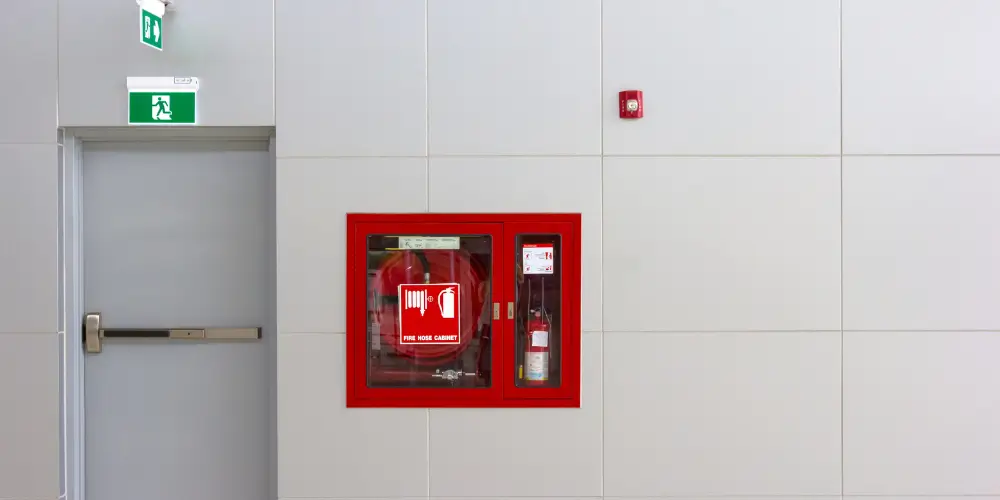
When a fire door is subjected to the intense conditions of a fire, its design and construction are put to the ultimate test. Specifically engineered to withstand high temperatures, a fire door serves as a barrier, slowing the spread of flames and smoke. This reproving functionality guarantees that occupants have a chance to escape and that damage to property is minimised.
Key aspects observed during such tests include:
- Heat Resistance: The door’s ability to endure extreme temperatures without failing.
- Sealing Effectiveness: How well it prevents smoke from passing through.
- Integrity Maintenance: The door must remain intact under pressure.
- Durability: Resistance to warping or deterioration due to heat exposure.
- Compliance with Standards: Adherence to regulatory requirements for fire safety.
These elements collectively highlight the essential role fire doors play in protecting lives and property during a fire emergency.
Inside a Fire Door: The Components That Give It Fire-Resistant Strength
A fire door’s effectiveness in preventing the spread of flames and smoke is attributed to its carefully engineered components. These doors typically consist of a solid core, often made from materials such as mineral board or steel, which provide substantial resistance to heat and fire.
The door’s frame is equally important; it is usually constructed from robust materials to guarantee a tight seal when closed. Fire-resistant glazing may be incorporated, providing visibility while still protecting against high temperatures.
Seals and intumescent strips are essential elements that expand when exposed to heat, blocking smoke and flames from seeping through gaps. Additionally, specialised hardware, such as fire-rated hinges and locks, guarantees the door remains functional under extreme conditions.
Together, these components create a barrier that enhances safety, allowing occupants and property to exist without the looming threat of fire spreading unchecked.
Why an Ordinary Door Is Not Enough When Fire Safety Is at Stake
While many might assume that any door can suffice in a fire emergency, the reality is that ordinary doors lack the essential features necessary for adequate fire protection.
These doors are primarily designed for privacy and security, not for resisting flames or smoke. In contrast, fire doors are engineered to withstand fire for a specified duration, providing a reprieve time for evacuation.
Key differences include:
- Material Composition: Fire doors use fire-resistant materials, unlike standard doors.
- Intumescent Seals: These seals expand when exposed to heat, preventing smoke from passing through.
- Self-Closing Mechanisms: Fire doors automatically close to help prevent the spread of fire.
- Certification Standards: Fire doors are tested and certified by renowned companies such as Landlord Certifications, with inspections and assessments conducted by our qualified and competent engineers to meet strict safety regulations.
- Durability: Designed to withstand high temperatures, ordinary doors can quickly fail under fire conditions.
Understanding these distinctions underscores the importance of investing in proper fire safety measures.
Common Areas Where Fire Doors Must Be Installed by Law
Fire doors are mandated by law under the Regulatory Reform (Fire Safety) Order 2005 (RRFSO) and the Fire Safety (England) Regulations 2022 in various common areas to ensure the safety of occupants and minimise fire spread. These protective barriers are typically required in locations such as stairwells, hallways, and between building compartments. By requiring the installation of fire doors in these areas, regulations confirm that residents have protected evacuation routes and that fire risk remains contained.
Moreover, fire doors must often be installed in areas where flammable materials are stored, such as boiler rooms or maintenance closets. In multi-tenant buildings, these doors play a pivotal role in safeguarding individual units from fire risks.
The presence of fire doors is not merely a regulatory formality; it serves as an energetic measure to confirm the well-being and freedom of those within. Ultimately, these installations are essential components of a thorough fire safety strategy, promoting a secure environment for all occupants.
How Fire Doors Buy Valuable Time for Evacuation and Emergency Response
When emergencies arise, the effectiveness of fire doors becomes evident as they serve an essential function in delaying the spread of flames and smoke. This significant delay not only safeguards property but also provides occupants with essential time for evacuation.
In chaotic situations, every second counts, and fire doors help create a safer environment by compartmentalising fires, allowing individuals to exit buildings safely.
- They minimise the risk of fire spreading to other areas.
- Fire doors are designed to withstand high temperatures.
- Properly installed fire doors can prevent smoke inhalation.
- They facilitate organised and efficient emergency response efforts.
- The presence of fire doors increases overall building safety.
In this way, fire doors play an indispensable role in ensuring that freedom from harm is prioritised during emergencies, allowing individuals the opportunity to escape and emergency responders to act effectively.
UK Fire Safety Rules Explained: Who Is Responsible for Fire Doors?
Understanding the responsibilities associated with fire doors is essential for guaranteeing compliance with UK fire safety regulations. The duty to guarantee fire doors are properly installed, maintained, and inspected falls on various parties, including building owners, employers, and designated responsible persons. Each has a unique role in safeguarding life and property.
| Role | Responsibilities | Consequences of Negligence |
| Building Owners | Guarantee proper installation and upkeep | Legal penalties and liability |
| Employers | Train staff and enforce safety practices | Risk to employee safety |
| Responsible Persons | Conduct regular inspections and audits | Increased risk of fire spread |
Understanding Fire Door Ratings and What FD30 or FD60 Really Mean
The ratings assigned to fire doors, such as FD30 and FD60, indicate their ability to withstand fire and prevent its spread for specific durations. An FD30 door can provide 30 minutes of protection, while an FD60 offers 60 minutes.
These ratings are essential for guaranteeing safety and minimising risks within a building.
- Fire doors act as barriers, slowing down the movement of smoke and flames.
- Higher ratings often mean more robust materials and construction methods.
- Understanding ratings helps in designing effective evacuation routes.
- Compliance with fire door ratings is essential for legal adherence and insurance purposes.
- Regular assessment guarantees that fire doors maintain their rated performance.
How Often Should Fire Doors Be Checked to Stay Safe and Compliant
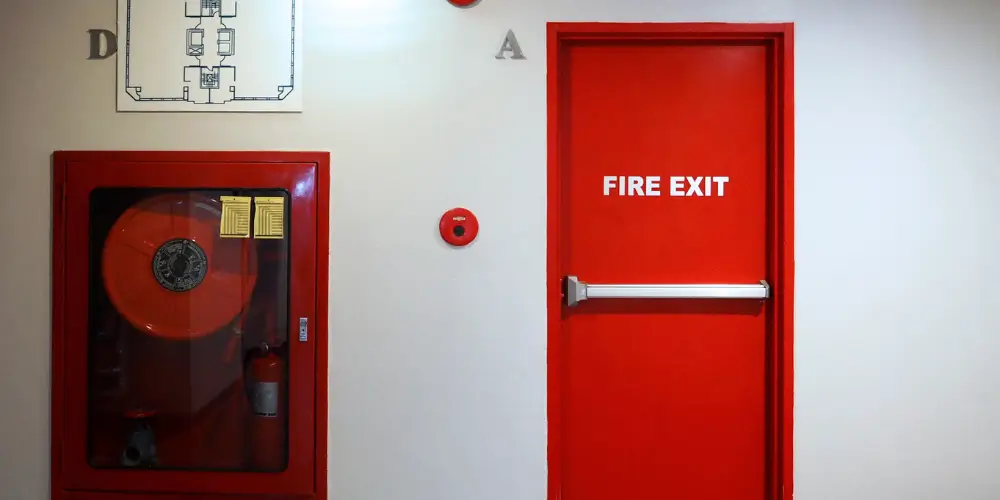
Regular inspections of fire doors are essential to confirm safety and compliance with fire regulations, as neglecting this aspect can lead to serious consequences. It is typically recommended that fire doors be inspected at least once a year. However, more frequent checks may be necessary in high-traffic or high-risk environments, confirming functionality and adherence to safety standards.
| Inspection Frequency | Recommended Action | Compliance Requirement |
| Monthly | Visual checks | Identify visible damage |
| Quarterly | Functional tests | Confirm proper operation |
| Annually | Professional inspection | Complete compliance review |
The Real Risks of Ignoring Damaged or Incorrectly Fitted Fire Doors
Neglecting the integrity of fire doors can lead to dire consequences in case of a fire emergency.
Fire doors are designed to contain flames and smoke, providing precious time for occupants to escape. When these doors are damaged or improperly fitted, their effectiveness is compromised, posing significant risks to life and property.
The possible dangers of ignoring fire door issues include:
- Increased risk of smoke inhalation, which can be fatal.
- Higher likelihood of rapid fire spread, endangering lives.
- Legal repercussions due to non-compliance with safety regulations.
- Raised insurance costs or denied claims after a fire incident.
- A false sense of security that can lead to complacency in safety measures.
Frequently Asked Questions
Can Fire Doors Be Painted or Altered in Any Way?
Fire doors can be painted, but modifications that affect their performance or integrity are generally prohibited. Compliance with regulations guarantees their effectiveness in fire safety, emphasising the importance of maintaining their original specifications.
What Materials Are Fire Doors Typically Made From?
Fire doors are typically constructed from materials such as steel, solid wood, or composite materials, designed to withstand high temperatures and prevent the spread of fire. These materials guarantee durability and efficiency in fire safety applications.
How Do I Know if My Fire Door Is Compliant?
To determine if a fire door is compliant, one must check manufacturer labels, verify fire ratings, inspect for proper installation, and guarantee it meets local building codes, all while considering the importance of safety.
Are There Any Exemptions for Fire Door Installation in Buildings?
Certain buildings, like single-family homes or low-rise structures without considerable fire risk, may have exemptions from fire door installation. However, regulations vary greatly, and consulting local codes is essential for clarity on specific requirements.
Can Fire Doors Be Used as Regular Doors Outside of Emergencies?
Fire doors should not be used as regular doors outside of emergencies. Their primary function is to contain fire and smoke, and using them for everyday access compromises safety, possibly endangering lives and property during an emergency.
Conclusion
To sum up, fire doors are a pivotal component of building safety, designed to protect lives and minimise property damage during a fire. For anyone asking what a fire door is, its specialised construction and adherence to stringent regulations guarantee effective performance in emergencies. Regular inspections and maintenance are necessary to uphold their integrity and compliance. Neglecting fire doors poses significant risks, emphasising the need for awareness and vigilance in their installation and upkeep to safeguard occupants and property alike.